







 Sep 01, 2026 33 Minutes ReadA wider range can increase revenue, improve customer retention and reduce dependence on one product. It can also turn a healthy business into a warehouse full of slow stock. Relying solely on the fact that your long time Chinese manufacturing partner tells you that this product is “trendy” does not necessarily mean that your stocks will sell fast. The decision how to expand your product portfolio with China suppliers is yours only. And you are in the best position to assess your market, retail or wholesale price, and all the key parameters that ensure the success of a new addition to your product range. In short: To expand your product portfolio with China suppliers, start with proven customer demand, choose the right development and supplier route, calculate the full landed economics, qualify the manufacturing process, and use a pilot order before scaling. The supplier should support the product strategy. The supplier catalog should not define it. What It Means to Expand Your Product Portfolio With China Suppliers Product portfolio expansion means adding products that give customers a relevant new reason to buy. It does not necessarily mean entering a completely new industry. For most importers, the lowest-friction opportunities sit close...
- Aug 25, 2026 41 Minutes ReadA sourcing company reduces procurement costs when its supplier access, product knowledge, quality control, logistics coordination, and local follow-up remove more cost than the company charges in fees. The saving should be measured against the buyer’s total procurement cost, not only against the lowest factory quotation. Consider a 50,000-unit order. A $0.20 reduction in unit price saves $10,000. One $8,000 emergency shipment and $4,000 of rework turn that apparent saving into a $2,000 loss. This is why a useful sourcing company works on the complete cost of the order: product, quality, logistics, inventory, cash exposure, internal workload, and supplier risk. In short: the sourcing company’s job is not only to identify the best value for money offer from manufacturers. A sourcing agent’s procurement value lies in its ability to reduce expenses and risks throughout the order in China process. It empowers international buyers with additional, sourcing-specific skills, and prevents business exposure to quality costs and brand damage. Start With the Full Procurement Cost, Not the Unit Price Purchase price is only one cost layer. The European Commission’s guidance on life-cycle costing makes the same basic point: acquisition price does not capture every cost of purchasing, using, and disposing of a...
- Aug 14, 2026 28 Minutes ReadDuring Production Inspection (DUPRO or DPI) means checking an order while the factory is still making it. At JS Sourcing, DUPRO is usually arranged when about 20% to 80% of the order has been produced. The inspector checks the goods already made, production progress, important dimensions, workmanship, parts, function, packaging, and any defects that keep showing up. If 2,500 pieces of a 10,000-piece order are finished and the same hole-position problem is already appearing, the factory still has 7,500 pieces that can be made after the process is fixed. Book Before the Risky Process Choose the inspection time based on the production step you want to check. The best time is usually before a problem becomes difficult or expensive to fix. Product Useful Check Point What to Check What Becomes Harder Later Machined metal parts Before plating or coating Hole position, threads, thickness, flatness, fit Machining again may damage the finished surface Injection-molded parts After normal mass production starts Flash, sink marks, deformation, dimensions, fit The same molding problem may spread to thousands of parts Furniture Before important joints are covered Frame size, hole position, joints, assembly Upholstery or finishing may hide structural parts Garments During normal sewing production Measurements,...
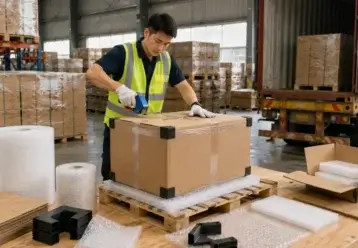
- Aug 14, 2026 27 Minutes ReadMost shipping damage should be dealt with before the goods leave the factory. Keep the product from moving inside the box, stop finished surfaces from rubbing together, use cartons and pallets that suit the real weight, keep the goods dry, inspect the finished packing, and make sure the cargo cannot shift during loading and transport. Start With How the Product Can Be Damaged Product Main Risk What to Check First Glass and ceramics Cracks, chipped edges, broken handles Separation, edge protection, movement Furniture Scratches, crushed corners, broken fittings Surface protection, corners, loose hardware Metal parts Scratches, rust, dents, carton failure Pack weight, separators, moisture control Electronics Impact damage, loose parts, damaged connectors Cushioning, clearance, accessory position Textiles Moisture, mold, crushed cartons Dry packing, carton strength, storage condition Long products Bending, broken ends, punctures Support points, end protection, pallet position Heavy parts Carton rupture, crushed lower cartons, pallet failure Gross weight, carton compression, pallet capacity Before you approve the packing, check these five points: Can the product move inside the carton? Can two products, parts, or accessories touch each other? Which part is easiest to break, bend, scratch, or crush? How much weight will the carton and pallet carry? Could moisture...
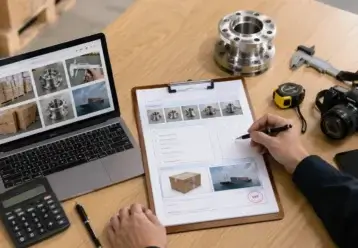
- Aug 14, 2026 20 Minutes ReadA good inspection report should tell you exactly what was checked, what standard was used, what the inspector found, and why the order passed or failed. It should show the correct order and batch, available quantity, sample size, measurements, test results, defects, packaging checks and photos. If something could not be checked, the report should say Not Tested or Not Available, not PASS. Order and Batch Start by checking that the report is for the right order and the right batch. Inspection report number Inspection date Buyer Supplier Factory and inspection location Purchase order number Product name SKU or model Lot or batch number Production date or date code, if used Ordered quantity Available quantity Inspected quantity If the order has several SKUs, do not combine everything into one total. Show each SKU on its own. SKU Ordered Available Inspected A101 1,000 pcs 1,000 pcs 80 pcs A102 500 pcs 500 pcs 50 pcs A103 500 pcs 420 pcs 50 pcs A103 is 80 pieces short when the inspection takes place. If the report only says “Total order: 2,000 pcs,” you would not see that shortage. The purchase order should also point to the right drawing, product specification, artwork and...
- Aug 14, 2026 23 Minutes ReadPre-shipment inspection (PSI) is the final check on an order before it ships. The inspector takes samples from the actual goods and checks the quantity, defects, dimensions, function, packaging, labels, accessories, and other requirements against the buyer’s approved documents. A useful pre-shipment inspection should give the buyer enough information to make a clear decision: ship, hold, sort, repair, re-inspect, or reject. Check Whether the Order Is Ready Before booking the inspection, ask the supplier for these three numbers: Ordered quantity Finished quantity Packed quantity Example A: Ordered: 8,000 units Finished: 8,000 units Packed: 6,800 units Packed rate: 85% All 8,000 products are finished, so the inspector can check the products themselves. But 1,200 units are not in final packaging yet, so carton quantity, labels, packing method, and shipping marks are not fully covered. Example B: Ordered: 10,000 units Finished: 6,000 units Packed: 5,800 units In this case, 4,000 units have not been made yet. An inspection of the first 6,000 units cannot be treated as a final check of the whole 10,000-unit order. If a large part of the order is still being made, a During Production Inspection is usually a better choice. JS Sourcing uses DUPRO during the 20–80%...
- Aug 11, 2026 76 Minutes ReadBased on my experience, an RFQ built around a line such as “We need 18 mm particleboard for a furniture line” will prove inefficient. It identifies the material and thickness, but it does not tell a supplier enough to recommend and quote the right board. Before contacting suppliers, decide what you are actually buying and what the board must do. Will it be supplied raw or laminated? Will it be used in a dry room, a humid interior or somewhere exposed to occasional splashes? Do you need full sheets, or components that the supplier must cut, drill and edge-band? The finished product also changes the questions you need to ask. A hanging kitchen cabinet needs a board that can hold its fixings and carry the intended load. A movable desk may be assembled and dismantled several times, so the fittings must not quickly loosen in the board. A long shelf needs enough stiffness for its span and expected load. These are practical questions for your product designer, purchasing team and supplier. They help you choose the board grade and decide which performance figures belong in the RFQ. The destination market is just as important. Formaldehyde limits, test methods and supporting...
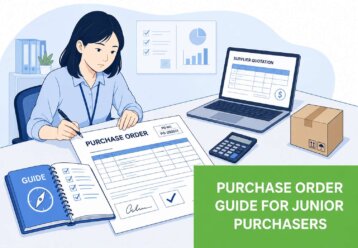
- Aug 11, 2026 26 Minutes ReadA practical purchase order format does not need to turn a routine order into a miniature purchasing system or manufacturing contract. It needs to tell the supplier what is being ordered, which approved product version applies, how much will be paid, and when the goods should be ready. Prepare the purchase order after the supplier’s quotation or proforma invoice (PI), product specifications, quantity, price, payment terms and delivery basis have been agreed. Send it before paying the production deposit. The PO then becomes the buyer’s record of the order and gives the supplier one document to accept. This guide explains the purchase order process in the order a buyer normally follows it. We have also included a Free Purchase Order Template download for free later in the post. The spreadsheet provides a purchase order format in Excel that can be adapted to a first order or a repeat order. Many purchase order templates are designed for general domestic buying. This version focuses on an overseas buyer placing a manufacturing order with a Chinese supplier. Before issuing the PO What should already be confirmed Supplier Contracting company and approved manufacturing location Product Product version, specification and approved sample, when used Commercial...
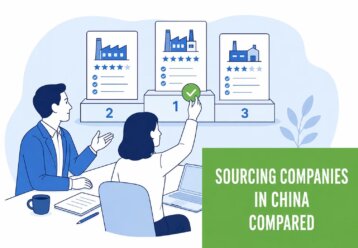
- Aug 11, 2026 37 Minutes ReadThere is no single best China sourcing agent for every order. The sourcing companies in China compared here solve different problems. JS Sourcing mainly works with offline retail chains, brands and wholesalers that need flexible China-side procurement support. JingSourcing offers one-stop sourcing and fulfillment with a strong focus on online retailers. Gembah combines product development and sourcing with a wider, multi-country manufacturing reach. NextSmartShip is fulfillment-led. SourcinBox is built mainly around dropshipping and parcel fulfillment rather than traditional B2B sourcing. Published by JS Sourcing. Research for the comparison database was checked on August 4, 2026. The comparison uses public company pages, independent review platforms and verified app reviews. We did not place test orders with all five companies, inspect private contracts or treat a missing public claim as proof that a service is unavailable. Which Sourcing Company in China Fits Which Buyer? Company Operating model Best fit Less suitable when Published pricing model JS Sourcing Flexible China sourcing and supply-chain execution partner Offline retail chains, brands and wholesalers that need spot services or an all-in-one sourcing solution You mainly need dropshipping fulfillment or manufacturing options outside China Standard product sourcing from US$800; other spot services and integrated projects are quoted...
- Aug 06, 2026 58 Minutes ReadBy JS Sourcing Editorial Team | Updated 5 August 2026 Hotel lighting sourcing covers much more than selecting attractive lamps. The buyer must turn the designer’s intent into fixtures that can be quoted, sampled, manufactured, tested, packed, installed, commissioned, maintained, and reordered. When the products come from China, this also means identifying who controls the engineering and final assembly, locking destination-market requirements, and checking that production still matches the approved sample. In short: to source hotel lighting from China, begin with the fixture schedule, drawings, room types, controls, brand requirements, budget, approval roles, and project dates. Compare suppliers against the same technical and commercial scope. Then use controlled samples, production checks, packaging identification, installation records, and spare-parts planning to keep the approved fixture consistent from RFQ to hotel handover. Hotel lighting can include decorative, architectural, task, accent, exterior, emergency, and control-related products for guestrooms, bathrooms, corridors, lobbies, restaurants, meeting rooms, wellness areas, and back-of-house spaces. The exact boundary between the lighting package, FF&E, electrical works, life-safety systems, and the building-controls package must be confirmed for each project. A hospitality lighting design guide, for example, separates hotel lighting by area and by ambient, task, accent, decorative, and controllable layers.[1] Consider a...




Tag
2024advantages of goods inspectionavoid late deliverybike sample inspectionbuilding materials suppliersbuilding sourcesbuilding suppliesbuilding supplies made in chinabuilding supply wholesalebuy from chinabuy wholesalebuying from china risksbuying wholesalecasegoods vendorschinachina furniture importchina goods inspectionchina manufacturingchina outsourcingchina product inspectionchina shippingchina sourcingchina sourcing tipschina steelchina steel newschina supplier troubleshootingchina supplierschina trade newschina trendschina typhoonchinese manufacturerschinese suppliersconstruction material suppliersconstruction sourcingcontract furniture supplierscontract manufacturingcontruction materials sourcingcost of sold goodscustom bike framecustom casegoodsdisrupted shippingdupro qc checkexport regulationsfactory auditfactory directFF&EFF&E quality checksFF&E sourcing tipsfind suppliersglobal sourcingglobal tradeglobal trade 2023golden samplehospitality sourcinghospitality suppliershow to find hospitality suppliershow to sourceimport building productsimport exportimport-exportimport-export newsimporting building suppliesimporting from china tipsinspection in china turning badinternational buyersmade in chinamade in china hotel suppliesmanufacturingmanufacturing companiesmanufacturing outsourcingmanufacturing products chinamitigating risksoem bicycle frameoffshoring manufacturingoutsourcing costsoutsourcing manufacturingpackaging qualitypractical sourcingpre shipment inspectionpre shipment quality inspectionprocurementproduct developmentproduct development and sourcingproduct inspectionproduct inspection chinaproduct portfolioproduct sampleproduct sourcingproducts chinaprofessionnal sourcing knowledgepurchasing agentpurchasing costsquality assurancequality checkquality controlquality control knowledgequality inspectionquality inspection companyquality made in chinaquality solutions low cost sourcingreduce risks sourcing from chinarisk managementrisks sourcing from chinasample manufacturingshipping from chinasourcingsourcing chinasourcing china benefitssourcing companiessourcing company advantagessourcing costsourcing disruptionssourcing documentssourcing experiencesourcing guidesourcing in chinasourcing infographicssourcing processsourcing profitabilitysourcing specialist knowledgesourcing specialistssourcing steelsourcing storiessourcing strategiessourcing strategysourcing teamsourcing tipssourcing trendssteel exportssupplier evaluationsupply chainsupply chain knowledgetyphoon chanthutyphoon hitting chinaus china importsvalue of sourcing companies


