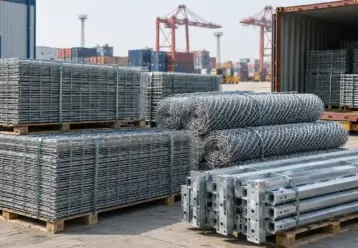
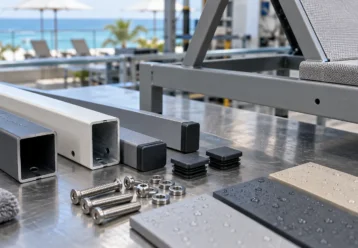
China sourcing is buying goods made in China — straight from a factory, through a trading company, or with an agent handling it for you. Sourcing near me is buying from a supplier in your own country: a local factory, a distributor with stock on the shelf, or a workshop down the road.
The difference isn’t really price. China sourcing usually gets you a lower unit price and far more say in how the thing gets made. What you take on in return is freight, duty, an 8–14 week wait on your first order, a minimum order quantity, and the job of checking quality before the goods leave. Sourcing near you costs more per unit, and you get it in days, you can order five, and you can drive over there if something goes wrong.
The numbers below are the ranges we see in this industry. They’re not quotes and not a price list — use them to check whether a quote makes sense. Duty rates and freight move around; get the live figures from your forwarder and a licensed customs broker before you send any money.
What China sourcing actually means
“China sourcing” sounds like one thing. It isn’t. It’s three, and they fall apart in different ways when something goes wrong.
1. Buying direct from a Chinese factory
You find the factory, send the spec, argue about price, place the order. You get the best unit price and the most control over materials, tooling and tolerances. You also get every headache that comes with that: you write the spec, you chase production, you book the inspection, you sort the freight, you clear customs.
Some numbers. Direct factory pricing usually comes in 30–50% under what a local distributor charges for something comparable — but that’s a gap in unit price, not in landed cost. Getting three to five quotes is normal before you know whether a factory price is any good, because factories in the same city will quote the same drawing differently. China has been the world’s largest exporter of goods for well over a decade,[1] which is why one product category can throw up three to five comparable quotes in the first place.
2. Buying through a trading company
A trading company may not own a single machine. What it sells is access — it knows which factory makes what, it combines small orders across factories, and it deals with the export paperwork. Expect 5–20% on top of the factory price.
For mixed orders it’s often the only route that works. Say you want 200–500 units across five products in one container; no single factory makes all five. One question worth asking: which factory will actually make my goods?
3. Working with a sourcing agent or sourcing company
An agent works for you inside China: finding and vetting suppliers, negotiating, handling samples, chasing production, inspecting, coordinating the shipment. A sourcing company is the same idea with a team behind it and a contract. Fees usually land at 3–10% of order value, sometimes a flat project fee.
You need one if you can’t do three things yourself: visit the factory, read the Chinese contract, check the goods before they ship.
What “sourcing near me” actually means
“Sourcing near me” usually means one of four things:
- A local manufacturer. A factory in your own country. Easy to deal with, easy to audit, and usually the most expensive per unit — 30–100% above a comparable Chinese price.
- A local distributor or wholesaler. They import and hold stock. The container is already in the country, which is why it feels quick. That convenience isn’t free: markups usually run 30–80% over landed cost. And they only stock what they decided to buy — if your size, colour or spec isn’t on their list, you’re waiting anyway.
- A local job shop. A workshop doing the last step — logo printing, kitting, packing, light machining. Common for promotional goods and runs under a few hundred units.
- A marketplace reseller. Local stock on Amazon, eBay or a B2B marketplace. Easy to buy from, but you’re three steps away from the factory and you pay for every one of them.
Most “local” stock was made in China to begin with. Buy it from a distributor and you’re paying for their inventory risk — and you can’t change a thing about the product.
Quick comparison
| Point | China sourcing | Sourcing near me |
|---|---|---|
| Unit price | Usually 30–50% below local distributor price | Usually 30–80% above landed cost |
| Lead time, first order | 8–14 weeks | Days to 2 weeks |
| Lead time, repeat order | 6–10 weeks | Days |
| Minimum order | 500–5,000 units for custom work | Often 1 unit |
| Tooling | $3,000–$30,000+, 3–6 weeks | Usually none |
| Payment | 30% deposit / 70% balance is the common split | Net 30–60 once you have history |
| Quality check | You arrange it, before the balance is paid | You look before you pay |
| Compliance | You are the importer and carry the liability | Supplier is already the importer |
| Returns | Rarely worth it | Simple |
| Best for | Repeat orders, custom products, volume | Urgency, small runs, testing demand |
1. Cost: the number on the quote is not the number you pay
A factory quotes $4.00 a unit FOB.[2] The local distributor wants $7.50. Looks like you’re saving $3.50. You’re not — not yet, anyway.
By the time those goods reach your warehouse, the China unit has picked up:
- Freight. Sea freight runs around 5–15% of goods value for dense products, and can go past 50% for light, bulky ones. That one line decides whether China sourcing works for you more often than anything else.
- Duty and import taxes. Your HS code sets it — that’s the classification system the World Customs Organization maintains[3] — along with the customs value rules your market uses.[4] Most consumer categories land between 0% and 12%. Some go much higher.
- Clearance and broker fees. Usually $150–$500 per shipment, before any duty.
- Currency. RMB moving 1–3% over a three-month production run is normal.
- Inspection. A man-day in China costs about $200–$350. First orders usually need one to three.
- Capital. Your cash sits in that order for two to four months.
- Defects. Catch one late and it isn’t a return — it’s a write-off, or a sorting job in your own warehouse.
Worked example, and it is only an example. 2,000 units at $4.00 FOB is $8,000. Add sea freight and delivery at 10% of goods value ($800), duty at an assumed 6% ($480), clearance $250, inspection $300, and 2% of FX movement ($160). You land at roughly $9,990, or about $5.00 a unit. Still well under $7.50. But the gap is $2.50, not $3.50, and it closes fast on small shipments where freight per unit hurts.
China sourcing wins big on unit price and less big on landed cost, and the gap keeps shrinking as the order gets smaller. Below roughly $3,000–$5,000 of goods value, the fixed fees and the freight tend to eat the whole saving. Where your line sits comes down to value against weight: dense, high-value goods go to China; light, bulky ones stay home.
Want this run on your own numbers instead of an example? Send us the product, the quantity and the destination port. We’ll send back the landed figure line by line — freight, duty, clearance, inspection — so you can put it next to the local quote sitting on your desk.
2. Time: where the days actually go
Local sourcing is fast because the goods already exist. China sourcing has to make them first, then move them.
| Stage | China sourcing | Sourcing near me |
|---|---|---|
| Sampling | 1–3 weeks, plus 3–7 days courier ($30–$80) | Days, or same week |
| Tooling, if needed | 3–6 weeks before production | Usually none |
| Production | 2–8 weeks, around 4 weeks typical for repeat runs | Already made, or days |
| Inspection | 1–3 days on site, book 5–7 days ahead | None, or you look yourself |
| Sea transit | 25–40 days to US West Coast, 30–45 to Northern Europe | Not applicable |
| Air transit | 5–10 days door to door | Not applicable |
| Clearance | 2–5 days if paperwork is clean, weeks if not | Not applicable |
Add it up, including four to six weeks on the water: a first order from China usually takes 8 to 14 weeks from the first email to goods in your hands. A repeat order runs 6 to 10 weeks. The production gets faster. The ship doesn’t.
Time zones cost more than people expect. China is 12–16 hours ahead of US business hours and 7–8 hours ahead of Europe. Most back-and-forth turns into one exchange a day, so a negotiation that would take two days locally takes one to two weeks.
If your sales cycle can’t absorb a 10-week wait, you either hold safety stock — most importers keep four to eight weeks of cover — or you keep a local supplier for the urgent 20%.
3. Order size: MOQ and how much you can change
Factories set an MOQ because setting up a run costs the same whether you make 50 or 5,000. Usual numbers: 500–5,000 units for custom work, 50–500 for stock items, and more for anything that needs a mould.
Local suppliers rarely bother with a meaningful MOQ. You can order five.
If the MOQ is more than you can sell, the factory will often take a smaller run at a higher unit price — halving it usually adds 10–30%. Still cheaper than local, most of the time. And the concessions that actually work with Chinese suppliers are rarely the ones buyers try first.
Customisation flips it around. A Chinese factory will build tooling to your design, change materials, match a colour, print your packaging. A local distributor sells you whatever is on the pallet. If the product itself is your edge, you need the factory relationship — either through product development or white label manufacturing.
Injection moulds usually run $3,000–$30,000 depending on size, cavities and steel, and take 3–6 weeks. Get ownership in writing. If your mould ends up sitting in a factory you later walk away from, “who owns the mould” turns into a negotiation. Same for artwork files, jigs and fixtures.
4. Quality: you can walk into a local shop; you need a system for China
With a local supplier, quality control is something you do with your own eyes. You visit, you ask for a sample, you check the delivery, and a bad batch goes back.
With China, the goods are on the other side of the world and sending them back isn’t worth the money. So the checking has to happen before you pay and before they ship. Three things do the work:
- Approve a golden sample. A real unit, signed and dated, that everyone agrees is the standard for the whole run.
- Set the AQL before anyone starts counting. AQL is the defect level that passes or fails a batch, and the sampling schemes behind it come from ISO 2859-1.[5] For general consumer goods the usual defaults are 0 for critical defects, 2.5 for major, 4.0 for minor, at General Inspection Level II. To make that concrete: on a 2,000-unit batch at Level II, 125 units get checked, and at AQL 2.5 you accept on 7 defects and reject on 8.
- Inspect before the balance goes out. The pre-shipment inspection is your last bit of leverage — once the money’s gone, so is the leverage. For anything new or complicated, a pre-production inspection catches material and component problems before the whole run is committed.
Check the supplier before you send a deposit: business licence, factory address, who actually owns the machines. Video works if you can’t fly, and it covers the same ground as a supplier audit or a factory visit in person.
5. Payment, contracts and IP
Local suppliers will often give you net 30 or net 60 once you have some history with them. That’s working capital you don’t have to fund yourself.
Chinese factories usually want a deposit — 30/70 is the common split, 50/50 if you’re a new buyer — with the balance due before or shortly after shipment. Payment is normally T/T, with $20–$50 of bank fees per transfer. Letters of credit show up on bigger orders and cost roughly 0.1–0.5% of order value in bank charges. Either way you’re funding the production run, which is another reason landed cost isn’t just unit price. Put the commercial terms in the purchase order, not the email thread. Ask which currency the price is in while you’re at it — plenty of factories will quote in either RMB or USD, and the one you settle in decides who carries the exchange rate risk. If the number matters, get it fixed for the length of the run instead of letting it float.
Two things to settle before any money moves:
Intellectual property
A standard NDA doesn’t do much here. What people actually use for China is an NNN agreement — non-use, non-disclosure, non-circumvention — written so it holds up locally, ideally in Chinese under Chinese law. And China’s trademark system runs on who files first, not who used it first: if two parties apply for the same or similar marks, the earlier application is the one that goes forward.[6] Registration takes about 9–12 months, so if the brand matters, file before you start showing the product around, not after.
Who is the importer of record
Buy local and the supplier already imported the goods — that responsibility is theirs. Buy from China and it’s yours. Your name goes on the customs entry, and if the product doesn’t meet the rules, you’re the one answering for it; the importer of record is the party legally on the hook for the goods arriving legally and for the duties owed.[7] It’s the single biggest shift in responsibility between the two models.
6. Compliance: the part that decides whether you can sell at all
Buy local and most of the compliance sits with the supplier. Buy from China and it sits with you. Depending on the product and the market, that can mean:
- CE or UKCA marking — UKCA applies in Great Britain, and the UK government sets out when and how to use it.[8] Either way it needs a technical file behind it, not a logo printed on the box.
- FCC rules for radio products and for digital electronics running above certain clock speeds, in the US.[9]
- RoHS restrictions on hazardous substances in electrical and electronic equipment,[10] and REACH on chemical substances.[11]
- EU General Product Safety Regulation, which requires a responsible person based in the EU for most consumer products sold there.[12]
- US consumer product testing and certification, where the importer carries the testing and certificate obligation — not the factory.[13]
- Product-specific rules for toys, electrical goods, food contact and children’s products.
Lab testing is its own cost line, and it isn’t the same thing as an inspection. One material test usually runs $100–$500. Full product safety testing for a regulated category is often $1,500–$5,000 per model.
Ask the factory for test reports, then check who paid for them, which model they cover, and when. A report for a similar product is not a report for your product. “We have CE” with nothing behind it is not compliance. Clearance is its own pile of paperwork — commercial invoice, packing list, bill of lading, then the customs entry — and handling customs and import regulations when sourcing from China walks through it step by step.
7. After the sale: spare parts, reorders, complaints
Local suppliers win on response, and it isn’t close: a failed part replaced in days, someone who can show up, warranty handled under your own legal system.
With China, spare parts across borders are slow and don’t make sense in small quantities — air-freighting three replacement parts can cost more than the parts do. Ship spares with the main order instead: 1–3% of units for critical components, packed separately.
Local service also does one thing no factory can: it isn’t tied to a single brand. A factory supports its own product and nothing else, while a local integrator working across several brands can keep a mixed setup running. The trade-off is that you have to ask where their parts come from — “compatible” isn’t the same as “genuine”, and the contract should say which one you’re buying.
China does win on one thing here: tooling continuity. If your mould is at the factory and the factory is still trading, an order two years later matches the original run. A local distributor may have switched supplier three times by then, and every switch is a slightly different product.
When sourcing near you is the better choice
- You need it this month.
- You’re testing demand and can’t forecast yet.
- The order is under about $3,000–$5,000 of goods value, where fixed fees eat the saving.
- The product is light and bulky, so freight runs above 30–50% of goods value.
- Compliance is heavy and you have $1,500–$5,000 of testing to swallow on one model.
- You can’t fund a deposit plus two to four months of tied-up cash.
- The product isn’t differentiated, so distributor pricing is good enough.
- After-sales speed is what your customers are actually buying from you.
When China sourcing is the better choice
- You order again and again, so the first-order setup gets spread out.
- The product is custom, or the design is your advantage.
- You need tooling, specific materials, or tolerances a distributor can’t offer.
- Volume is big enough that unit price dominates — usually once a shipment passes roughly 15–20 CBM, where a full container beats less-than-container-load; the crossover is worked through with real shipment figures in how to ship LCL from China.
- You can hold safety stock and ride out a delayed shipment.
- You want the factory relationship, not just the goods.
The hybrid most buyers end up with
Few established importers are 100% one way. It usually looks like this: China for the core SKUs that sell steadily and justify tooling; a local distributor for urgent top-ups and slow movers; a local workshop for the last step, printing or kitting, so that work doesn’t have to cross an ocean.
If a factory has a bad quarter, or a port backs up, the urgent 20% is still covered at home. So is the week your order gets bumped — factories schedule by order size, and unless you’re the biggest customer in the queue, you will occasionally lose your slot to someone who is.
Ten questions to answer before you choose
- Can I wait 8 to 14 weeks for the first delivery?
- Have I worked out the landed cost, or am I still comparing unit prices?
- Do I need to change the product, or is a standard version fine?
- Is the product dense and high-value, or light and bulky?
- Can I fund a 30% deposit plus two to four months of tied-up cash?
- Who checks the goods before I pay the balance, and what does that cost?
- Which compliance rules apply, and who produces the test reports?
- Is my trademark filed in China?
- How do I handle spare parts and warranty claims?
- What happens to my tooling if I switch factory?
If “no” or “I don’t know” applies to more than three, local is probably the safer first move — or find someone to handle the China side properly.
The figures at a glance
| Item | Typical range |
|---|---|
| First order, enquiry to delivery | 8–14 weeks |
| Repeat order | 6–10 weeks |
| Sea transit, China to US West Coast / North Europe | 25–40 / 30–45 days |
| Air transit, door to door | 5–10 days |
| Deposit / balance split | 30 / 70 |
| Agent or sourcing company fee | 3–10% of order value |
| MOQ, custom product | 500–5,000 units |
| Injection mould tooling | $3,000–$30,000, 3–6 weeks |
| Inspection | $200–$350 per man-day |
| Sampling + courier | 1–3 weeks, $30–$80 |
| Duty, most consumer categories | 0–12% of goods value |
| LCL to FCL break point | Around 15–20 CBM |
| Safety stock most importers carry | 4–8 weeks of cover |
| Spare parts shipped with the order | 1–3% of units |
Terms you will meet in your first week
| Term | What it means in practice |
|---|---|
| MOQ | Minimum order quantity — the smallest run the factory will accept. |
| OEM / ODM | OEM: they build to your design. ODM: they own the design and you rebrand it. |
| EXW | Goods at the factory door. You handle everything from there. |
| FOB | Seller delivers goods on board the ship; you take over from there.[2] |
| CIF / DDP | CIF: seller pays freight and insurance to your port. DDP: seller also handles duty and clearance. |
| Lead time | Order to goods-ready. It does not include ocean transit unless stated. |
| AQL | Acceptable Quality Level — the defect threshold used to pass or fail a batch. |
| Golden sample | The signed physical unit that defines the standard for the whole run. |
| Tooling | The moulds, dies and fixtures your product needs. Confirm who owns them. |
| HS code | The classification number that sets your duty rate. Get it right before quoting. |
| T/T | Telegraphic transfer — the standard bank-to-bank payment route. |
| Bill of lading | The document that proves who owns the shipment in transit. |
| Freight forwarder | The company that books the vessel and handles the shipping documents. You can appoint your own rather than use the factory’s. |
| QA vs QC | QA is the system that stops defects happening; QC is the inspection that catches them afterwards. What you buy as an importer is usually QC. |
Every term above turns up on a real document. The ones you receive are covered in China sourcing documents: a buyer’s guide, and the first one you send out in what a China RFQ should include.
FAQ
Is China sourcing still worth it in 2026?
For repeat orders of custom or high-volume products, usually yes. Compare landed cost, not unit price, and redo the maths for your product, market and volume. Rough rule: the landed saving over local distributor pricing needs to be somewhere around 20–30% before the extra working capital and the waiting are worth it. Below that, the hassle usually isn’t. If you want to see what your category actually ships at, the UN’s trade statistics database is public and free to query.[14]
How much do I need to start?
Enough to cover the deposit, tooling if there is any, samples and courier, inspection, freight and duty — all before you’ve sold a single unit. On a first order of $8,000 in goods, the non-production lines usually add $1,500–$2,500. That’s why small first orders disappoint on price.
Can I visit the factory?
Yes. Most buyers who fly in cover two to four factories in three to five days. When travel isn’t realistic, a live video walkthrough plus document checks covers most of the same ground.
What if the MOQ is higher than I can sell?
Three ways out, roughly in the order they work: ask whether your run can ride along with a production slot the factory is setting up anyway; find a smaller factory whose MOQ fits your volume; or take a stock item and do the customisation at home — printing, packaging, kitting. Paying a premium for a short run is the last of the three, not the first.
How do I avoid being scammed?
Check the company against its business licence, make sure the bank account is in the company’s own name, never pay a personal account, tie payments to milestones you can verify, and inspect before you pay the balance. And if one quote comes in 30–40% under every other quote for the same spec, treat that as a warning, not a win.
Do I need a sourcing agent?
Only if you can’t do the three things that matter yourself: check the factory, check the goods, enforce the contract. At 3–10% of order value an agent isn’t automatically cheap — but one failed shipment usually costs more than the fee.
Bottom line
China sourcing saves money on the unit and costs you time, cash flow and control. Sourcing near you costs more per unit and buys back speed and flexibility. Work out the landed cost on your own product, hold it against the 8–14 week first-order clock, and you’ll usually know.
From first enquiry to delivery, a China order runs through sampling, tooling, production, inspection, freight and clearance — how product sourcing works in China covers each stage.
Still deciding? Send us the drawing, a photo of the sample, or just a description and the quantity you have in mind. We’ll come back with what it costs to make in China, what it costs to land, and how long it takes — then you can put it next to your local quote and decide.
Written by the JS Sourcing team in Shanghai. We’ve been working with importers on supplier vetting, inspection and shipment coordination since 2011. Last reviewed September 2026. These figures are industry ranges, not quotes. Duty rates, freight rates and product compliance rules change — check the current requirements with your customs broker before you order.
References
- World Trade Organization, World Trade Statistical Review 2025 — wto.org
- ICC, Incoterms® 2020 rules — iccwbo.org
- World Customs Organization, Harmonized System nomenclature — wcoomd.org
- WTO, Customs valuation — wto.org
- ISO, ISO 2859-1:2026 sampling procedures indexed by AQL — iso.org
- WIPO Lex, Trademark Law of the People’s Republic of China — wipo.int
- U.S. Customs and Border Protection, Basic import and export information — cbp.gov
- UK Government, Using the UKCA marking — gov.uk
- Federal Communications Commission, Equipment authorization — fcc.gov
- EUR-Lex, Directive 2011/65/EU (RoHS) — eur-lex.europa.eu
- EUR-Lex, Regulation (EC) No 1907/2006 (REACH) — eur-lex.europa.eu
- EUR-Lex, Regulation (EU) 2023/988 (General Product Safety Regulation) — eur-lex.europa.eu
- U.S. Consumer Product Safety Commission, Testing and certification — cpsc.gov
- United Nations, UN Comtrade trade statistics database — comtradeplus.un.org