






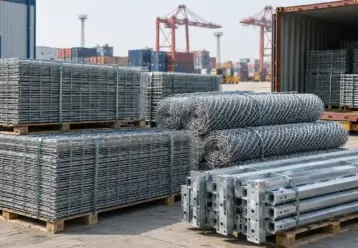
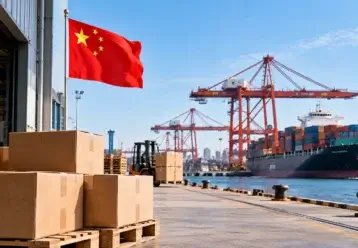
 Sep 18, 2026 33 Minutes ReadChina sourcing is buying goods made in China — straight from a factory, through a trading company, or with an agent handling it for you. Sourcing near me is buying from a supplier in your own country: a local factory, a distributor with stock on the shelf, or a workshop down the road. The difference isn’t really price. China sourcing usually gets you a lower unit price and far more say in how the thing gets made. What you take on in return is freight, duty, an 8–14 week wait on your first order, a minimum order quantity, and the job of checking quality before the goods leave. Sourcing near you costs more per unit, and you get it in days, you can order five, and you can drive over there if something goes wrong. The numbers below are the ranges we see in this industry. They’re not quotes and not a price list — use them to check whether a quote makes sense. Duty rates and freight move around; get the live figures from your forwarder and a licensed customs broker before you send any money. Goods staged at a Chinese port warehouse before loading — the starting point...
- Sep 18, 2026 27 Minutes ReadChina sourcing models in 2026 Most China sourcing setups in 2026 fall into five groups: factory direct, sourcing agents, trading companies, local procurement teams, or a mix of these. Direct sourcing gives you the clearest view of factory pricing. For budgeting, agent fees are often modeled at around 3%–10%, while buyers may use a 5%–20%+ trader markup when running cost scenarios. The right choice comes down to order size, product complexity, risk, supplier count, and how much work your own team can handle. China is still a huge part of global trade. WTO data show that the country exported about US$3.77 trillion of merchandise in 2025. Over the previous three years, China accounted for roughly 14.4% of global merchandise exports by value.[1] But buying from China is not just about finding a low factory quote anymore. Tariffs, compliance, traceability, quality problems, launch deadlines, and supplier coordination can easily add more cost than a small difference in unit price. The cost figures below are working ranges for budgeting, not official industry averages. Real fees can move quite a bit depending on the product, order size, supplier location, and how much support you need. The five China sourcing models buyers actually use...
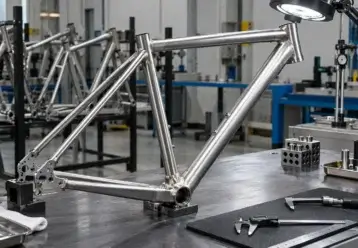
- Sep 16, 2026 33 Minutes ReadBicycle frame pre-shipment inspection Before shipment, compare bicycle frames with the latest approved drawing and production sample. Check cracks and structural damage first. Then measure the geometry and assembly points that matter, including the headset, bottom bracket and rear axle. Hold the shipment if a structural issue is still open, a critical dimension is outside tolerance, or an approved component cannot be fitted normally. Record the actual measurements and defects. A simple “workmanship passed” note is not enough. A frame can look clean and still create trouble on the assembly line. The rear triangle might be slightly out of line. A bearing seat can be too small. Paint may have filled part of a thread. Catch that at the factory and it may take a few minutes to fix. Find it after 1,000 frames reach an overseas warehouse and you have a sorting job. When sourcing bicycle frames and components, agree on the inspection method before production starts. Any numerical example below that is not tied to a cited standard should be treated as an example only. The approved drawing and QC plan always take priority. Inspect against the current drawing Put the drawing revision directly on the inspection sheet....
-
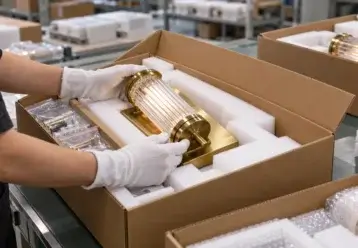
Sep 11, 2026 41 Minutes ReadI still remember the supplier’s reply because it sounded so reassuring. We were following an order of custom bedside lamps for a hotel project. The deposit had been paid, the approved sample was signed, and production was well underway. When the time came to arrange the pre-shipment inspection, the supplier sent photographs of several rows of sealed cartons instead.In a way,it is how the supplier refuses third party inspection.Politely, and without being too contradictory. “No need to spend this money,” the sales manager wrote. “Our QC has checked everything. We have never had a quality complaint.” Nothing in the message sounded confrontational. The supplier even appeared to be helping the buyer save money. Yet after two more requests, we still had no inspection date. That is often how a supplier refuses third-party inspection. There may be no clear refusal at first. The supplier changes the subject, sends more photographs, refers to its internal QC team or promises that the goods will be ready “very soon.” Each answer sounds reasonable on its own, but none gives the inspector access to the order. Sometimes this reluctance hides nothing more than a production delay or poor coordination supplier-side. But it can also be...
- Sep 10, 2026 45 Minutes ReadA golden sample is the final physical sample that a buyer approves as the benchmark for mass production. It gives the factory, buyer and inspector a real product to place beside production units. This makes details such as color shade, gloss, texture, fit, stitching, print quality and packaging presentation easier to compare. The sample must be clearly identified. Label it “GOLDEN SAMPLE” and add the product name, SKU, revision, approval date and signatures. Anyone handling it should recognize it at a glance and distinguish it from ordinary development samples or units taken from the production batch. The label must also link the sample to the correct specification, drawing, bill of materials, artwork, test method and purchase order. A tamper-evident seal is an additional control, not a condition that makes the sample valid. It is useful when the factory copy will pass through several departments or remain at the supplier for repeat orders. It helps show whether someone has replaced, repainted, repaired or altered the approved unit. Clear identification and written approval are essential. Sealing is recommended when it adds useful protection and can be applied without damaging the product. Case file: “black coating” was not precise enough A buyer...
- Sep 09, 2026 91 Minutes ReadThe idea to write a guide focusing on sourcing documents came to me a few weeks ago. I was sipping a matcha latte during a pause when I stumbled upon an article about commerce records in ancient Greece. I could not tell whether every historical conclusion was equally well researched, but the article piqued my interest. It described how merchants, ships, cargo, customs duties and financial obligations were recorded as trade expanded between people who did not know one another. Anyway, it became clear that listing sourcing documents currently used in 2026 would be a great resource for people involved in international purchasing worldwide. Reading got me thinking about current practices. To this day, I am convinced that sourcing in 2026 involves more paperwork than trade has ever required at any other point in human history. I may be wrong, but I decided to test the idea by listing the documents involved in an international sourcing project. This guide is meant to shed some light on the number and variety of records used in outsourced manufacturing, especially for junior sourcing specialists. It explains what each document is, what it is for, who normally prepares it, what is at stake, and...
- Sep 07, 2026 30 Minutes ReadTake one real lot and trace it in both directions. You should be able to confirm the exact product, find the production and release records behind it, and account for every unit that was received or shipped. If 15,000 units came in, the stock, customer shipments, samples, returns, and disposal records should add back to 15,000. Different production, packaging, or sterilization numbers are fine as long as the records clearly show how they are connected. Record the Product First Start with a unit from the actual shipment. Copy the information from the label rather than relying on a supplier spreadsheet. Field What to Record Manufacturer Legal manufacturer shown on the label Product Exact product name REF/catalog number Manufacturer’s item number Lot/batch Every character exactly as printed Expiry If shown Manufacture date If shown UDI If applicable Pack size Units per pouch, box, or case Sterile status Sterile or nonsterile Supplier Company that shipped the goods PO Your purchase order Quantity Quantity received from this lot Keep the lot number exactly as printed. Do not remove leading zeros, spaces, letters, hyphens, prefixes, or suffixes. For example, 026A107 should not automatically become 26A107. Software sometimes removes a leading zero, but the two...
- Sep 07, 2026 32 Minutes ReadBefore the lighting ships, compare the real production goods with the final approved drawing, sample, BOM, finish, dimensions, voltage, driver, LED board, CCT, dimming setup, mounting parts, safety requirements, and packing. Open selected fixtures, test every function, measure the dimensions that affect installation, and compare lights that will be used together. If you find the wrong part, a safety issue, or the same defect more than once, check how much of the batch may be affected before releasing the shipment. Approved Inspection Pack The inspector should work from the final approved files: shop drawings; golden sample or approved production sample; product specification; bill of materials (BOM); finish sample or finish code; LED and driver specification; CCT and CRI requirements; dimming specification; voltage and frequency; installation drawings; packaging specification; required test and compliance documents. Check the revision number first. If Drawing Rev. A shows a 120 mm backplate but Rev. C was later approved at 135 mm, use 135 mm for inspection. If the latest drawing and approved sample do not match, record the difference and get confirmation before passing that item. These conflicts are easier to find during a pre-production inspection, before the wrong version is used across the full...
- Sep 07, 2026 25 Minutes ReadStart with one approved BOM and make every production run match it. Each item needs a fixed quantity, measurable specification, approved source, shelf-life rule and inspection limit. If 5,000 kits each need 20 bandages, production should account for about 100,000 bandages plus recorded samples or scrap. Any change to the supplier, size, material, formulation or label should be reviewed before it reaches the packing line. Start With the Actual Use Decide who will use the kit, where it will be stored and where it will be sold before choosing the contents. Item Example Market United States User Household Use Minor cuts, scrapes, burns and basic first aid Capacity Family of 2–5 people Storage Home or vehicle Case Portable zip pouch Drug products Yes / No Refillable Yes / No Sales channel Retail / Marketplace / Distributor Required standard If applicable The same content list will not work equally well for every use. Kit Type What Changes Vehicle Storage temperature, adhesives, wipes, medicines and long storage periods matter more. Workplace Quantities need to reflect worker numbers, hazards and how quickly supplies can be replaced. Outdoor Moisture, case strength, weight and storage conditions need more attention. Household Common minor injuries and simple...
- Sep 07, 2026 27 Minutes ReadWhen comparing PIR and PUR sandwich panel suppliers, make sure everyone is quoting the same thing first. Core type, thickness, steel facings, coating, thermal data, fire reports, joints, structural data, factory QC, delivery, packing, and warranty all need to line up. If a supplier cannot meet a required fire, thermal, structural, or compliance condition, there is no point comparing its price with the others. RFQ Data to Send Item What to Specify Application Wall, roof, ceiling, cold room, clean room, warehouse Core PIR or PUR if already fixed Thickness Required thickness or project U-value Outer steel Thickness, grade where required, coating Inner steel Thickness, grade where required, coating Effective width Installed cover width, not only physical width Length Exact project lengths or cutting schedule Joint Concealed, exposed, tongue-and-groove, roof overlap Thermal Required conductivity or U-value Fire Required classification, approval, or test standard Structural Wind, span, roof/wall use, support arrangement Accessories Flashings, screws, washers, sealants, closures Commercial Quantity, destination, Incoterm, delivery date You may see common options such as 50, 75–80, 100, 120–125, 150, or 200 mm cores, effective widths around 1,000–1,200 mm, and steel facings such as 0.40, 0.50, or 0.60 mm. These are only common product examples. They are...







Tag
2024advantages of goods inspectionavoid late deliverybike sample inspectionbuilding materials suppliersbuilding sourcesbuilding suppliesbuilding supplies made in chinabuilding supply wholesalebuy from chinabuy wholesalebuying from china risksbuying wholesalecasegoods vendorschinachina furniture importchina goods inspectionchina manufacturingchina outsourcingchina product inspectionchina shippingchina sourcingchina sourcing tipschina steelchina steel newschina supplier troubleshootingchina supplierschina trade newschina trendschina typhoonchinese manufacturerschinese suppliersconstruction material suppliersconstruction sourcingcontract furniture supplierscontract manufacturingcontruction materials sourcingcost of sold goodscustom bike framecustom casegoodsdisrupted shippingdupro qc checkexport regulationsfactory auditfactory directFF&EFF&E quality checksFF&E sourcing tipsfind suppliersglobal sourcingglobal tradeglobal trade 2023golden samplehospitality sourcinghospitality suppliershow to find hospitality suppliershow to sourceimport building productsimport exportimport-exportimport-export newsimporting building suppliesimporting from china tipsinspection in china turning badinternational buyersmade in chinamade in china hotel suppliesmanufacturingmanufacturing companiesmanufacturing outsourcingmanufacturing products chinamitigating risksoem bicycle frameoffshoring manufacturingoutsourcing costsoutsourcing manufacturingpackaging qualitypractical sourcingpre shipment inspectionpre shipment quality inspectionprocurementproduct developmentproduct development and sourcingproduct inspectionproduct inspection chinaproduct portfolioproduct sampleproduct sourcingproducts chinaprofessionnal sourcing knowledgepurchasing agentpurchasing costsquality assurancequality checkquality controlquality control knowledgequality inspectionquality inspection companyquality made in chinaquality solutions low cost sourcingreduce risks sourcing from chinarisk managementrisks sourcing from chinasample manufacturingshipping from chinasourcingsourcing chinasourcing china benefitssourcing companiessourcing company advantagessourcing costsourcing disruptionssourcing documentssourcing experiencesourcing guidesourcing in chinasourcing infographicssourcing processsourcing profitabilitysourcing specialist knowledgesourcing specialistssourcing steelsourcing storiessourcing strategiessourcing strategysourcing teamsourcing tipssourcing trendssteel exportssupplier evaluationsupply chainsupply chain knowledgetyphoon chanthutyphoon hitting chinaus china importsvalue of sourcing companies


