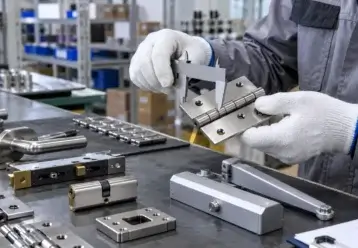
A golden sample is the final physical sample that a buyer approves as the benchmark for mass production. It gives the factory, buyer and inspector a real product to place beside production units. This makes details such as color shade, gloss, texture, fit, stitching, print quality and packaging presentation easier to compare.
The sample must be clearly identified. Label it “GOLDEN SAMPLE” and add the product name, SKU, revision, approval date and signatures. Anyone handling it should recognize it at a glance and distinguish it from ordinary development samples or units taken from the production batch. The label must also link the sample to the correct specification, drawing, bill of materials, artwork, test method and purchase order.
A tamper-evident seal is an additional control, not a condition that makes the sample valid. It is useful when the factory copy will pass through several departments or remain at the supplier for repeat orders. It helps show whether someone has replaced, repainted, repaired or altered the approved unit. Clear identification and written approval are essential. Sealing is recommended when it adds useful protection and can be applied without damaging the product.
Case file: “black coating” was not precise enough
A buyer approved a desk lamp with a textured, matte-black coating. The proforma invoice only stated “black powder coating.” When JS Sourcing inspected the coated metal parts before assembly, the production finish was smooth and glossy. JS Sourcing requested rework, but the coating workshop replied that the parts met the wording on the order. The client’s approval existed in emails and photographs, but no signed physical sample was available on the workshop floor. The team then had to reopen old messages and explain a visual requirement that should have been obvious from a direct comparison. Time was lost because the paperwork and the approved appearance did not point to one controlled benchmark.
This article explains how to prevent that situation. It covers what a golden sample controls, when sealing is useful, how the factory should use the sample, and what a sourcing professional should do when production does not match it.
What Makes a Sample “Golden”?
“Golden” sets the approval status, nothing else. A skillfully handmade hotel pendant does not become the production benchmark just because the factory is proud of its work. The buyer needs to sign off that exact unit. The factory must then agree to use it as the benchmark for the upcoming production.
The golden sample sets the approved result for characteristics that people can compare directly. These may include finish, shape, key dimensions, parts, fit and customer experience. For a hotel sofa, for example, the approved sample establishes the expected seat feel, back support, fabric hand and overall appearance. The specification must still record measurable requirements such as foam density, fabric composition, dimensions and test criteria.
Factories and buyers may also say approved sample, master sample, seal sample, gold seal sample or reference sample. The words vary by supplier and industry. The important point is that everyone can identify the same approved unit and the document revisions that apply to it.
| Sample stage | Main purpose | Golden sample status |
|---|---|---|
| Stock sample | Shows the supplier’s general workmanship or an existing product. | Usually unsuitable because materials or details may differ. |
| Prototype | Tests the design, shape, mechanism or user experience. | Not yet. Changes are still expected. |
| Pre-production sample | Shows the planned production configuration before bulk work. | Can become the golden sample after documented approval. |
| First production unit | Confirms the result produced with bulk materials, production tooling and normal line conditions. | Can confirm the earlier approval. It only replaces it if the buyer formally approves a new golden sample. |
| Shipment sample | Records what the factory actually produced. | No. It is evidence from the finished order. |
During product sourcing in China, stock samples can help a buyer compare suppliers. They should not be treated as the final production approval unless the factory will supply that exact configuration. During product development in China, the same distinction prevents the factory from treating an early prototype as the final approval. For a complex or high-value order, a pre-production inspection can then verify that the factory has the approved materials, tooling and document revisions before cutting, coating, printing or assembly begins.
A pre-production sample describes timing. A golden sample describes approval. One unit can be both, but only after the buyer approves that exact version for production.
The Sample, Specification and Inspection Must Work Together
A practical approval system has three parts. The physical sample shows the approved appearance, fit and feel. The controlled documents define measurable requirements, hidden materials and test conditions. The inspection plan states what the inspector will check, how many units will be sampled and who decides when a difference has no written tolerance.

| Control area | What the golden sample can show | What must remain written |
|---|---|---|
| Color and finish | Visual direction, texture, gloss and surface feel. | Color code or master, tolerance, lighting and viewing method. |
| Dimensions | General size, proportion, fit and assembly. | Measurement points, units, tolerances and the required measuring tool. |
| Materials | Visible fabric, hardware, coating and accessible construction. | Grade, composition, brand, supplier code, BOM and approved substitutions. |
| Function | Expected movement, operation and user feel. | Test load, duration, environment, equipment and pass/fail criteria. |
| Branding | Logo position, print appearance and label placement. | Vector artwork, print method, color data and legal markings. |
| Packaging | Presentation, inserts, accessories and pack-out order. | Dielines, board grade, carton size, barcode data and transit-test requirement. |
Color shows why the sample and written specification must work together. A buyer may approve the product shape on the physical sample and approve its color shade against a corresponding Pantone reference. The Pantone color systems provide a shared language for identifying that color.
During inspection, daylight, factory lighting and camera settings can all make the shade look different. Placing a production unit beside the golden sample under the same light gives the inspector an immediate side-by-side comparison. The Pantone reference and agreed tolerance remain in the specification. The NIST guidance on color and appearance explains why light, material and viewing conditions affect what people see.
Gloss also needs a defined method when the difference matters commercially. A value such as “8–12 GU” is incomplete unless the specification identifies the measuring angle, instrument and surface. ASTM D523, for example, covers specular-gloss measurements at 20°, 60° and 85° for nonmetallic surfaces. The applicable method still needs to suit the product and coating.
Dimensions need the same discipline. “Width: 420 mm” is unclear if the drawing does not show where the measurement starts and ends. Record the unit, measurement points, tolerance and tool. The BIPM describes the International System of Units, while ISO 10012:2026 addresses measurement management systems. Neither source defines the acceptable dimensions of the buyer’s product. The buyer and technical team must do that.
A sample and a specification can contradict each other. State the rule before production starts. For example: “Dimensions, materials, safety requirements and test limits follow the latest approved specification and drawing. The golden sample controls visual and tactile characteristics unless a written requirement states otherwise.” This prevents the factory from choosing whichever version is easier to meet.
How to Approve a Reproducible Golden Sample
A development sample may look better than normal production. The sample maker may spend hours correcting its surface by hand. A temporary material may be used because the bulk material has not arrived. One packaging sample may be digitally printed even though production cartons will use offset printing. These methods are acceptable while the product is still being developed. Before approval, the buyer needs to know which details the factory can reproduce under normal production conditions.
- Finish the intended configuration. Confirm the material, components, finish, dimensions, artwork, accessories, labels, packaging and destination-market requirements.
- Ask how the sample was made. Confirm the material source, tooling, printing method, production equipment, assembly method and any hand-finishing. Ask the factory which steps will change during mass production.
- Compare it point by point. Measure the critical dimensions and record the test results. “Sample OK” is not enough because it does not show what was checked.
- Record every known difference. If bulk production will use a different material or process, state the difference, why it is necessary and what result production must achieve.
- Confirm relevant testing. Buyer approval does not prove chemical, electrical, mechanical or regulatory compliance.
- Assign the sample ID and document revisions. Put the same sample ID on the physical unit, approval form, purchase order and inspection instruction. List the applicable specification, drawing, BOM and artwork revisions.
- Release production in writing. Confirm that the factory may not change a material, component, process, package or subcontractor without written approval.
- Check the first production output. Compare the first units made with bulk materials and normal equipment against the golden sample. This is the best time to correct a wrong finish, shape or assembly method.
If laboratory testing is required, the tested unit must represent the product that the factory will manufacture. Record its sample ID, materials and component versions. ISO/IEC 17025 sets competence requirements for testing and calibration laboratories. Buyers can also use the ILAC signatory search to check the relevant accreditation body.
Buyer approval does not prove regulatory compliance. A lamp can match the golden sample and still contain a restricted substance, an unapproved electrical component or the wrong warning label. For EU-bound products, the European Chemicals Agency explains REACH responsibilities, while the European Commission provides official information about the General Product Safety Regulation and CE marking. Our guide to compliance in Chinese procurement and manufacturing explains how this evidence fits into a sourcing project.
The ISO conformity-assessment toolbox explains how testing, inspection, certification and supplier declarations serve different purposes. For electrical products, the IEC Conformity Assessment Systems provide international schemes for electrotechnical equipment and components. Buyers selling consumer products in the United States can use the CPSC Business Guidance Library to identify relevant federal safety guidance. These sources help determine the required evidence. The golden sample remains a production benchmark, not a compliance certificate.
Practical approval wording
We approve sample GS-DL2407-V4 as the visual benchmark for the textured matte-black finish, product shape, assembly, logo position and packaging presentation. Production must also comply with Specification Rev. 5, Drawing Rev. C, BOM Rev. 4 and Artwork Rev. 3. The black coating must visually match this sample. Where measured, the 60° gloss requirement is 8–12 GU. No material, coating, component, subcontractor or process may change without our written approval. Please label and sign the factory copy, send photographs of the completed label, and compare the first five production units before continuing the run. If a numbered tamper seal is used, include its number in the approval record.
When and How to Use a Sealed Sample
A sealed sample is a golden sample with an added form of tamper evidence. The seal helps show whether the approved unit has been opened, altered or exchanged after approval. It does not mean that every golden sample must be locked inside a box.
Sealing is valuable when the sample will remain at the factory, move between departments or be reused for several orders. A numbered tamper label, signed tape across a closure, or signatures and a company chop across the sample label can provide this control. For a large sofa, hotel pendant or assembled machine, sealing the whole product may add little value. The parties can instead secure the identification label and separately seal approved material swatches, finish panels or critical removable parts.
The aim is traceability, not ceremony. An inspector should be able to answer three questions quickly: Is this the unit the buyer approved? Has it been changed since approval? Which purchase order and document revisions does it control?

What to put on the sealed sample label
- Buyer and supplier names
- Product name, model and SKU
- Unique golden sample ID and revision
- Purchase order or project number
- Approval date and approver names
- Specification, drawing, BOM and artwork revisions
- Seal or tamper-label number, if one is used
- Accepted exceptions or a link to the approval record
- Current holder, storage location and planned review date
For a portable product, ask the factory to make at least two approval units from the same development batch. The factory copy supports production and internal QC. The buyer or China-side team keeps the second copy. A third unit is useful when an independent inspector or laboratory needs direct access to the physical benchmark.
Two complete units are not always economical. A custom hotel sofa, large light fitting or machine may be too costly to duplicate and store. In that case, keep the approved product at the factory and retain signed finish panels, fabric swatches, component samples, measured records and detailed photographs with the buyer. State clearly which evidence controls each characteristic.
Do not assume that separately made approval units are identical. Compare their critical dimensions, finish, parts and function before distributing them. Photograph every side, the label, any seal, the accessories and the packaging. These photographs help confirm identity and condition. They cannot reproduce color, texture or feel reliably enough to replace the physical sample.
Identification and signatures make the unit a controlled golden sample. A tamper-evident seal adds protection when substitution or alteration is a realistic concern. Neither control proves that hidden materials, performance or the complete production batch comply.
How the Factory Should Use the Golden Sample
A signed sample kept in the general manager’s office will not control a production line. The production manager, workshop supervisor, internal QC team and external inspector need access when they approve materials, set up the line or inspect finished units. The factory copy should therefore have a named storage location and a simple checkout record if it is moved between departments.
| Production point | How the sample is used | Supporting evidence |
|---|---|---|
| Pre-production meeting | Review appearance, construction, packaging and accepted exceptions. | Current specification, BOM, drawings and change log. |
| Incoming quality control | Compare the appearance and identity of incoming materials, hardware and components. | Material grade, supplier code, batch details, dimensions and certificates. |
| Line setup and first piece | Confirm fit, finish, assembly and basic function. | Work instruction, process settings, measurements and test results. |
| In-process QC | Check repeated workmanship and appearance during the run. | Control plan, defect criteria and inspection records. |
| Final inspection | Compare randomly selected finished units against approved characteristics. | Sampling plan, checklist, PO, packaging files and test instructions. |
| Warehouse and pack-out | Confirm accessories, labels and presentation. | Pack-out standard, barcode data, carton marks and quantities. |
A during-production inspection can find a wrong finish, material or assembly method before the full batch is completed. A pre-shipment inspection in China checks finished and packed goods before the buyer releases the shipment. Broader quality inspection services may combine comparison against the golden sample with quantity, workmanship, function, measurement, packaging and labeling checks. Our guide to quality control in a China sourcing strategy shows where these checks fit across the order.
The golden sample does not determine how many units an inspector selects. It also does not set the allowed number of defects. Those decisions belong in the sampling plan and defect classification. ISO 2859-1:2026 defines acceptance-sampling plans for inspection by attributes. The NIST acceptance-sampling handbook explains that this type of sampling supports a decision about the lot. It does not calculate the exact percentage of defective units in the shipment.
Before booking, send the golden sample ID, photographs, storage location, document revisions, accepted exceptions and comparison conditions. Include the seal number if a seal is used. Confirm that the factory copy will be available on the inspection date. If it will not, state which characteristics the inspector can still verify from written specifications and which visual checks must be reported as not verifiable.
Natural Materials Need Limits, Not One Perfect Sample
Wood grain, natural leather, stone, hand-applied glaze and some textile dye lots will vary. One sample shows one point inside the possible range. It cannot show the complete acceptable range.
Use limit samples or a controlled range when natural variation matters. A light and dark leather sample can show the acceptable shade boundaries. Marked photographs can show the size and frequency of acceptable knots in wood. A defect board can separate acceptable hand-finishing marks from workmanship defects. Written criteria should state what may vary, by how much, and which characteristics must remain consistent.
This distinction matters in industry-specific sourcing. A custom hotel furniture package may accept natural variation in veneer grain and shade. It may not accept bedside tables that look noticeably different when placed in the same guest room. This is one way sample control connects with hospitality FF&E sourcing. Building products may need separate light and dark limits for each batch, together with written controls for thickness and surface finish. These controls also matter in factory-direct building-material sourcing.
Packaging Is Part of the Approval
A product can match the approved sample and still arrive damaged, carry the wrong barcode or miss an accessory. The approval therefore needs to cover the unit packaging, inserts, protective materials, retail presentation and shipping carton used for the order.
The approved pack-out shows where the product, accessories and protective materials belong. The packaging specification should separately record carton dimensions, board or material grade, pack quantity, gross and net weight, carton-closing method, shipping marks and barcode data. GS1 barcode standards provide the global identification framework, but the buyer must still supply and verify the data assigned to the product.
For fragile, heavy or high-value products, packaging appearance is not enough. The test method should reflect the product, carton and distribution route. The International Safe Transit Association lists packaging test procedures ranging from basic screening to general simulation. These tests assess risks such as vibration, impact and compression that cannot be judged from a golden sample sitting on a table.
What to Do When Production Does Not Match
Do not begin by arguing about whether the factory “followed the sample.” Put the golden sample and a production unit side by side. Then establish what differs, how many units may be affected, and whether the sample or a written requirement controls that characteristic.

- Stop the affected process or isolate the goods. Do not allow questionable parts to move into assembly, packing or shipment while the difference is being reviewed.
- Verify the approved benchmark. Check the golden sample ID, condition, signatures and linked document revisions. If it has a seal, confirm that the number matches the approval record and that the seal is intact.
- Compare under the same conditions. Place the sample and production unit under the same light. Use the measurement points, equipment and test method stated in the inspection instruction.
- Find where the difference started. Check the material batch, component source, tooling, process settings, production line, subcontractor and any rework already completed.
- Identify the affected quantity. Separate units confirmed to be different from units that are only suspected. Record the production dates, batches or carton numbers involved.
- Apply the approved limit. Use the written tolerance, defect classification or accepted exception. If no limit exists, show the buyer the side-by-side evidence and ask for a decision.
- Decide what happens to the goods. The options may include rework, sorting, replacement, retesting, written acceptance of the difference, or rejection. The inspector supplies the evidence. The buyer makes the commercial decision unless the purchase terms already define it.
- Prevent the same mistake. Correct the specification, work instruction, approval record or inspection plan before production restarts.
A useful quality inspection report should place the approved requirement beside the actual result. It should show the checked quantity, photographs, measurements, tests, defect count and anything the inspector could not verify. If no tolerance was agreed, the report should say so instead of inventing a pass or fail result.
How the desk-lamp issue should be controlled
After the coating dispute, the client signs a finished lamp labelled GS-DL2407-V4. The factory signs the same label and keeps the sample beside its coating approval records. The specification is revised to state “textured matte black,” identify the approved powder, and add a measurable gloss range. On the next order, the inspector places a coated production part beside the golden sample before assembly. If the part is smooth or glossy, both sides can see the difference immediately. The workshop can recoat the parts without reopening weeks of messages or debating what “black coating” was supposed to mean.
When a Golden Sample Must Be Replaced
Before every repeat order, confirm that the factory still has the correct sample and that its condition has not changed. Approve a new version whenever a product or process change can affect appearance, construction, performance, compliance, inspection or packaging.
- A material, component, coating, adhesive, battery, fabric or colorant changes.
- The factory changes a sub-supplier, subcontractor, production site or line.
- A mold, die, jig, fixture, pattern, program or process changes.
- Dimensions, tolerances, firmware, labels, warnings, artwork or packaging change.
- A complaint, failure or corrective action changes the product.
- The retained sample fades, oxidizes, compresses, warps, contaminates or deteriorates.
- A long production gap makes the old material or process unrepresentative.
Give the replacement a new ID and update every document that referred to the old one. Mark old copies “SUPERSEDED: DO NOT USE FOR PRODUCTION OR INSPECTION,” then remove them from the workshop and QC area. This is particularly important when sourcing repeat orders from China. The product name may remain unchanged even though the next batch uses a new material lot, operator, sub-supplier or package.
A golden sample remains valid only while the product configuration and the physical sample remain controlled. Reorders need confirmation, not assumption.
Golden Sample Approval Checklist
- The approved unit uses the intended production materials, components and methods.
- All open sample comments have been closed or recorded as accepted exceptions.
- Critical dimensions and test results have been recorded against written limits.
- Required compliance evidence applies to the approved configuration.
- Product, accessories, labels, retail packaging and shipping packaging are included.
- The sample has a unique ID, approval date and linked PO/project number.
- Specification, drawing, BOM, artwork and packaging revisions are listed.
- If factory and buyer copies are used, their critical characteristics have been compared before distribution.
- The sample is clearly labelled “GOLDEN SAMPLE” and signed by the buyer and factory.
- If a tamper-evident seal is used, its number and condition are recorded.
- Photographs record the complete sample, details, label, any seal and accepted differences.
- The factory has accepted the no-substitution and change-notification rules.
- Production QC knows where the sample is and how to use it.
- The inspector has the baseline, checklist, sampling plan and escalation rules.
- The storage location and conditions are recorded, together with the changes that require a new approval.
For projects that need local coordination, JS Sourcing’s China inspection and supplier-audit services can carry the same approved benchmark from pre-production checks through in-process and final inspections. This discipline also protects cost. A lower quotation is not a saving if an undocumented material or finish change leads to rework, claims or returns. Our guide to reducing procurement costs through sourcing control explains that wider relationship.
Frequently Asked Questions
Is a golden sample the same as a sealed sample?
No. A golden sample is the physical production benchmark approved by the buyer and accepted by the factory. A sealed sample is a golden sample with added tamper evidence. Sealing can help protect a factory-held unit, but a clear label, signatures and linked approval documents establish its identity and status.
Can a prototype become the golden sample?
Yes, but only if it represents the final production configuration and the buyer approves that exact version. A hand-built prototype using temporary materials or processes is usually unsuitable.
Is a signed golden sample automatically legally binding?
No. Its contractual effect depends on the contract, applicable law, sample identification and how the purchase order incorporates it. The UNCITRAL CISG resource is a starting point for international-sale context, but product-specific disputes require appropriate legal advice.
Can photographs replace the physical sample?
Not reliably when color, texture, finish, weight, fit or tactile quality matters. Photographs help confirm the sample’s identity and condition, but lighting, camera settings, compression and screens can change its appearance.
Does an approved golden sample replace final inspection?
No. It proves that one unit was accepted. It does not prove that the factory made the complete lot consistently, packed the right quantity, used the approved hidden materials, or met every test and labeling requirement.
How long should a golden sample be kept?
Keep it through production, inspection, delivery and the relevant claim or warranty period. For repeat orders, retain the current version until a controlled replacement is approved. Review materials that fade, oxidize, compress or otherwise age in storage.
Finally
A golden sample gives the buyer, factory and inspector one physical benchmark. Label it clearly, record the approval, and link it to the correct specification, BOM, drawing, artwork, testing and purchase order. The factory must also confirm that normal production can reproduce the approved result.
A tamper-evident seal is useful when it helps protect the factory copy from unnoticed replacement or alteration. It is not compulsory for every product. Written tolerances still control measurable requirements. Testing still provides compliance and performance evidence. Inspection still checks whether the production batch matches the approved benchmark.
The workflow is simple to remember: approve the right unit, label and sign every controlled copy, add a seal when it provides useful protection, connect the sample to the current files, compare the first production output, and issue a new version whenever the product or process changes.