






 Mar 19, 2026 43 Minutes ReadBuilding supply wholesale is global now. This should not come as a surprise to anybody involved in this industry for the last 10 years. Global used to rhyme with modernity, free trade, and many advantages for both buying and selling countries. Today’s reality is not as simple, or positive. The supply chains for construction materials are now intricate, interconnected and operationally complex. Manageming a materials supply chain has become inherently far more difficult. In construction supply, the physical movement of product, the stream of payments, and digitized flux of information (product data, approvals, technical responsibility, etc…) usually don’t follow the same path. On larger or more regulated orders for building materials from China for example, that trend amplifies. It becomes the core condition upon which the feasibility of the import project depends. That is one reason the construction material procurement still resists the tidy supply-chain diagrams that work better in other industries. The World Bank describes the sector as short-term, project-based, and structurally fragmented. A recent UK construction products supply-chain study reaches a similar conclusion from a different angle: the route taken by the product can diverge from the one taken by ownership, payment, and responsibility within the same project....
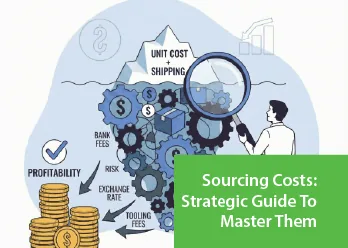
- Feb 02, 2026 9 Minutes ReadI keep fond memories of my first sourcing assignment. It was both difficult and stressful, especially when it came to sourcing costs. During that first project, I understood that the initial quote from a supplier is a bit like the first five minutes of a movie. It gives you the premise, but it certainly doesn’t tell you the whole story. For some time, I was amazed at some buyers who’d like to brag about a low unit price they’d just negotiated. They made it sound like a victory. But I know better now. As I became a seasoned procurement professional, I learned that unit price and COSG (Cost of Sold Goods) are two very different animals. If you want to increase your value as a buyer and protect your company’s bottom line, you need to look beyond the unit price on the invoice. This is why I decided to write about all the sourcing costs that a purchaser has to deal with on a daily basis. I organized this post into 3 sections, from the most obvious sourcing costs to the least obvious. I hope that my take at categorizing costs into: cash, time, and labor; will make sense to...
- Sep 13, 2023 4 Minutes ReadGetting in touch with manufacturers in China is just the first step. We understand your decision to get the products manufactured in China. It’s affordable, and yes, you get a bulk load of the products faster. But how do you control what’s happening in China? You may be getting the products manufactured in China, but to know if it meets the laid down standards should also be your priority. If you get defective products, it will harm your reputation as a business, and of course, you and the manufacturer will waste some precious time too in deciding who is to blame. You need a China inspection company that can handle the quality control aspect. What are the perks of getting a quality control expert onboard? Let’s find out in this quick post. #1 Avoid Any Possible Delays QC delivers the inspection certificates, which means you get the products within a reasonable timeframe. As a business owner, you don’t want delays because customers wait for your products. And going out of stock can harm your business’s reputation. Delays can be costly; thus, get a quality control expert onboard. #2 Quality Assurance The quality control experts check the quality of the products....
- Jul 18, 2023 1 Minutes ReadMany furniture importers have had to face unprecedented disruptions over the last 3 years. Although some may have decided to go back to local sourcing, JS Sourcing and its hospitality clients have taken note of a less stable environment, increase in costs and contraction in hospitality furniture vendor numbers. Today, we have decided to share 6 keys to successfully source international furniture from Chinese vendors in 2023.
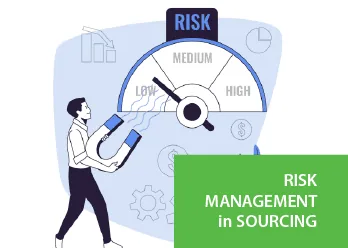
- Jul 11, 2023 6 Minutes ReadOrganizations have difficulties managing their supply chains and reducing possible hazards in today’s linked and dynamic business environment. Sourcing and risk management are two crucial tactics used to overcome these issues, especially when working with a Chinese sourcing company. But it’s necessary to consider and comprehend the intricacies and misunderstandings surrounding these ideas. We may learn important lessons about how businesses might improve their operations and strengthen their competitive advantage by examining the nuances of these practices. The Holistic Approach to Risk Management A complete and integrated strategy is used in the holistic approach to risk management to detect, evaluate, and reduce risks across the whole supply chain. It goes beyond retaliatory actions and emphasizes proactive detection and disruption avoidance. This strategy places a strong emphasis on comprehending how risks are interrelated, creating effective mitigation methods, and assuring business continuity and resilience. Organizations may successfully traverse uncertainties and protect their supply chain operations by considering various risks and implementing measures to handle them. The Strategic Approach to Sourcing A thorough and forward-looking perspective beyond temporary cost-cutting initiatives is a key component of the strategic approach to sourcing. It tries to provide a sustained competitive advantage by coordinating sourcing efforts with...
- Jun 16, 2023 6 Minutes Read3 reasons why China still relevant to outsource manufacturing and participating to world growth in 2023
- Apr 04, 2023 6 Minutes ReadWhen sourcing raw materials or products from a foreign country, there are many challenges that you may encounter. But sourcing agencies are here to make it easy for you. A reliable sourcing agent will take care of the whole process so that you get the best deals and high-quality products. Many China inspection services do a thorough quality check before the products reach you. However, there are also many disadvantages associated with hiring sourcing agents. PROS OF USING A CHINA SOURCING AGENT Vast Network Sourcing agents use their vast network to accommodate you with the best services and products. They have a wide range of connections due to their focus on establishing relationships with the best suppliers and factories in the source country. Knowing that your sourcing agent has chosen your supplier will make you feel confident about your purchase, as they will connect you with only verified and trustworthy manufacturers. Some sourcing agents may also connect you with factories outside China, which will give you a competitive advantage as you can access higher-quality products. You can hire China inspection services to get products of the highest quality. Can Spot Fake Suppliers Sourcing agents know how to detect trustworthy manufacturers from fake...
- Jan 17, 2023 1 Minutes ReadConstruction companies, building supplies wholesalers, home builders and home improvement retailers all rely on purchasing the most competitive building material supply wholesale to boost their business. However, finding the right building supplies manufacturers is easier said than done. JS Sourcing has listed 4 essential tips for construction products professionals when purchasing building materials from China.
- Jun 06, 2021 8 Minutes ReadLet's look into the types of Chinese suppliers and how to select the best Chinese manufacturing Companies for your business. It is the first step to building an efficient and sustainable supply chain in China.
- Jun 04, 2018 9 Minutes ReadIt is now more than ever relevant to hire purchasing agent so as to ensure survival amidst ever increasing manufacturing, logistics & operating costs.
- Oct 10, 2026 26 Minutes ReadIf you’re buying medical gauze from China, compare mesh count, ply, fabric weight (GSM), and absorbency before looking at prices. An 8-ply, 23 GSM pad measuring 10 × 10 cm has a theoretical fabric weight of 1.84 g. A 12-ply pad at 14 GSM weighs just 1.68 g by the same calculation. The finished weight may differ because of folding. You’ll also need to agree on fabric standards, sterility, packaging, and the rules in your destination market. Which Medical Gauze Specifications Matter Most? Asking a factory for a price on “8-ply cotton gauze” isn’t enough. Two suppliers might quote completely different products under that description. When sourcing medical supplies from China, give every factory the same specifications. Include warp and weft thread counts with their units, the number of layers, fabric GSM, finished-pad dimensions, absorbency test methods, and edge construction. Tell the supplier whether the gauze needs to be sterile and where you plan to sell it. Those details determine which tests, documents, and labels may be required. Also, gauze used to cover an external wound isn’t the same as gauze used inside the body during surgery. They have different finished-device requirements. Mesh Count: Is 26 × 18 Better Than...
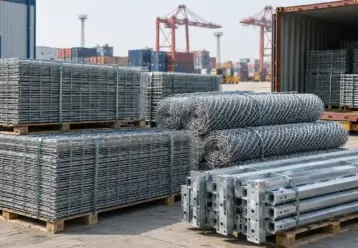
- Sep 30, 2026 48 Minutes ReadLast updated: 30 September 2026. The prices and duty rates below are planning ranges, not offers. Rates move during the year, so ask your broker to confirm the current stack before you sign a PO. Welded wire mesh fencing from China runs US$1.2–3.0 per m² FOB Tianjin. Chain link is US$2–6 per m². A 2.5 × 2.5 m 358 anti-climb panel quotes at US$55–130 FOB. The working minimum is one 40HQ, and that holds 900–1,400 panels. From deposit to vessel, plan on 30–45 days. More than 13,000 companies in Anping County, Hebei work the same wire, and the county’s woven mesh covers over 80% of national output and exports.[1] A standard 2.5 × 2.0 m panel in 4 mm wire, galvanized and powder coated, quotes US$6–14 FOB. At US$9.50 FOB that same panel lands in the United States at US$20–24 once the steel duties stack up. And the coating mass is the number that decides whether it lasts 6 years or 20. Costs: US$1.2–3.0 per m² for a plain welded panel, US$9–21 per m² for 358 anti-climb mesh, US$2–6 per m² for galvanized chain link fabric. Minimums: 300–500 panels per size if you use stock tooling, 800–1,500 for a size...
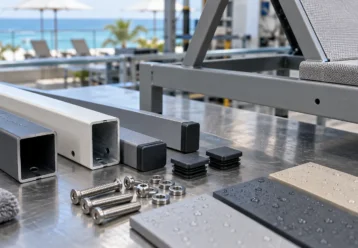
- Sep 30, 2026 57 Minutes ReadLast updated: 30 September 2026. Planning ranges in this guide are for budgeting and specification, not factory quotations. Short answer: six numbers. That’s the whole job. Where your site sits on the chloride scale. The alloy and how thick the tube wall is. Dry film thickness read at the edge, which is where it’s always thinnest. Salt spray hours, run on a coupon from your batch. The fastener grade. And whether water can get back out of the frame. A supplier who can put four of those six on paper has engineered the product. A supplier who answers with “marine grade” and “heavy duty” has written you a brochure. You can tell which one you’re talking to in about five minutes. Take a hotel sitting 50 to 200 m from breaking surf. The six come out roughly like this: Site: ISO 9223 C5. Chloride lands at 300 to 600 mg/m² a day, which works out to 110 to 220 kg of chloride settling on a 1,000 m² terrace over a year.[1] Frame: 6063-T5 or T6 tube at 1.5 to 2.0 mm wall. Drop to 1.0 to 1.2 mm and the tube dents and cracks at the welds inside two seasons....
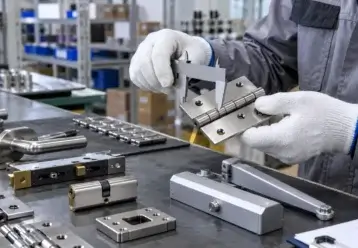
- Sep 28, 2026 42 Minutes ReadLast updated: September 2026. Prices and lead times below are planning ranges for budgeting, not quotations. Architectural hardware is one of those categories China makes both deep and cheap. Hinges alone: the country shipped more than 570,000 tonnes of base-metal hinges in 2024, worth about US$2.3 billion[1]. Locks, closers, exit devices, handles and sliding systems ship on top of that. The supply base sits in a handful of towns with names worth learning: Wenzhou for locks and hinges, Yongkang for doors and zinc parts, Xiaolan in Zhongshan for locks, Jieyang for stainless, Foshan and Ningbo for door control. And here’s something buyers learn fast. Get three quotes for the same hinge drawing inside one cluster and they’ll spread 20–40%. The gap is material grade, plating hours and test evidence. Not geography. Costs: commodity lever handles run US$1.50–6.00 a set, ball-bearing hinge pairs US$0.60–2.00, Grade 1 closers US$12–25, panic bars US$20–60, all FOB planning figures. Standards: EU projects call for EN codes (EN 1935 hinges tested to 200,000 cycles, EN 1154 closers to 500,000). US projects call for ANSI/BHMA grades (a Grade 1 closer survives 2,000,000 cycles). Chinese datasheets print all of these; only some factories hold certificates that survive a...
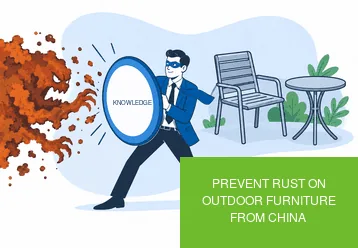
- Sep 25, 2026 41 Minutes ReadA few years ago, a client forwarded us several photographs of café chairs stacked behind a restaurant at the end of the summer season. The chairs still looked good from a distance, but orange marks had appeared below a number of welds and around the feet. The factory had described the finish as “outdoor powder coating,” and at the time that wording had sounded reasonably reassuring. It was only when we traced the problem through the frame material, welds, drainage, and coating process that the weaknesses became visible. Rust prevention rarely depends on one impressive specification. It usually comes from several fairly ordinary decisions that happen to work well together. That is worth remembering when sourcing outdoor furniture from China. Two chairs can look almost identical in a showroom or quotation photograph while having very different prospects after two wet seasons. The following sections share what we believe importers and sourcing specialists should consider before choosing the material, supplier, and quality controls for an order. Contents Why some outdoor furniture rusts after one season Whether another frame material avoids the problem How frame design prevents water traps and rust What protects a steel frame Why capable suppliers still get rust...
- Sep 24, 2026 38 Minutes ReadAlmost everything you buy from China comes out of a handful of small towns. Most product categories are made in fewer than five of them, and plenty are made in just one or two. Electronics come out of Shenzhen and Dongguan, where parts, tooling and assembly lines all sit within an hour’s drive of each other. Lighting comes out of Guzhen. Tiles and toilets come out of Foshan. Small goods and gifts come out of Yiwu, where 70,000-plus booths will happily sell you a single carton. Shoes come out of Jinjiang. Hand tools come out of Yongkang. Ceramics come out of Chaozhou, Liling and Dehua. Get the town right and a sample that used to take three weeks comes back in three days. Your first order drops from a few thousand pieces to a few hundred. Last updated: September 2026. Cost and lead-time figures below are planning ranges, not quotes. How this map was put together: these are the hubs our own team keeps landing in. We screen factories and walk plant floors for clients in furniture, consumer goods, hardware, medical consumables and components. The category-to-cluster links below reflect where suppliers we actually work with run their lines. We cross-checked...
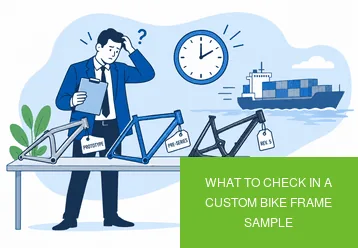
- Sep 24, 2026 35 Minutes ReadTwo years ago, a friend called me one morning to ask whether I could drive him to work. He had found a crack in his bicycle fork and, quite sensibly, did not want to ride another kilometre with it. What I expected to be a one-morning detour turned into a full week of sharing the commute while he waited for the correct replacement fork to be fitted. We joked about our temporary car-sharing arrangement, but the reason behind it was less amusing. His bicycle had looked perfectly normal until he noticed that crack. The tyres were inflated, the brakes worked and the paint still looked clean. Yet one compromised part could have put him in hospital if it failed during a ride. This is also why the appearance of a custom bike frame sample tells us so little on its own. The frame may look well made and still have the wrong geometry, material, alignment or component interfaces. Its tubes, welds, bonds or laminate may also behave differently once exposed to load, impact and repeated cycles. A purchasing professional does not need to replace the engineer, quality inspector or laboratory. The real task is to understand what the sample should...
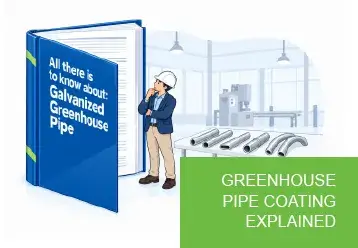
- Sep 22, 2026 26 Minutes ReadLast Sunday, I found myself inspecting the state of the zinc coating on a few tunnel greenhouses. My wife had planned a trip to an eco-farm on the outskirts of Shanghai. The kids were having a great time, but I quickly found it borderline boring. It did not look like the staff was actually working the gardens and growing the vegetables themselves, which suggested a rather obvious lack of knowledge of their own trade. Anyway, I decided to make the trip worthwhile by having a closer look at the frames of the many greenhouse tunnels, and especially at the condition of the greenhouse pipes. What caught my attention was how unevenly the coating had aged. Some straight sections still looked perfectly acceptable, while rust had started to appear around drilled holes, flattened ends and a few heavily formed areas. That is also what makes greenhouse pipe galvanizing slightly deceptive. A tube may leave the galvanizing line in good condition, then still be cut, bent, punched, flattened or welded before delivery. For greenhouse buyers, the useful technical knowledge is therefore quite practical: understand what coating was agreed at order, know which manufacturing operations may affect it, and know what can realistically...
- Sep 18, 2026 33 Minutes ReadIf you buy from China, you will keep seeing the same terms: MOQ, SKU, RFQ, OEM, ODM, PI, PO, T/T, lead time, AQL, EXW, FCA, FOB, DDP, HS code, commercial invoice, packing list, and landed cost. Some affect price. Others affect payment, quality, shipping, or customs. Knowing what they actually mean makes supplier quotes much easier to read. The sourcing terms buyers see most often Term Meaning What it affects RFQ Request for Quotation Supplier pricing SKU Stock Keeping Unit Product variation and inventory tracking MOQ Minimum Order Quantity Order size, inventory and unit cost MOV Minimum Order Value Minimum purchase amount MOP Minimum Order Price Minimum order spend where the supplier uses this term OEM Original Equipment Manufacturer Production to buyer specifications ODM Original Design Manufacturer Supplier-developed products BOM Bill of Materials Components and materials PP Sample Pre-Production Sample Final sample before mass production Golden Sample Approved physical reference Quality benchmark PI Proforma Invoice Proposed order and payment details PO Purchase Order Buyer’s formal order Commercial Invoice Final commercial invoice for shipped goods Customs value and transaction details Packing List Physical packing record Cartons, weights, dimensions and quantities T/T Telegraphic Transfer Bank payment Lead Time Time required for a...
- Sep 18, 2026 27 Minutes ReadA product inspection checks whether manufactured goods match what the buyer ordered before the goods are accepted or shipped. Inspectors usually look at appearance, dimensions, function, quantity, packaging, and labels. For larger orders, they normally inspect a defined sample instead of every single unit. Here is a simple example. A drawing says a part should measure 50.0 ± 0.2 mm. A reading of 50.1 mm is fine. A repeated reading of 50.5 mm is not. Or maybe each carton should contain 24 pieces, but several cartons only have 23. These are clear problems. There is no need to argue about whether the products “look okay.” What is the purpose of product inspection? It checks whether the factory actually made what you ordered. An approved sample may look perfect. Mass production is another story. Once the factory starts making 5,000 or 50,000 units, materials can change, tooling can wear, assembly can drift, printing can move, and the wrong packaging can end up on the line. Say you order 10,000 plastic housings with a 3.0 mm wall thickness. After 2,000 pieces are made, several inspected parts measure only 2.6–2.7 mm. That is early enough for the factory to stop and check the...


Tag
2024advantages of goods inspectionavoid late deliverybike sample inspectionbuilding materials suppliersbuilding sourcesbuilding suppliesbuilding supplies made in chinabuilding supply wholesalebuy from chinabuy wholesalebuying from china risksbuying wholesalecasegoods vendorschinachina furniture importchina goods inspectionchina manufacturingchina outsourcingchina product inspectionchina shippingchina sourcingchina sourcing tipschina steelchina steel newschina supplier troubleshootingchina supplierschina trade newschina trendschina typhoonchinese manufacturerschinese suppliersconstruction material suppliersconstruction sourcingcontract furniture supplierscontract manufacturingcontruction materials sourcingcost of sold goodscustom bike framecustom casegoodsdisrupted shippingdupro qc checkexport regulationsfactory auditfactory directFF&EFF&E quality checksFF&E sourcing tipsfind suppliersglobal sourcingglobal tradeglobal trade 2023golden samplehospitality sourcinghospitality suppliershow to find hospitality suppliershow to sourceimport building productsimport exportimport-exportimport-export newsimporting building suppliesimporting from china tipsinspection in china turning badinternational buyersmade in chinamade in china hotel suppliesmanufacturingmanufacturing companiesmanufacturing outsourcingmanufacturing products chinamitigating risksoem bicycle frameoffshoring manufacturingoutsourcing costsoutsourcing manufacturingpackaging qualitypractical sourcingpre shipment inspectionpre shipment quality inspectionprocurementproduct developmentproduct development and sourcingproduct inspectionproduct inspection chinaproduct portfolioproduct sampleproduct sourcingproducts chinaprofessionnal sourcing knowledgepurchasing agentpurchasing costsquality assurancequality checkquality controlquality control knowledgequality inspectionquality inspection companyquality made in chinaquality solutions low cost sourcingreduce risks sourcing from chinarisk managementrisks sourcing from chinasample manufacturingshipping from chinasourcingsourcing chinasourcing china benefitssourcing companiessourcing company advantagessourcing costsourcing disruptionssourcing documentssourcing experiencesourcing guidesourcing in chinasourcing infographicssourcing processsourcing profitabilitysourcing specialist knowledgesourcing specialistssourcing steelsourcing storiessourcing strategiessourcing strategysourcing teamsourcing tipssourcing trendssteel exportssupplier evaluationsupply chainsupply chain knowledgetyphoon chanthutyphoon hitting chinaus china importsvalue of sourcing companies


