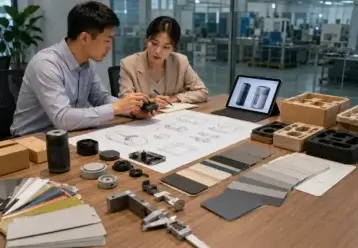
Hotel lighting sourcing covers much more than selecting attractive lamps. The buyer must turn the designer’s intent into fixtures that can be quoted, sampled, manufactured, tested, packed, installed, commissioned, maintained, and reordered. When the products come from China, this also means identifying who controls the engineering and final assembly, locking destination-market requirements, and checking that production still matches the approved sample.
In short: to source hotel lighting from China, begin with the fixture schedule, drawings, room types, controls, brand requirements, budget, approval roles, and project dates. Compare suppliers against the same technical and commercial scope. Then use controlled samples, production checks, packaging identification, installation records, and spare-parts planning to keep the approved fixture consistent from RFQ to hotel handover.
Hotel lighting can include decorative, architectural, task, accent, exterior, emergency, and control-related products for guestrooms, bathrooms, corridors, lobbies, restaurants, meeting rooms, wellness areas, and back-of-house spaces. The exact boundary between the lighting package, FF&E, electrical works, life-safety systems, and the building-controls package must be confirmed for each project. A hospitality lighting design guide, for example, separates hotel lighting by area and by ambient, task, accent, decorative, and controllable layers.[1]
Consider a 120-room hotel with four decorative fixtures in each standard guest room. Before counting corridors, suites, restaurants, or the lobby, the repeated guest-room package already contains 480 fixtures. If one bedside light is used once in every room, one wrong drawing, finish, or driver decision can affect 120 units.
The examples in this guide use a hypothetical project with 120 rooms, six room types, 12 main fixture codes, and three delivery phases. These figures are calculation examples, not industry averages.
The starting brief should also record the hotel brand’s design and maintenance requirements, the room mock-up date, production milestones, phased delivery dates, construction sequence, handover date, and planned opening date. A fixture that arrives after ceilings close or rooms enter final cleaning may be technically correct but still unusable within the project schedule.
Projects that still have only a sketch, reference photograph, or early concept should prepare a clear product development brief before asking for a firm production price. Buyers sourcing guest-room lamps, wall lights, pendants, floor lamps, and custom chandeliers can also review the available hotel lighting sourcing capabilities.
1. What Hotel Lighting Sourcing Includes
The sourcing assignment starts before a manufacturer is contacted. The project team first needs to establish what is being purchased, which documents govern each fixture, who may approve changes, and when samples and deliveries must reach the project. This is what makes the later quotations comparable.
Define Each Hotel Light Fixture
A render or reference photograph shows the appearance, but it rarely contains enough information for manufacturing. It may not show material thickness, the internal frame, mounting holes, driver position, wiring space, glass fixing, cleaning access, or the method used to replace a failed part.
Give every fixture a stable code. One fixture code may appear in at least eight records: the quotation, drawing, sample approval, production list, product label, packing list, room schedule, and handover file. The same code should be used in every record.
| Item | Information to Record |
|---|---|
| Location | Building, floor, room type, room number, or public area |
| Quantity | Total quantity and quantity for each delivery phase |
| Dimensions | Width, height, depth, diameter, projection, and suspension drop |
| Materials | Base metal, glass, fabric, wood, stone, crystal, acrylic, and other visible parts |
| Finish | Base material, finish process, color reference, gloss, texture, and approved sample |
| Light source | Lamp, LED board, replaceable LED module, or custom light engine |
| Driver | Brand, model, output, dimensions, position, and access method |
| Electrical | Voltage, frequency, wiring, grounding, plugs, sockets, and switches |
| Controls | Switching, dimming method, control system, and expected behavior |
| Mounting | Wall, ceiling, recessed, surface, floor, track, or suspended installation |
| Brand requirements | Required appearance, maintenance access, approved components, guest-room standards, and replacement expectations |
| Schedule | Mock-up date, production milestones, delivery phases, installation sequence, handover date, and planned opening date |
| Packaging | Fixture-based, room-based, floor-based, or module-based packaging |
| Delivery | Destination, delivery phase, required sequence, and site-access limits |
| Spares | Complete spare fixtures and individual replacement parts |
Do not leave missing details for each bidder to decide. If the brief says only “brushed brass, warm LED, dimmable,” one supplier may quote plated stainless steel, another may use painted steel, and a third may use solid brass. The prices will not describe the same product.
A useful question log should show the fixture code, missing information, person responsible for answering, due date, effect on price or delivery, final answer, and updated drawing revision.
Match the Document to the Sourcing Stage
An early budget can use controlled assumptions. A production order cannot.
| Stage | Purpose | Minimum Information |
|---|---|---|
| Budget estimate | Set an early cost range | Quantity, approximate size, main materials, finish direction, electrical scope, and listed assumptions |
| Formal quotation | Compare suppliers fairly | Stable fixture codes, quantities, dimensions, materials, components, finish, controls, packaging, and delivery scope |
| Working sample | Test the actual fixture | Construction drawing, real materials, driver, wiring, finish process, mounting, and review criteria |
| Production release | Approve repeat manufacturing | Approved drawing, sample record, component list, tolerances, tests, labels, packaging, and closed comments |
In the 120-room example, a budget may start with 480 guest-room fixtures. The formal quotation must then divide those fixtures by the six room types and 12 fixture codes. Otherwise, suppliers may use different quantities or assume that every room has the same layout.
Set Approval Roles
A hotel project may involve the owner, operator, designer, lighting consultant, electrical consultant, contractor, purchasing team, and supplier. Each party should approve only the decisions within its responsibility.
| Decision | Typical Reviewer | Required Record |
|---|---|---|
| Visible shape and finish | Interior designer or design lead | Approved drawing and signed finish sample |
| Driver and electrical parts | Electrical consultant or technical lead | Approved model and technical information |
| Control behavior | Controls specialist and electrical consultant | Mock-up or system test record |
| Mounting change | Contractor and project engineer | Revised installation drawing |
| Cost-saving change | Purchasing team and affected technical reviewer | Approved change record |
| Delivery sequence | Main contractor or project manager | Updated delivery plan |
One person or team should collect comments and send one approved response to the supplier. If five project members send five separate instructions, the supplier may receive conflicting requirements for the same fixture.
Control Changes
Once a sample, drawing, component, or finish is approved, record the accepted revision and approval date. A later change should not be handled through an informal message.
Each change request should show:
- The affected fixture codes
- The reason for the change
- The old and new requirements
- The effect on appearance, dimensions, function, and installation
- The effect on technical documents and labels
- The effect on price, delivery, and spare parts
- The person who approved the change
- The drawings and records that must be updated
A small unit-price change can become a large project change. A saving of USD 3 per fixture equals USD 1,440 across 480 guest-room fixtures. It is only a real saving if the new option does not remove the approved driver, finish process, mounting parts, packaging, testing, or warranty coverage.
A replacement driver may fit inside the fixture and turn on the LED but still change the wiring, dimming, heat, service access, technical documents, or future spare-parts list. “Equivalent” is not enough without checking these differences.
2. Why Source Hotel Lighting from China?
China offers a deep lighting supply base, particularly around Guzhen and the wider Zhongshan area. Regional sources describe a dense cluster of lighting manufacturers, component suppliers, showrooms, and specialist workshops.[2] This gives importers access to metalwork, glass, crystal, ceramics, stone, shades, LED modules, drivers, surface finishing, final assembly, and export packaging within one manufacturing region.
The advantage is choice. Existing components and specialist processes can reduce development cost, support custom finishes, and make it possible to divide a hotel package between repeated guest-room fixtures and engineered public-area pieces. China is less advantageous when the project is too small to absorb sampling, testing, inspection, freight, and replacement logistics, or when the buyer cannot freeze decisions before production.
The same cluster density creates a limitation. A seller may be a vertically integrated factory, an assembler, a trading company, a showroom, an engineering specialist, or a coordinator using several workshops. None of these structures is automatically good or bad. The buyer needs to know which party controls drawings, components, outsourced processes, testing, final assembly, correction, and warranty.
JS Sourcing practice note: We treat the supplier’s business structure as a responsibility question. A specialist subcontractor can add real value. What matters is whether the lead supplier discloses the relevant production chain, controls changes, and remains responsible for the finished fixture.
Divide the Hotel Lighting Package
A hotel lighting package may include repeated guest-room lamps, architectural lights, exterior fixtures, emergency products, restaurant pendants, ballroom fixtures, and large custom chandeliers. One supplier may not be equally suitable for every category.
One coordinator can simplify finish matching, drawing control, shipment consolidation, room-based packaging, and warranty communication. Specialist suppliers may provide better engineering or production control for individual product groups.
Use these questions when dividing the package:
- Is the product repeated across many rooms?
- Does it need special engineering, suspension, or assembly?
- Does it depend heavily on a building control system?
- Does it follow a different testing or documentation route?
- Will products from several factories need to be packed and delivered together?
In the example project, eight of the 12 fixture codes could cover repeated guest-room products, while four codes cover the lobby, restaurant, and other public areas. The room fixtures may suit a production-focused supplier, while the public-area chandelier may need an engineering specialist.
Projects that combine several factories, workshops, components, and shipping points may need a managed contract manufacturing setup. Projects that mainly need a suitable factory shortlist and comparable quotations may use a narrower product sourcing service.
3. Find and Evaluate Hotel Lighting Suppliers in China
A supplier search should begin with the package structure, not a generic list of hotel lighting manufacturers. Repeated bedside lights, bathroom fixtures, architectural downlights, exterior products, and a custom lobby chandelier may require different production and compliance capabilities.
| Supplier Structure | Possible Strength | Point to Verify |
|---|---|---|
| Production-focused manufacturer | Repeatability and cost control for a defined product family | Which key processes, finishes, and electrical parts are outsourced |
| Assembler or workshop network | Access to several materials and specialist processes | Who owns engineering, incoming control, final testing, and correction |
| Trading company or showroom | Broad product range and convenient package coordination | Traceability to the actual producer and control of later repeat orders |
| Engineering or custom-lighting specialist | Shop drawings, structural coordination, modular design, and installation information | Whether it also controls production, certification, packing, and site corrections |
| Sourcing or project coordinator | Multi-supplier comparison, consolidation, inspections, and one reporting channel | Scope, fees, decision authority, technical competence, and accountability |
Online listings, trade-show booths, hotel logos, certificates, and fast quotations are useful starting points. They are not approval evidence. Shortlisting should be based on comparable drawings and samples, production responsibility, relevant destination experience, quality records, commercial terms, achievable lead time, and the supplier’s response when a specification is incomplete or contradictory.
Check Who Controls the Finished Fixture
The word “factory” does not show who controls the finished fixture. A wall light may involve at least five separate work areas: metalwork, glass, finishing, electrical components, and final assembly.
Identify who controls:
- Drawings and engineering changes
- Molds, jigs, dies, and other tooling
- Metal, glass, shades, and decorative parts
- Surface finishing
- LEDs, drivers, wiring, and assembly
- Testing and product labels
- Packaging and shipping
- Warranty and replacement production
The supplier’s explanation should match the quotation, contract, drawing title block, product label, test record, packing list, and warranty document.
Subcontracting is not automatically a problem. The problem begins when subcontractors make changes without approval or when no single company accepts responsibility for the finished fixture.
Check Relevant Hotel Project Experience
A project photograph does not prove that a supplier designed, manufactured, tested, packed, or supported the shown fixtures. Ask what the supplier actually did.
| Evidence | Value |
|---|---|
| Hotel logos, catalog pages, and finished photographs | Show familiarity with a project but do not confirm the supplier’s role |
| Production photographs, sample images, quantities, and packing records | Show some involvement but may not prove full responsibility |
| Approved drawings, sample records, defect corrections, replacement orders, and confirmed references | Provide stronger evidence of comparable work |
For repeated room fixtures, look for evidence of batch consistency, mounting accuracy, room packaging, missing-part control, and later replacement orders.
For large public-area fixtures, look for experience with structural frames, suspension, modular assembly, numbered parts, several crates, and installation instructions.
For technically controlled products, check whether the supplier has worked with the same destination voltage, control protocol, documentation route, certification route, and destination market.
Previous experience reduces uncertainty but does not replace a project-specific sample when the design, finish, driver, control system, or installation method is different.
Adjust the Sourcing Method to the Hotel Tier
There is no universal customs or technical definition of a three-star lamp or a five-star lamp. Hotel classification systems set functional and service expectations, but they do not create a separate manufacturing standard for each star level. The Hotelstars Union criteria, for example, include functional provisions such as adequate room lighting, bedside reading lights, and wash-basin lighting within a wider hotel classification framework.[3]
The practical sourcing difference is usually the complexity of the package and the cost of inconsistency. A standardized three-star project often benefits from fewer fixture codes, proven components, durable finishes, simple controls, quick installation, and locally replaceable parts. A five-star project is more likely to require additional lighting layers, tighter finish matching, custom public-area fixtures, more control scenes, stronger mock-up review, and detailed commissioning.
Safety, maintainability, and document control do not become optional in a lower-tier hotel. Likewise, a five-star label does not justify complexity that the hotel cannot commission or maintain. The supplier shortlist should follow the actual brand standard, design, operating model, and project budget.
4. Compare Hotel Lighting Quotations and Approve Samples
Once the shortlist is credible, the main risk is comparing offers that look similar but describe different products. The RFQ, clarification log, quotation comparison, sample record, and final purchase order should therefore use the same fixture codes and revision references.
Compare Quotations on the Same Scope
Do not compare only unit prices. First confirm that every supplier has priced the same fixture, components, services, and responsibilities.
| Comparison Item | Supplier A | Supplier B | Supplier C |
|---|---|---|---|
| Base material and thickness | |||
| Finish process and reference sample | |||
| Glass, shade, or decorative parts | |||
| LED or lamp | |||
| Driver and control method | |||
| Drawings and sample rounds | |||
| Testing and labels | |||
| Packaging and spare parts | |||
| Freight and site support | |||
| Warranty and exclusions | |||
| Change conditions and revision charges |
Change conditions should explain how quantity changes, drawing revisions, extra sample rounds, tooling changes, component discontinuation, and late delivery changes affect price and schedule.
Suppose Supplier A is USD 3 cheaper per fixture but excludes room labels and mounting kits. Across 480 fixtures, the quoted saving is USD 1,440. If the contractor must sort cartons, identify rooms, and buy missing hardware on site, the lower unit price may not reduce the final project cost.
Include the cost of tooling, samples, site sorting, missing-part replacement, rework, small repeat orders, replacement development, and warranty administration.
Tooling terms should state who pays for the molds, jigs, or dies, who owns them, where they are stored, and whether they remain available for replacement orders.
Control the Specific Risks of Custom Hotel Lighting
Custom hotel lighting combines product development with construction coordination. A reference image or designer’s sketch must become a shop drawing, material and component schedule, finish standard, electrical configuration, mounting design, packaging plan, and installation sequence. The more original the fixture, the less useful a supplier’s similar-looking catalog certificate or earlier sample becomes.
For a large chandelier, confirm the structural frame, total and module weights, suspension points, ceiling interface, lifting method, maximum crate dimensions, route through the building, numbering system, assembly sequence, and installer responsibility. For repeated guest-room lamps, focus on finish consistency, switch position, shade alignment, driver access, wall-plate fit, cable or plug specification, and the availability of repeat parts.
Custom changes can also affect compliance. A different driver, internal wire, canopy, mounting method, wet-location construction, or manufacturing site may fall outside the configuration covered by an existing report or listing. The compliance route should be checked against the final ordered construction and destination, not the first catalog model shown during quotation.
JS Sourcing practice note: Sample approval is not one general “looks good” decision. We link the accepted fixture code and drawing revision to the material, finish, LED or lamp, driver, wiring, mounting, reviewer, date, comments, and approval result. That record becomes the production reference.
Check Safety and Destination-Market Documents
A certificate or test report should match the actual ordered fixture, not merely a product with a similar name.
IEC 60598-1:2024 sets general safety requirements and tests for luminaires operating at supply voltages up to 1,000 V. The project must still identify the requirements that apply to the actual fixture type, construction, destination, and installation.[4]
Check whether the documents match:
- The ordered model and dimensions
- The destination voltage and frequency
- The actual driver, LED, lamp holder, and wiring
- The materials and internal construction
- The mounting method and intended location
- The manufacturer named on the product
- The final label
For electrical equipment covered by the EU Low Voltage Directive, manufacturers must prepare technical documentation, complete the required conformity assessment, issue an EU declaration of conformity, and keep series production consistent with the documented design. Product changes must be taken into account.[5]
A standard catalog fixture and a heavily customized hotel fixture should not automatically be treated as the same configuration. A change to the driver, wiring, dimensions, mounting, or internal structure may require another review.
Supplier documents are useful inputs, but the project should use the qualified electrical, engineering, or local compliance professional responsible for the destination and installed product.
Check Drivers, Light Quality, and Controls
A driver supplies power to an LED and affects how it switches or dims. A replacement driver may turn the light on but still change low-level dimming, wiring, heat, physical fit, or communication with the hotel system.
Confirm:
- Whether the fixture switches only or also dims
- The required dimming or control method
- The exact driver model
- The driver position and replacement access
- The expected behavior at low brightness
- Whether repeated fixtures respond evenly together
- What happens after a power interruption
- Who tests the complete fixture and control system
For repeated LED fixtures, the schedule may also need to control correlated color temperature (CCT), color consistency or SDCM, color rendering, output, flicker expectations, and acceptable batch variation. CCT alone does not ensure that adjacent fixtures will appear consistent on the same wall or ceiling.
If each of the 120 rooms has two bedside lights using the same driver, one driver model is repeated across 240 fixtures. Testing one complete room before production gives more useful information than discovering a control problem after all 240 units are installed.
IES guidance on lighting controls covers equipment selection, system design, documentation, protocols, construction, commissioning, and functional testing. These decisions should be made as one system rather than as separate fixture and control purchases.[6]
For DALI-2 and D4i components, the DALI Alliance states that certification applies to the specific tested product. The product brand, GTIN, firmware, hardware version, and database identity must match the official record.[7]
Where practical, test the intended fixture, driver, and hotel control equipment together in the room mock-up. A factory on-and-off test does not show how the complete hotel system will behave.
Approve Samples and the Mock-Up Room
A finish chip, working prototype, room mock-up, and sectional sample answer four different questions.
| Sample Type | What It Checks |
|---|---|
| Finish chip | Color, gloss, texture, coating, plating tone, and appearance on the real base material |
| Working prototype | Dimensions, construction, weight, driver, wiring, light effect, mounting, heat, cleaning, and replacement access |
| Room mock-up | Mounting height, glare, furniture relationship, controls, installer access, cleaning, and maintenance |
| Sectional sample | A repeated material, joint, finish, or decorative part used in a large custom fixture |
A reduced-scale model may help review proportions but cannot prove full-size weight, suspension, structure, heat, or site access.
Link every approved sample to:
- The fixture code and sample round
- The approved drawing revision
- The material and finish record
- The LED and driver model
- The wiring and mounting method
- The reviewer, date, comments, and approval result
Use one of three results: approved, approved with listed conditions, or rejected. An approval with conditions should state which issues can be closed through documents and which require another physical sample.
Fixture W-12, sample round 2: the finish is darker than approved finish chip FC-04 under the project review lighting. Adjust the finish process and submit a new metal sample before producing the next working prototype.
For custom brackets, housings, connectors, or other parts that must be checked before production tooling, a controlled rapid prototype may help confirm fit and assembly.
Set Installation, Functional, and Visual Tolerances
“Match the approved sample” does not explain how much variation is acceptable. Separate tolerances into three groups.
- Installation tolerances cover mounting holes, recessed openings, wall plates, suspension points, cable exits, brackets, and module connections.
- Functional tolerances cover glass retention, shade fit, component assembly, driver space, wiring clearance, and service access.
- Visual tolerances cover color, gloss, texture, alignment, spacing, visible joints, glass variation, and symmetry.
Hand-blown glass, wood, stone, fabric, and hand-finished metal may vary naturally. The approved sample and written requirements should separate acceptable natural variation from poor workmanship.
Do not copy one set of numerical tolerances across every fixture. A mounting hole that must match a finished wall needs a different level of control from a hand-made glass pattern.
5. Control Hotel Lighting Production, Packaging, and Delivery
The approved sample is a reference, not a guarantee. Production control must keep the batch aligned with the approved drawing, components, finish, light quality, labeling, and packaging. This is especially important in China when several specialist workshops contribute to one finished fixture.
Control Production in Stages
Confirm the approved drawings, materials, finishes, LEDs, drivers, glass, shades, cables, labels, mounting parts, and packaging before production expands.
The production plan should contain five main control points. An operating or burn test may be added where integrated LEDs, drivers, complex wiring, unusual heat conditions, or project requirements make it useful.
| Control Point | Main Checks |
|---|---|
| Before production | Drawings, materials, components, tooling, finish process, and quantities |
| First finished unit | Dimensions, construction, appearance, wiring, mounting, and function |
| During production | Fabrication, finish batches, component use, wiring, assembly, and progress |
| Functional or burn test where justified | Driver operation, wiring, heat, switching, dimming, and stable operation |
| Final assembly | Product identity, labels, hardware, access, and visible finish |
| Before shipment | Quantity, appearance, dimensions, function, documents, and packaging |
A final inspection cannot correct every earlier mistake. Wrong materials, changed drivers, and inconsistent finishes should be found while correction is still practical.
Repeated guest-room fixtures need strong batch checks because one repeated defect can affect many rooms. In the example project, one wall light used in every room creates a 120-unit batch. A missing bracket or incorrect hole position can therefore create the same installation problem 120 times.
Large custom fixtures need closer checks of modules, suspension points, assembly order, numbering, and site access. Hand-made fixtures need an approved range of visual variation.
A during-production inspection can check semi-finished goods and production changes before the complete batch is finished. The site also provides a practical guide on monitoring quality during sourcing.
A later pre-shipment inspection can check finished quantities, appearance, function, labels, packaging, and recorded defects before release.
Pack and Label for the Hotel Site
Packaging must protect the fixture and keep its identity clear from the factory to the final room.
Use one identity chain:
Fixture schedule → drawing → product label → carton or crate → packing list → receiving record → room allocation → installation record → handover file.
If the 120-room example is delivered in three equal phases, each phase covers 40 rooms and 160 guest-room fixtures. The packing list should separate the three phases so the site does not open cartons intended for a later floor or installation period.
A room package should show the project, building, floor, room type or room number, fixture codes, quantities, mounting parts, box count, and package sequence.
A large fixture shipped in six crates should not be labeled only as “chandelier parts.” Each crate should show the fixture code, its sequence such as “2 of 6,” the included modules, and the matching assembly-drawing reference.
Before approving the package, check the unloading method, service lift, doors, corridor turns, storage area, opening space, floor protection, and route to the installation point.
The receiving plan should state who checks the shipment, how damaged or missing parts are recorded, which photographs, carton numbers, and crate numbers are required, and how quickly claims must be submitted.
Shortages and replacement shipments should keep the original fixture code, room identity, drawing revision, and part reference. A replacement carton marked only as “spare lamp” may reach the hotel but still be difficult to assign to the correct room or fixture.
The IMO/ILO/UNECE CTU Code identifies poor packing, weak cargo securing, overloading, and incorrect cargo information as causes of injury and cargo damage. It provides international guidance for packing and handling shipping containers and other cargo transport units.[8]
For large, fragile, or multi-supplier orders, loading supervision can check quantities, package condition, container condition, and the loading record at shipment.
Prepare Installation Before Shipment
Send the installation information before the fixtures arrive. Depending on the product, the package may need:
- The final approved drawing
- A mounting template and hole positions
- Fixture weight and suspension points
- A hardware and module list
- A wiring diagram and driver position
- Control information
- An assembly sequence
- Cleaning and replacement instructions
- A technical contact
Fixture weight, suspension points, and loads should be checked by the qualified project or structural professional responsible for the building support.
Unless installation or site engineering is included in the supplier’s contract, the supplier may not control the finished ceiling support, wall structure, wiring position, fixing surface, or control programming.
Record approved site changes. A replacement fixture made later from the original drawing may not fit if installers changed the mounting plate, cable exit, driver position, or suspension length without updating the record.
6. Install, Commission, and Maintain Imported Hotel Lighting
The sourcing process does not end when the shipment leaves China. Fixtures must arrive in the required sequence, fit the prepared site conditions, operate with the selected controls, and remain identifiable for maintenance and replacement.
Test the Installed System
After installation, check the complete room or area rather than only confirming that the fixture turns on.
The checks may cover:
- Switching and dimming
- Control response
- Several fixtures operating together
- Fixture alignment and aiming
- Visible finish and damage
- Labels and product identity
- Driver and service access
- Cleaning access
- Suitability for the actual indoor, bathroom, exterior, or other installation location
- Emergency operation where the fixture forms part of an emergency-lighting system
- Any required field evaluation or project-specific acceptance check
IES describes lighting commissioning as a quality-control process used to confirm that the installed luminaires, light sources, drivers, and controls meet the owner’s and designer’s performance requirements.[9]
A defect record should show the fixture code, room or area, problem, likely cause, temporary action, responsible party, final correction, completion date, and affected handover documents.
For a 40-room delivery phase, testing one room does not close the whole phase. The team should confirm that the approved control settings, fixture orientation, labels, and installation method have been repeated correctly across the other rooms.
Plan Spare Parts Before the Original Order Closes
Select spare parts before the original order closes. Waiting for the first failure may reveal that the driver has been discontinued, the glass mold is unavailable, the fabric has changed, or the finish cannot be matched.
Choose spares according to:
- The effect of the failure on the room or public area
- How unique the part is
- How long a replacement may take
- What the hotel maintenance team can replace safely
Quantity alone does not decide the spare plan. A driver used across 240 bedside lights affects a large repeated group. A hand-made glass part used once in the lobby affects only one fixture, but reproducing it later may be more difficult.
A repeated guest-room fixture may need spare drivers, LED modules, shades, glass, mounting parts, and complete fixtures. A large chandelier may need spare crystals, decorative modules, connectors, suspension parts, and special tools.
Link every spare to the fixture code, part number, quantity, storage location, replacement instructions, and supplier contact.
Prepare for Discontinued Parts
When an original component is no longer available, the hotel needs a clear replacement process.
The record should state:
- Who proposes the replacement
- Who checks its size, wiring, and heat
- Who checks the light and control behavior
- Whether another sample or room test is required
- How the new part is added to the maintenance record
Agree tooling ownership, drawing control, editable files, finish records, sample retention, and record-retention periods before closing the original project.
Handle Renovation and Replacement Projects
Renovation and replacement work needs accurate site information before a new fixture is quoted.
Confirm:
- Whether existing wall and ceiling openings can change
- Whether existing wiring and controls will remain
- Whether rooms remain occupied during the work
- Whether delivery must follow floors or construction phases
- Whether an old fixture is available for measurement
- Whether old and new fixtures will be visible together
- Whether one component or the complete fixture will be replaced
If original drawings are unavailable, keep one existing fixture as a controlled reference for dimensions, construction, finish, wiring, and parts.
A visually similar catalog fixture may still require new holes, wall repairs, control changes, or different maintenance access. A newly made glass or shade may also look different from neighboring parts that have aged in service.
Use Five Release Checks
The order should pass five release points: RFQ, sample, production, shipment, and handover.
- 1. RFQ
Comparable scope - 2. Sample
Approved construction - 3. Production
Controlled batch - 4. Shipment
Verified and identified - 5. Handover
Installed and maintainable
| Release Point | Checks Required |
|---|---|
| RFQ release | Fixture codes, quantities, dimensions, materials, finish, electrical requirements, responsibilities, brand requirements, dates, and open questions |
| Sample release | Drawing revision, real materials, components, wiring, mounting, finish, review criteria, and approver |
| Production release | Approved sample, drawing, components, tolerances, labels, tests, packaging, and closed comments |
| Shipment release | Quantity, appearance, function, product identity, room labels, mounting parts, documents, packaging, shortages, replacement actions, and open defects |
| Handover release | Final drawings, site changes, driver and part codes, finish records, test records, installation and maintenance manuals, spares, warranties, contacts, and unresolved issues |
7. What 2025-2026 Market Conditions Mean for Hotel Lighting Buyers
Trade figures must be used carefully because customs data does not isolate hotel lighting. HS 9405 and industry export datasets combine hotel, residential, commercial, architectural, exterior, and other lighting products. They can describe the broader supply environment, but they cannot prove the size of hotel-lighting trade.
The China Association of Lighting Industry reported approximately USD 49.9 billion of Chinese lighting-product exports in 2025, about 11 percent below the previous year, with falling average export prices across major categories.[10] For a hotel-lighting importer, this suggests a highly competitive supplier market and continued price pressure. It does not provide a benchmark price for a custom sconce, guest-room package, or lobby chandelier.
Full-year 2026 trade figures were not available when this guide was updated on 5 August 2026. Any 2026 number should therefore be labelled year-to-date and matched to the same product scope and reporting period.
2026 Hotel Lighting Trends That Affect the RFQ
Current hospitality-design discussions emphasize wellness, sleep-supportive lighting, discreet controls, warmer residential character, place-specific details, and light used to guide the guest journey. Industry reporting from HD Expo 2026, for example, placed lighting alongside sound, scent, in-room fitness, and customization as wellness moved across hotel settings.[11]
These directions affect sourcing only when they become measurable requirements. “Circadian,” “human-centric,” “smart,” “sustainable,” and “luxury” are not complete specifications. The RFQ still needs defined light output and color requirements, a control sequence, compatible components, glare and dimming expectations, manual fallback, commissioning responsibility, service access, and destination-market documentation.
More customization is also appearing below the top luxury tier. Buyers can respond without creating unnecessary fixture codes by customizing visible finishes, shades, decorative elements, or selected public-area pieces while keeping hidden electrical and mounting components standardized.
Conclusion: Control Every Handoff
Sourcing hotel lighting from China can give an importer broad manufacturing choice, competitive pricing, and access to specialist processes. Those advantages are strongest when the buyer controls the information passed between the designer, purchasing team, supplier, inspector, freight team, contractor, and hotel operator.
A 120-room hotel with four decorative fixtures per room already contains 480 guest-room fixtures before public areas are counted. Managing that package requires five release checks, three tolerance groups, clear sample results, and one fixture code that remains consistent across at least eight records. The order is ready only when the approved drawing, sample, production parts, packaging labels, installation information, test records, manuals, and spare-part records all describe the same fixture.
Frequently Asked Questions
What information should a hotel lighting RFQ include?
At minimum, use stable fixture codes, quantities by room type or area, dimensions, materials, finishes, light sources, drivers, controls, electrical requirements, mounting details, compliance requirements, packaging, spares, delivery phases, approval roles, and project dates. List open questions instead of allowing each supplier to make a different hidden assumption.
Should one supplier manufacture the complete hotel lighting package?
Not automatically. One coordinator can simplify finish control, packing, delivery, and warranty communication, while specialist suppliers may be better for architectural products, repeated room fixtures, exterior lighting, or large custom chandeliers. Divide the package according to capability and responsibility, not convenience alone.
How do you compare hotel lighting suppliers in China?
Compare product suitability, technical capability, control of subcontracted processes, comparable-project evidence, destination-market experience, quotation scope, payment terms, MOQ, lead time, sampling process, quality records, packaging, and responsibility for corrections. Do not approve a supplier from its showroom, hotel logos, or certificates alone.
Is the approved sample enough to control mass production?
No. Link the sample to the approved drawing, components, finish, driver, wiring, mounting, labels, and tolerances. Then verify the first finished unit, production batches, final assembly, and shipment. Otherwise, components or finishes can change after sample approval.
What spare parts should a hotel order with imported lighting?
The answer depends on failure impact, uniqueness, replacement lead time, and what the maintenance team can safely replace. Typical items include drivers, LED modules, shades, glass, mounting parts, decorative modules, and selected complete fixtures. Record each spare against the fixture code and part number.