A China RFQ should give every supplier the same product specifications, quantities, quality limits, tests, packaging requirements, prices, delivery terms and response format. The supplier should be able to prepare a complete quotation without guessing which material, component, test or shipping cost the buyer expects.
A good RFQ makes quotations easier to compare. It also helps the buyer find material substitutions, hidden costs, unrealistic lead times and missing compliance documents before placing an order.
The figures in this guide are planning examples, not rules for every product. Replace them with values that match your product, market and supply chain. You may find the results interesting.

What an RFQ Should Do
An RFQ is mainly used to request technical and commercial quotations. It is not a complete purchase contract.
As such, buyers should not send a RFI (Request for Information) when they actually seek a RFQ (Request for Quotation). So before we begin with the detailed contents of a RFQ, let’s go over some of the most common terms you usually use when buying from China.
| Document | Main Use |
|---|---|
| RFI | Collect basic information about a supplier |
| RFQ | Request prices based on defined requirements |
| RFP | Ask suppliers to propose a technical or commercial solution |
| Purchase order | Confirm the ordered product, quantity, price and delivery |
| Quality agreement | Control defects, tests, inspections and corrective action |
| Tooling agreement | Control tooling ownership, maintenance, use and transfer |
| Supply agreement | Control legal and long-term commercial responsibilities |
| Approved drawing | Control dimensions, materials and revisions |
| Approved sample | Control agreed appearance, feel and assembly |
After selecting a supplier, move every accepted requirement into the purchase order, signed drawings, quality agreement, tooling agreement or supply contract.
The required level of detail depends on the product:
- Standard product: exact model, options, quantity, packaging, price, lead time and warranty.
- Private-label product: logo, colors, labels, manuals, barcodes, packaging and approval steps.
- Custom product: drawings, materials, tolerances, tooling, samples, tests and change control.
- Regulated product: target market, applicable rules, test reports, warnings, traceability and required records.
Depending on your workload, RFQs may greatly impact other deliverables, and Kpis that count. In that case, you may need to expand your team and source new purchasing talent. Or you can contact a sourcing company in China, and have them help you with resource-intensive tasks such as product sourcing service in China instead of delivering late and average results.
Project Details
Put the main project information at the beginning of the RFQ.
| Field | What to Include |
|---|---|
| RFQ number | A unique internal reference |
| RFQ revision | The current version number |
| Product name | A clear product or part name |
| Buyer | The legal company name |
| Target market | The country or region where the product will be sold |
| Sales channel | Retail, e-commerce, industrial, distributor or project supply |
| Project stage | Prototype, trial order, supplier transfer or mass production |
| Quote deadline | Date, time and time zone |
| Question deadline | The last date for supplier questions |
| Buyer contact | Name, department, email and phone |
| Expected launch | The planned production or sales date |
| Attached files | A list of drawings, BOMs, artwork and test methods |
| Response format | The tables every supplier must complete |
The target market matters because the same product may need different plugs, labels, warnings, chemical limits, importer details or test documents in the United States, the EU, the UK or Australia.
The sales channel also affects packaging. A product delivered by pallet to an industrial distributor does not face the same handling risks as one shipped individually through an e-commerce network.
Target market: United States
Sales channel: Online retail and distributors
Project stage: Existing product moving to a new supplier
Trial order: 500 units
Normal order: 2,000 units
Annual estimate: 15,000–20,000 units
RFQ revision: Rev 02
Quote deadline: August 15, 2026, 5:00 p.m. Singapore time
Use realistic order estimates. Do not promise 100,000 units per year when the expected first order is only 500 units. The supplier may use the forecast to calculate material purchases, tooling cost, production capacity and MOQ.
RFQ Schedule
Give suppliers enough time to review drawings, contact material vendors and calculate packaging and testing costs.
| Project Type | Typical Planning Range |
|---|---|
| Standard catalogue product | 3–5 working days |
| Private-label product | 5–7 working days |
| Custom mechanical product | 5–10 working days |
| Complex electrical or engineered product | 10–15 working days |
| Supplier question deadline | 2–3 working days before quote deadline |
| Quotation validity | Usually 15–30 days |
| Extension after a major RFQ change | About 3–7 working days |
These are planning ranges. A quotation may take longer when the product uses custom electronics, new tooling, special materials or laboratory testing.
Product Specifications
Describe the product using values that can be measured or checked.
Depending on the product, include:
- Overall dimensions
- Weight and permitted variation
- Material grade and standard
- Wall thickness
- Hardness
- Color and gloss
- Surface finish
- Coating type and thickness
- Electrical rating
- Power or capacity
- Operating temperature
- Pressure rating
- Load limit
- Expected service life
- Compatible parts
- Included accessories
Avoid requirements such as:
- High quality
- Strong
- Premium
- Heavy duty
- Industrial grade
- Good finish
- Food grade
These words do not tell the factory what to make. “Food grade” is also incomplete unless the RFQ states the material, target market, type of food, contact temperature, contact time, repeated-use conditions and required test evidence.
Weak requirement:
Strong steel housing with a good finish.
Better requirement:
The housing must be made from 1.5 mm cold-rolled steel. External surfaces must have powder coating with a dry-film thickness of 60–90 μm. Visible surfaces must have no exposed metal, rust, peeling, coating bubbles or sharp edges.
The figures above are one project example. They are not standard limits for every steel product.
Use Conditions
Explain where and how the product will be used.
- Indoor or outdoor use
- Consumer or professional use
- Continuous or intermittent operation
- Daily operating hours
- Normal and peak loads
- Start-stop frequency
- Installation direction
- Contact with water, oil, dust, salt or chemicals
- Exposure to sunlight
- Storage and transport temperatures
- Expected product life
- Maintenance conditions
A life requirement without operating conditions is not useful.
Expected motor life: At least 10,000 operating hours at rated load, rated voltage, the stated temperature range and the stated start-stop frequency.
For products connected to another part or system, define:
- Connector type
- Thread type
- Mounting-hole pattern
- Electrical interface
- Communication protocol
- Software or firmware version
- Cable length
- Mating-part dimensions
- Required clearance
A part may meet its own drawing but still fail because it does not fit the buyer’s equipment.
Drawings and Revisions
Use controlled drawings for custom products. Photos alone cannot control internal components, wall thickness, wiring, tolerances or performance.
The RFQ package may include:
- 2D drawings
- 3D models
- Bill of materials
- Circuit and wiring diagrams
- Assembly drawings
- Exploded views
- Packaging drawings
- Label artwork
- Test procedures
- Reference photos
Each file should show:
- File name
- Part number
- Revision number
- Issue date
- Units
- Drawing scale
- Approval status
| File | Revision | Date | Purpose |
|---|---|---|---|
| Housing Drawing | Rev B | July 18, 2026 | Dimensions and tolerances |
| Product BOM | Rev 03 | July 18, 2026 | Materials and components |
| Carton Drawing | Rev A | July 20, 2026 | Export packaging |
| Label Artwork | Rev A | July 20, 2026 | Product and carton labels |
State which document takes priority when two files conflict. A practical order is:
- Mandatory legal requirements
- Signed product specification
- Latest approved drawing
- Latest approved BOM
- Approved test method
- Approved packaging and label files
- Approved physical sample
- General descriptions and photos
A golden sample may control color, feel, assembly and appearance. It should not replace written requirements for materials, safety, dimensions or performance.
When the RFQ changes:
- Send the new files to every supplier.
- List the changed items.
- Mark old files as obsolete.
- Ask suppliers to confirm receipt.
- Extend the deadline if the change affects cost or engineering work.
- Require every quotation to state the revisions used.
This quotation must be based on RFQ Rev 02, Housing Drawing Rev B, BOM Rev 03, Carton Drawing Rev A and Label Artwork Rev A.
Materials and Components
State the exact material for every important part. A general material name or grade may not be enough.
| Incomplete | Better |
|---|---|
| Stainless steel | Exact grade, material standard, product form and surface condition |
| Aluminum 6061-T6 | 6061-T6 plus the applicable plate, bar or extrusion standard |
| Q235B or equivalent | Q235B to the named standard; alternatives need written approval |
| ABS plastic | Named resin grade, virgin or recycled content, color and required properties |
If equivalent materials are allowed, require the supplier to state:
- Proposed grade
- Applicable standard
- Chemical composition
- Mechanical properties
- Surface condition
- Reason for the change
- Effect on product performance
- Cost and lead-time effect
Main housing: Virgin ABS resin only. Recycled resin and replacement with HIPS, PP or another plastic are not allowed without written approval.
If recycled material is permitted, define the maximum percentage, source, color limit, contamination controls, required properties and test frequency.
For important materials, request records that match the production batch:
- Mill or material certificate
- Resin batch record
- Chemical composition report
- Hardness report
- Coating record
- Incoming inspection record
A general brochure or certificate from another batch does not prove which material was used in the order.
Critical Components
Control components that can affect safety, function or product life.
- Motors
- Bearings
- Seals
- Fasteners
- Batteries
- Power supplies
- Cables and connectors
- Switches and sensors
- Printed circuit boards
- Adhesives
- Heating elements
| Part | Required Information | Alternative Rule |
|---|---|---|
| Power supply | Brand, model and electrical rating | Written approval and compliance review |
| Battery cell | Manufacturer, model, chemistry and capacity | New test evidence required |
| Bearing | Size, sealing type, load rating and approved brand | Comparison test and written approval |
| Seal | Material, hardness, dimensions and service conditions | Sample and performance test |
A short test may find early problems but cannot always prove full service life. A bearing that runs for 100 hours without failure has not automatically proved a 10,000-hour life.
Also ask whether a component:
- Is normally in stock
- Has its own MOQ
- Has a long purchasing lead time
- May be discontinued
- Can be traced by batch
- Needs special storage
Order Quantities
Ask for prices at several realistic quantities.
| Order Type | Planning Example |
|---|---|
| Engineering samples | 3–10 units |
| Trial order | 100–500 units |
| Normal order | 1,000–3,000 units |
| Larger order | 5,000–10,000 units |
| Annual estimate | Expected monthly demand multiplied by 6–12 months |
These ranges are examples for preparing a quotation table. They do not mean every supplier will accept the same MOQ.
For each quantity, request:
- Unit price
- MOQ
- Minimum order value
- Carton and pallet quantity
- Material lead time
- Production lead time
- Available monthly capacity
Confirm whether MOQ applies to the whole order or separately to each model, color, size, logo and packaging design.
A supplier may accept an MOQ of 2,000 units but require at least 500 units per color. Four colors can meet the 2,000-unit MOQ, while six colors require at least 3,000 units.
Possible planning ranges for custom packaging include:
| Packaging Item | Possible Supplier Range |
|---|---|
| Printed label | 500–2,000 pieces per design |
| Printed polybag | 1,000–5,000 pieces per design |
| Custom color box | 1,000–3,000 pieces per design |
| Custom molded insert | May require tooling plus a separate MOQ |
Actual MOQs depend on the printing process, material, size and supplier. Orders below the normal MOQ may have a higher unit price or setup charge.
Define permitted overproduction and underproduction:
The shipped quantity must be between 100% and 102% of the purchase-order quantity. Any larger overproduction requires written approval.
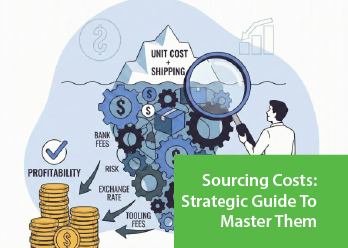
Cost Breakdown
Ask suppliers to separate:
- Unit price
- Engineering
- Samples
- Tooling
- Test fixtures
- Packaging
- Printing and labels
- Factory tests
- Laboratory tests
- Inspection support
- Inland freight
- Export documents
- International freight
- Insurance
- Bank charges
For each unit price, state:
- Quantity
- Currency
- Incoterm
- Named location
- Packaging included
- Testing included
- Tax status
- Quote validity
| Quantity | Unit Price | Trade Term | Lead Time |
|---|---|---|---|
| 500 | Supplier to complete | FCA named factory | Supplier to complete |
| 2,000 | Supplier to complete | FCA named factory | Supplier to complete |
| 5,000 | Supplier to complete | FCA named factory | Supplier to complete |
If the price can change, require the material-price reference, exchange-rate reference, adjustment trigger, calculation method, notice period and treatment of confirmed orders.
“Price may change according to the market” is not a usable price-adjustment rule.
Quality Limits
Define what the supplier must inspect and what counts as a defect.
Critical defects may include:
- Electrical shock or fire risk
- Sharp points that can injure users
- Missing safety parts
- Prohibited materials
- Wrong voltage
- Missing safety warnings
- Dangerous structural failure
- Serious contamination
Major defects may include:
- The product does not work
- Wrong material or component
- Missing accessory
- Dimensions prevent normal use
- Serious leakage
- Wrong assembly
- Wrong model or color
- Barcode cannot be scanned
- Retail packaging cannot be sold
Minor defects may include:
- Small scratches
- Slight printing defects
- Minor color differences
- Small packaging marks
- Cosmetic defects that do not affect normal use
The classification must match the product. A loose screw may be minor on a display item but critical on an electrical safety part.
Visual Inspection Data
Visual limits should define how the product will be inspected. The following is one possible project setup:
| Inspection Item | Example Requirement |
|---|---|
| Main visible surface | View from 30–50 cm |
| Side or secondary surface | View from 50–70 cm |
| Viewing time | About 3–5 seconds per surface |
| Inspection lighting | Approximately 800–1,200 lux |
| Viewing angle | Normal viewing position unless otherwise stated |
| Color difference | Project limit may be ΔE ≤1.0, ≤1.5 or ≤2.0 |
| Coating measurements | Three to five stated points per sampled unit |
The inspection distance, lighting and color limit must match the product. A glossy cosmetic product may need stricter controls than an internal industrial bracket.
No scratch is allowed on the main front surface. On each side surface, no more than two scratches up to 5 mm long are allowed, or one scratch longer than 5 mm but not over 10 mm. No scratch may be wider than 0.3 mm. Inspect from 50 cm under the stated lighting.
Also define:
- Inspection angle
- Main and hidden surfaces
- Allowed number of defects
- Defect size and spacing
- Approved color and defect limit samples
Sampling Inspection
A sampling instruction should state:
- Sampling standard and edition
- Lot definition
- Inspection level
- Normal, tightened or reduced inspection
- Single or double sampling
- Critical acceptance rule
- Major and minor AQL values
- Sample size
- Acceptance number
- Rejection number
ISO 2859-1:2026 is the current ISO standard for AQL-indexed, lot-by-lot inspection by attributes. It replaced the 1999 edition in January 2026.[1]
ISO 2859-1 is designed for a series of lots from an ongoing process or supplier. For an isolated lot or a short series where switching rules cannot be used, ISO 2859-2:2020 may be more suitable.[2]
AQL is used to select a sampling plan. It is not the percentage of the shipment inspected. An acceptance number of zero means no defect of that class is accepted in the inspected sample. It does not prove that every unit in the shipment is defect-free.
Safety-critical points may need 100% testing, controlled materials, automatic records and stronger process controls. Even 100% testing can miss problems when the test method, fixture or measuring equipment is poor.
The RFQ requirements can be converted into a checklist for quality inspection services in China. This allows the inspector to check the same drawings, defects, tests, labels and packaging that the supplier quoted.
Tolerances and Measurements
Every important dimension needs a tolerance.
Incomplete:
Length: 100 mm
Better:
Length: 100 ± 0.5 mm, measured from the stated datum after coating.
The following ranges are examples only:
| Dimension Type | Possible Project Range |
|---|---|
| General external dimension | ±0.5 to ±1.0 mm |
| Normal assembly-hole position | ±0.2 to ±0.5 mm |
| Important machined fit | ±0.05 to ±0.10 mm |
| Critical precision feature | Set from the real fit and process capability |
| Plastic-part measurement | May be measured 24 hours after molding |
Do not use a tight tolerance unless the product needs it. Unnecessary precision increases machining time, inspection cost and scrap.
State the measurement method where it matters:
- Measurement datum
- Measurement point
- Measuring instrument
- Instrument accuracy
- Part and room temperature
- Measurement force
- Time after molding or processing
- Whether coating is included
- Whether soft material is compressed
As a practical planning rule, the measuring instrument should be much more accurate than the allowed tolerance. For a ±0.10 mm requirement, a device with only 0.10 mm resolution is normally not suitable.
Plastic parts may change size after molding. Welded parts may move after welding or stress relief. Coating adds thickness. State when the measurement must be taken.
Test Requirements
List every required test and provide enough detail for two people to perform it in the same way.
| Test Field | Required Detail |
|---|---|
| Method | Standard or controlled written procedure |
| Sample size | Number of units tested |
| Equipment | Machine, fixture or gauge |
| Conditions | Temperature, humidity, load, pressure, height or time |
| Acceptance limit | Measurable pass and fail rule |
| Frequency | Every unit, every batch, first piece or periodic |
| Record | Report, photograph, video or raw data |
| Responsibility | Factory, buyer, inspector or laboratory |
Weak requirement:
Conduct a drop test.
Better requirement:
Test one fully packed master carton according to Packaging Test Procedure PKG-04 Rev B. Condition it at 23 ± 2°C and 50 ± 5% relative humidity for at least 12 hours. Use the stated drop height and face-edge-corner sequence. After testing, all products must work, no accessory may be missing, and no retail box may have damage that prevents sale.
The drop height and sequence must match the package weight, product type and shipping method. Parcel shipping, pallet transport, LCL, FCL and air freight do not create the same risks.
Test Frequency
Testing frequency should match the risk of failure.
| Check | Possible Frequency |
|---|---|
| General appearance | According to the approved sampling plan |
| Basic product function | 100% or sampled according to risk |
| First-piece dimensions | At startup, after a tool change and after a major setup change |
| Critical safety test | Often 100% with recorded results |
| Material hardness | At least once per material batch |
| Coating thickness | For example, 3–5 units per batch |
| Packaging test | New packaging, major changes and periodic verification |
| Life test | Design approval and after important component changes |
Separate tests by purpose:
- Design verification: checks whether the design can meet the intended use.
- Compliance testing: supports legal or market requirements.
- Production testing: checks units or batches during manufacturing.
- Final acceptance testing: checks whether the finished lot can ship.
A successful prototype test does not prove that every production lot is acceptable.
A during-production inspection can check materials, components, semi-finished goods and repeated defects while production is still running. A pre-shipment inspection checks finished goods, quantities, labels, packaging and agreed tests before release.
Define what happens after a failed test:
- Whether production must stop
- Whether finished stock must be isolated
- Whether failed samples must be kept
- Whether a root-cause report is required
- How reworked goods will be checked
- Who pays for retesting
- Whether more units require screening
- Who may approve shipment
The supplier should not replace a failed sample with another sample without explaining the first failure.
Compliance Documents
Tell the supplier where the product will be sold and what compliance evidence is required.
Possible requirements include:
- Electrical safety
- Electromagnetic compatibility
- Radio equipment rules
- Chemical restrictions
- Food-contact rules
- Children’s product rules
- Medical product requirements
- Energy-efficiency rules
- Battery transport requirements
- Warnings and labels
- Traceability
- Country-of-origin marking
Do not ask only, “Is this product CE certified?” Ask:
- Which exact model was assessed?
- Which factory address is shown?
- Which laws and standards apply?
- Which standard editions were used?
- Which laboratory issued the report?
- Does the report cover the quoted components and materials?
- Have any parts, factories or software versions changed?
- Can the complete report be supplied?
- Who prepares the technical file?
- Who signs the declaration?
CE marking is required only for products covered by EU laws that require it. It is not a general product certificate, does not show product origin and does not mean that an EU authority approved the product as safe.[3]
An EU importer must check that the manufacturer completed the required steps and that the declaration and technical documents are available. An importer or distributor selling under its own name may take on the manufacturer’s responsibilities.[4]
For consumer products covered by U.S. CPSC certification rules, importers generally must electronically file certificate data from July 8, 2026. Goods entered from a U.S. Foreign Trade Zone have an effective date of January 8, 2027.[5]
If the product contains lithium cells or batteries, identify the cell, battery configuration, transport classification, required test evidence, test-summary responsibility and packaging. The UN Manual of Tests and Criteria includes subsection 38.3 for lithium cells and batteries.[6]
Check that the documents form one clear chain:
Product model → applicable rule → test standard → tested sample → BOM → critical components → factory → report → declaration → label → production record
Common problems include:
- The report covers another model.
- The report shows another factory.
- The tested sample used different components.
- The production material changed after testing.
- Only the first page is supplied.
- An outdated standard edition was used.
- The label does not match the declaration.
- The report cannot be verified.
Packaging Requirements
Describe the complete packaging system:
- Protective bag or film
- Foam or molded pulp
- Inner box
- Retail box
- Master carton
- Pallet
- Corner protection
- Moisture protection
- Strapping
- Stretch wrap
- Shipping marks
State:
- Units per inner box and carton
- Carton dimensions
- Net and gross weight
- Maximum carton weight
- Pallet size
- Cartons and units per pallet
- Maximum pallet height
- Stacking direction
- Storage conditions
- Estimated container quantity
Possible planning ranges include:
| Packaging Item | Planning Range |
|---|---|
| Manually handled master carton | Often kept around 15–20 kg gross weight |
| Loaded pallet height | Often around 1.2–1.8 m |
| Loaded pallet weight | May be around 500–1,000 kg |
| Sea-shipment corrosion protection | May be specified for 3, 6 or 12 months |
These are not universal limits. The buyer must check warehouse, carrier, port, retailer and destination requirements.
A retail box protects and presents one sellable unit. A master carton protects several units during transport. An e-commerce package may need to protect the retail box during individual parcel delivery.
For metal products, consider anti-rust oil, sealed bags, desiccants or vapor-corrosion protection. For fragile products, define foam density, internal clearance, edge protection, drop resistance and compression strength.
ISPM 15 covers regulated wood packaging made from raw wood, including pallets, crates and dunnage. Processed wood such as plywood is generally excluded because its manufacturing process removes the main pest risk.[7]
A container loading supervision can check quantities, carton condition, shipping marks, container condition, loading method and seal number.
Labels and Barcodes
Provide exact artwork and requirements for:
- Product model
- Voltage, power or capacity
- Batch or serial number
- Date code
- Country of origin
- Manufacturer or importer details
- Warnings
- Barcode or QR code
- Recycling and compliance marks
- Carton marks
State the label material, dimensions, font, position, adhesive strength and resistance to water, heat, oil or cleaning products.
For barcodes, define:
- Barcode type
- Encoded data
- Minimum size
- Quiet zone
- Print contrast
- Position
- Required verification grade
GS1 recommends checking printed symbols with a compliant barcode verifier instead of relying only on a normal scanner.[8]
Traceability
State what a batch or serial number must identify:
- Raw-material batch
- Critical-component batch
- Production date
- Production line and shift
- Mold and cavity
- Assembly station
- Test station and result
- Packaging date
- Shipment lot
Each finished product must carry a batch code that allows the supplier to identify the production date, line, main material batch, critical-component batches and final test record.
GS1’s traceability framework covers the identification, capture and sharing of information about materials, processing and product movement through the supply chain.[9]
For higher-risk products, test the system before mass production:
- Select one finished unit and trace it back to materials, components, production and test records.
- Select one material batch and trace it forward to all affected finished goods and shipments.
Also define how long records must be kept, how quickly they must be supplied and what happens if records are missing.
Samples
State which samples are required and what each sample approves.
| Sample | Purpose |
|---|---|
| Material sample | Material, hardness, texture or finish |
| Color sample | Color and gloss |
| Engineering prototype | Structure, fit and function |
| Tooling sample | Quality of molded, cast or formed parts |
| Packaging sample | Fit, protection, printing and packed size |
| Golden sample | Final appearance and assembly |
Possible sample lead-time ranges include:
| Sample Type | Typical Planning Range |
|---|---|
| Stock sample | 3–7 working days |
| Simple logo or color sample | 7–14 working days |
| 3D-printed or CNC prototype | 5–15 working days |
| Simple new-tool sample | 20–35 working days |
| Complex mold first sample | 35–60 working days |
| Sample correction | About 5–15 additional working days |
The ranges do not include buyer approval delays, repeated design changes or international delivery time.
Do not write only “Sample approved.” State what was approved:
Appearance, color, assembly and basic function approved. Compliance testing, packaging testing, dimensional inspection and mass-production inspection are still required.
Require the supplier to disclose differences between the sample and planned production:
- Prototype tooling instead of production tooling
- Manual machining instead of the planned production process
- Temporary materials or components
- Hand finishing
- Temporary printing or packaging
- Different production line
- Different subcontractor
- Different software or firmware
Custom-product buyers can connect the RFQ with a controlled product development process. Early parts can also be checked through rapid prototyping in China before spending money on final production tooling.
Tooling
Ask for tooling costs separately from the product price.
| Tooling Field | Supplier Response |
|---|---|
| Tool name and number | |
| Tooling cost | |
| Number of cavities | |
| Tool material | |
| Expected life | |
| Lead time | |
| Maintenance interval | |
| Storage location | |
| Ownership | |
| Transfer conditions |
Possible tooling planning ranges include:
| Tooling Item | Planning Example |
|---|---|
| Simple single-cavity mold | 20–35 working days |
| Complex or multi-cavity mold | 35–60 working days |
| Modification after first trial | 5–15 working days |
| Preventive maintenance review | For example, every 20,000–50,000 cycles |
| Quoted mold-life levels | For example, 100,000, 300,000 or 500,000 cycles |
Tooling time and life depend on the tool material, product resin, part shape, cycle conditions and maintenance.
Tool acceptance may require:
- Samples from every cavity
- Complete dimensional report
- Approved material and surface finish
- Required production cycle time
- Acceptable cavity-to-cavity variation
- Successful trial production
- Tool identification plate
- Maintenance instructions
A claim of “500,000-shot mold life” should state the processed material, maintenance interval, cycle conditions, acceptable part quality and responsibility for early failure.
Tool ownership, permitted use, storage, maintenance and transfer should be put in a signed tooling or supply agreement.
Changes and Deviations
Require written approval before changing:
- Raw material or material supplier
- Critical component or component supplier
- Production factory or line
- Subcontractor
- Tooling or mold cavity
- Manufacturing process
- Surface treatment or adhesive
- Test method or equipment
- Software or firmware
- Packaging or labels
- Country of manufacture
A change request should include:
- What will change
- Reason for the change
- Affected products and inventory
- Quality and compliance risks
- Cost and lead-time effects
- New samples
- Required tests
- Planned change date
No change to approved materials, components, suppliers, factory, process, tooling, software, testing, packaging or labels may be used without written approval.
Every supplier should complete a deviation table.
| RFQ Requirement | Supplier Proposal | Reason | Cost or Risk |
|---|---|---|---|
| Material | |||
| Dimension or tolerance | |||
| Component | |||
| Test | |||
| Packaging | |||
| Lead time |
The supplier must list every substitution, exception, assumption and excluded cost. A blank field must not be treated as confirmation.
Not every deviation is bad. A supplier may suggest a cheaper process or locally available component that does not reduce safety, performance or product life. Review and record every decision.
Trade Terms
Use a full Incoterm with a named place or port.
Incomplete:
FOB China
Better:
FOB Shanghai Port, Incoterms 2020
Other complete examples include:
- FCA Supplier Factory, Suzhou, China, Incoterms 2020
- FCA Yantian Container Terminal, Shenzhen, China, Incoterms 2020
- DAP Buyer Warehouse, Dallas, Texas, USA, Incoterms 2020
FCA can be used for any transport mode. When the named place is the seller’s factory, delivery normally occurs when the goods are loaded onto the buyer’s arranged transport.[10]
FOB is for sea or inland-waterway transport, with delivery when the goods are on board the vessel. For container goods handed to a carrier before vessel loading, FCA may match the real handover point better than FOB.[11]
Incoterms control delivery, costs and risk. They do not decide product ownership, payment timing, warranty or which court handles a dispute.
Confirm which costs are included:
- Factory loading
- Inland transport
- Export clearance
- Terminal charges
- International freight
- Insurance
- Import clearance
- Duties and taxes
- Final delivery
Production Lead Time
Break lead time into separate stages:
- Engineering review
- Tooling
- First sample
- Sample correction
- Material purchasing
- Production
- Testing
- Inspection
- Packaging
- Delivery to the named place
Possible planning ranges include:
| Product Situation | Typical Planning Range |
|---|---|
| Existing product and small order | 15–25 working days |
| Normal private-label order | 20–35 working days |
| Custom material or packaging | 30–45 working days |
| New-tool product after sample approval | 30–60 working days |
| Long-lead electronic component | May add 8–16 weeks |
These are planning ranges, not guaranteed factory lead times.
| Stage | Required Days | Start Condition |
|---|---|---|
| Drawing review | RFQ or purchase-order release | |
| Tooling | Drawing and tooling approval | |
| First samples | Tooling completion | |
| Material preparation | Deposit and BOM approval | |
| Mass production | Sample and artwork approval | |
| Final inspection | Production and packing completion |
State when the lead-time count starts. A supplier may quote 25 production days but need another 20 days to purchase materials.
Ask about:
- Available capacity for the product
- Number of shifts
- Current factory loading
- Long-lead materials
- Bottleneck processes
- Subcontracted work
- Holiday closures
- Backup equipment
- Recovery plan for delays
Payment and Warranty
The quotation should state:
- Deposit percentage
- Balance percentage
- Payment milestone
- Currency
- Bank charges
- Beneficiary name
- Beneficiary country
Tooling: 50% at tooling start and 50% after approved first samples.
Production: 30% deposit and 70% after passed final inspection and before shipment.
These percentages are examples, not fixed rules. Payment terms depend on order value, supplier history, tooling investment and product risk.
Before payment, compare:
- Quotation company
- Contract company
- Commercial-invoice company
- Bank beneficiary
- Chinese legal company name
- Exporter
- Actual factory
Different companies do not always mean fraud. A factory may use an affiliated exporter or Hong Kong company. The relationship must still be explained and checked. Confirm unexpected bank-detail changes through a known phone number, not only by replying to an email.
For the warranty, define:
- Warranty period
- Warranty start date
- Covered defects
- Excluded damage
- Required evidence
- Response time
- Root-cause report deadline
- Repair, replacement or credit method
- Spare-parts responsibility
- Return-shipping responsibility
Do not write only “12-month warranty.” State whether it begins on the production date, shipment date, delivery date, installation date or retail sale date.
A practical complaint schedule may be:
| Action | Example Deadline |
|---|---|
| Confirm receipt of complaint | Within 1–2 working days |
| Provide immediate containment | Within 3–5 working days |
| Provide initial cause analysis | Within 7–10 working days |
| Provide full corrective-action report | Within 10–20 working days |
| Safety-related problem | Stop shipment and isolate stock immediately |
Supplier Information
Request:
- Legal company name
- Chinese company name
- Business license
- Unified social credit code
- Registered address
- Factory address
- Bank beneficiary
- Year established
- Main products
- Employee count
- Production area
- Main equipment
- Inspection equipment
- Available monthly capacity
- Certificates and reports
- Subcontracted processes
- Experience with similar products
| Role | Legal Company Name | Address | Relationship |
|---|---|---|---|
| Quotation issuer | |||
| Contracting company | |||
| Actual factory | |||
| Exporter | |||
| Bank beneficiary | |||
| Name on compliance documents |
A trading company is not automatically a poor choice. It may provide better communication, mixed-product purchasing or order management. The actual factory, quality responsibility and subcontracting chain must still be clear.
For important or custom orders, check the business license, equipment, quality system and production capacity through an on-site factory inspection in China.
Require disclosure of outsourced processes such as:
- Heat treatment
- Plating
- Painting
- Printing
- Welding
- Electronic assembly
- Packaging
- Laboratory testing
Quotation Format
Give every supplier the same response table.
| Item | Supplier Response |
|---|---|
| Product number and description | |
| Quoted quantity | |
| Unit price and currency | |
| MOQ by SKU | |
| Incoterm and named location | |
| Packaging included | |
| Tooling and sample costs | |
| Testing included | |
| Material lead time | |
| Production lead time | |
| Payment terms | |
| Quote validity | |
| Available capacity | |
| Exclusions and deviations |
Require every field to be marked as:
- Confirmed
- Not confirmed
- Not applicable
- Alternative proposed
- Information pending
A blank cell must not count as confirmation.
Quote Comparison
Set pass-or-fail requirements before applying a supplier score.
- The legal company can be verified.
- The actual factory is known.
- Critical materials meet the specification.
- Safety requirements can be met.
- Required compliance evidence is available.
- The bank-beneficiary relationship is acceptable.
- Production capacity is sufficient.
- No unacceptable deviation remains.
- Required production tests are available.
| Area | Example Weight |
|---|---|
| Technical compliance | 30% |
| Quality controls | 20% |
| Total cost | 20% |
| Lead time and capacity | 15% |
| Communication | 10% |
| Commercial risk | 5% |
The weights are examples. Safety-related products should place more weight on technical and quality requirements.
Compare total cost, not only unit price. Include tooling, packaging, tests, inspections, freight, insurance, duties, warehousing, high SKU MOQs, rework and expected returns.
Ask the supplier for a clear product description, materials, use, country of origin, weights, battery or liquid content, dangerous-goods status and suggested HS code. The WCO advises private companies to confirm final classification with the customs authority of the importing or exporting country.[12]
RFQ Example
The following values are examples for one steel enclosure. They should not be copied into another product without technical review.
Product: Custom wall-mounted steel enclosure
Approximate size: 450 × 350 × 180 mm
Target market: United States
Sales channel: Industrial distributor
Trial order: 500 units
Normal order: 2,000 units
Larger-order quote: 5,000 units
Annual estimate: 15,000–20,000 units
Required terms: FCA named factory and FOB named port
RFQ revision: Rev 02
Housing: 1.5 mm cold-rolled steel according to BOM Rev 03.
Finish: Powder coating, 60–90 μm dry-film thickness.
Color: Approved physical sample and stated color reference.
Dimensions: Housing Drawing Rev B.
Critical mounting holes: ±0.3 mm from the stated datums.
Operating temperature: 0°C to 40°C.
Storage temperature: −20°C to 60°C.
No sharp edge that can injure the installer.
No exposed metal, visible rust, peeling or coating bubbles on visible surfaces.
Mounting holes must fit the approved installation fixture.
Final inspection must follow Inspection Checklist Rev 01.
Critical defects: Acceptance number zero in the inspected sample.
Major and minor AQL values: As stated in the approved inspection instruction.
Coating thickness: Five stated points on each of three sampled units per batch.
Adhesion: Approved Adhesion Test Procedure Rev A.
Fit test: Every inspected sample must fit the approved fixture.
Packaging test: Packaging Test Procedure PKG-04 Rev B.
Test-equipment model, range, accuracy and calibration status must be recorded.
One unit per protective bag and inner carton.
Four inner cartons per master carton.
Maximum master-carton gross weight: 20 kg.
Internal supports must prevent metal-to-metal contact and movement during the approved packaging test.
Final carton size, gross weight, pallet quantity and container quantity must be supplied before order approval.
The supplier must state:
- Unit prices at 500, 2,000 and 5,000 units
- MOQ by color and packaging design
- Tooling and fixture costs
- Sample cost
- Packaging cost
- Factory and laboratory test costs
- FCA price and named location
- FOB price and named port
- Material and production lead times
- Available monthly capacity
- Payment terms
- Quote validity
- All assumptions, exclusions and deviations
Final Checklist
Before sending the RFQ, confirm that it includes:
- Project stage, target market and sales channel
- Realistic sample, trial and production quantities
- Measurable product specifications
- Controlled drawings and revision numbers
- Exact materials and critical components
- Dimensions, tolerances and measurement methods
- Defect definitions and visual limits
- Sampling plan and critical test requirements
- Packaging, labels, barcodes and traceability
- Required compliance documents
- Sample and tooling requirements
- Change-control and deviation tables
- Unit prices and separate additional costs
- Incoterm and exact named location
- Material and production lead times
- Payment, warranty and complaint terms
- Supplier, factory, exporter and bank relationships
Conclusion
A useful China RFQ lets several factories quote the same product without guessing. For a 2,000-unit order, request prices at 500, 2,000 and 5,000 units, state every drawing revision, define critical materials, set measurable defect and test limits, and separate tooling, packaging and inspection costs. Confirm the named Incoterm location, the start of the production lead time and the legal relationship between the factory, exporter and bank beneficiary. After supplier selection, transfer every accepted requirement into the purchase order, approved drawings and quality agreement before paying the production deposit.