You should hire a sourcing agent when an overseas order is too complex, too risky, or too time-consuming for your team to manage well. Common reasons include a custom product, a new factory, several suppliers, strict testing rules, a fixed delivery date, or an order that would seriously hurt your cash flow if it failed.
You do not always need full-service sourcing. A small order of a standard product from a proven supplier may need only a factory check or a pre-shipment inspection. Use the lowest level of support that gives you enough control.
| Order situation | Practical choice |
|---|---|
| Standard product, small trial order, proven supplier | Buy direct and arrange a final inspection if needed |
| New supplier, moderate order value, simple product | Buy direct with a factory check and inspection |
| Custom product, new tooling, several suppliers, or strict deadline | Use a sourcing agent for daily follow-up and quality control |
| Safety-regulated or technically complex product | Use a sourcing agent together with qualified testing and compliance specialists |

What a Sourcing Agent Does
A sourcing agent works on the buyer’s side to find suppliers and manage local work. The exact service must be written into the agreement. It may include:
- Finding and screening factories
- Checking company registration and production sites
- Comparing quotations based on the same product requirements
- Negotiating prices, lead times, payment terms, and minimum order quantities
- Managing samples, drawings, packaging, and product changes
- Following production and reporting delays
- Arranging factory audits, inspections, and laboratory tests
- Coordinating rework when goods fail an inspection
- Collecting goods from several factories
- Checking shipping documents and working with freight forwarders
Some agents only introduce suppliers. Others manage the order from supplier search to delivery through a full product sourcing service. Buyers with regular projects may use a dedicated local sourcing team.
Before paying, ask for a written service list. It should state how many suppliers, quotations, samples, visits, inspections, and reports are included. It should also show travel costs, extra fees, and the decisions that still need your approval.
Do not judge a company only by whether it calls itself an agent or a trading company. Ask who signs the factory contract, who invoices you, who receives the goods, whether you can see the factory quotation, and who pays when the product is wrong. Also ask whether the company receives money from the supplier, freight forwarder, or laboratory.
A sourcing agent is not a laboratory, customs broker, freight forwarder, or lawyer. One company may coordinate these services, but the buyer should know who actually performs each task. An agent cannot promise zero defects, replace required product testing, or take over the importer’s legal duties simply by managing the order.
Hire an Agent for Custom Products
Custom products create more risk because the factory must follow drawings, materials, dimensions, components, packaging, and performance requirements that may not be part of its normal production.
A small misunderstanding can affect the whole batch. A factory may use a different steel grade, thinner plastic, another motor, a cheaper adhesive, or an unapproved subcontractor. The finished item may look correct but fail after use.
Before mass production, create one product file that includes the details the factory and inspector must follow:
- Drawings and exact dimensions
- Allowed tolerances and how they will be measured
- Material names and grades
- Component models and approved alternatives
- Color standards and surface finish
- Weight, function, load, output, or other performance requirements
- Bill of materials
- Packaging, carton, labels, and barcode details
- Inspection steps and test limits
- Approved sample photos and signed approval records
Avoid words such as “high quality,” “strong,” or “premium.” They cannot be inspected. Write a number, material, test, or limit instead. For example, “200 mm ± 1 mm” is useful only when that tolerance matches the product, material, production method, and measuring tool.
Give each drawing, specification, packaging file, and bill of materials a version number and approval date. State that the factory may not change materials, components, processes, subcontractors, production sites, colors, dimensions, or packaging without written approval.
Keep a signed approved sample, sometimes called a golden sample, but do not use it as the only quality standard. A sample cannot prove the grade of an internal material, the life of a motor, the strength of glue, or the consistency of mass production.
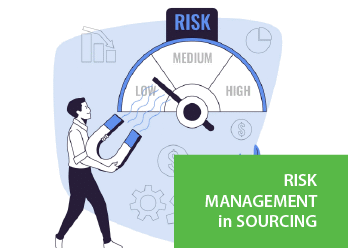
Hire an Agent When the Money at Risk Is High
Do not look only at the factory invoice. Count all the money that may be lost if the order is late, defective, unsafe, or unsellable:
- Deposit and product cost
- Molds and tooling
- Samples, testing, and certification
- Packaging and printing
- Inland and international freight
- Duties, taxes, port charges, and brokerage
- Storage and fulfillment
- Advertising and launch costs
- Refunds, replacements, rework, and returns
- Retailer penalties or missed seasonal sales
A $20,000 mistake may be manageable for a large importer but serious for a small company. Ask whether your business could pay for refunds, a replacement order, and another production cycle without stopping normal operations.
Time can be as important as order value. A smaller Christmas, trade-show, crowdfunding, or retailer order may carry high risk because a late delivery can remove most of its sales value.
An agent is more useful when the order uses a large share of your available cash, when defects are expensive to fix, or when one missed delivery date could damage the launch.
Hire an Agent When You Cannot Verify the Factory
A company registration shows that a legal entity was registered. It does not prove that the company still operates normally, controls the stated factory, owns or legally uses the equipment, or can make your product.
A useful factory check should confirm:
- Legal company name, registration number, status, and address
- The company’s right to use and control the production site
- Main products, workers, shifts, and quality staff
- Machines, tooling, production lines, and slow processes that limit output
- Current orders and realistic spare capacity
- Incoming-material, production, and final quality checks
- Equipment maintenance and measuring-tool calibration where needed
- Warehouse conditions and separation of approved and rejected materials
- Processes sent to subcontractors and how those suppliers are controlled
- Certificates and the exact factory, product, and activity they cover
The audit must focus on your product. A large factory can still be the wrong choice if it lacks the right machines, technical staff, materials, clean production area, or testing ability.
Do not accept a claimed capacity without checking it. Compare machine count, cycle time, working hours, setup time, reject rate, staff, current orders, and outsourced steps. One slow process can limit the whole line.
Ask for dated photos, videos, records, and a written conclusion that lists both strengths and problems. A report that only says “factory is good” is not useful. JS Sourcing’s factory audit guide gives more detail on what to check before approving a supplier.
A factory audit is a one-day view. Repeat or update it when the factory moves, changes major equipment, takes a much larger order, or sends important work to a new subcontractor.
Hire an Agent When Several Suppliers Must Work Together
Multi-supplier orders often fail at the connection points. The main product may be ready while the packaging, cable, manual, accessory, or printed label is late or does not fit.
For these projects, use:
- One bill of materials showing every part, supplier, quantity, and version
- One master specification used by all suppliers
- An approved sample for each important component
- A delivery plan showing which parts depend on other parts
- A final fit, function, and assembly check
- A carton and shipment list that matches the received goods
An agent can collect components, compare them with approved samples, deliver them to the final assembly factory, and consolidate finished goods. When using shipping and consolidation support, confirm the warehouse address, storage fees, insurance, receiving records, damage responsibility, loading checks, and maximum storage time.
The last small supplier often controls the final shipping date. Track packaging, labels, instructions, cables, screws, and accessories with the same care as the main product.
Hire an Agent When Quality or Delivery Is Hard to Control
A good sample does not guarantee a good order. Samples may be made by experienced workers using selected materials. Mass production may use different workers, machines, material batches, production speeds, or subcontractors.
Quality control should cover three stages.
Before production: Confirm the product file, approved sample, materials, components, packaging, quantity, delivery date, inspection rules, and change approval process. A pre-production inspection can check whether the correct materials, tooling, equipment, and production plan are ready.
During production: Inspect while there is still time to correct repeated problems. A during-production inspection is useful for large orders, new factories, custom products, multi-step production, and defects that become expensive after assembly.
Before shipping: A pre-shipment inspection normally checks a random sample of completed goods. The checklist may include quantity, dimensions, weight, appearance, function, assembly, accessories, packaging, labels, barcodes, and carton marks.
Define defects before inspection:
- Critical defect: A problem that may make the product unsafe or break a mandatory rule
- Major defect: A problem that can cause failure, customer rejection, missing functions, wrong materials, serious size errors, or poor protection in shipping
- Minor defect: A small appearance or workmanship issue that does not stop normal use
The report should show the sample size, selection method, tests, results, photos, defect levels, and acceptance limits. ISO 2859-1:2026 provides acceptance-sampling plans for inspection by attributes.[1] AQL is a method for deciding whether to accept a lot from a sample. It is not the actual defect rate and does not mean the shipment is defect-free.
Normal sampling is not enough for every risk. Safety functions, leakage, serial numbers, expensive components, or critical performance may need larger samples, laboratory tests, or 100% checks.
Do not pay the final balance only because the supplier says the order is complete. Review the inspection report first. If the order fails, record the affected quantity, cause, rework method, cost responsibility, new inspection date, and revised shipping date.
When quality disputes are likely, use an independent inspection company. There is a conflict of interest when the same party chooses the factory, manages production, and has sole power to approve shipment.
Hire an Agent When the Product Has Compliance Risk
Products such as children’s goods, batteries, electrical items, wireless devices, food-contact materials, personal protective equipment, cosmetics, medical products, and load-bearing products may need testing, labels, technical files, registrations, or market-specific documents before sale.
A sourcing agent can collect information and organize testing, but the importer must still understand its own duties.
In the United States, importers are expected to use reasonable care when entering goods and providing customs information.[2]
For a general-use product made outside the United States and covered by a CPSC certification rule, the importer must issue the General Certificate of Conformity based on test results or a reasonable testing program.[3] For a children’s product covered by CPSC rules, the importer generally issues a Children’s Product Certificate based on testing by a CPSC-accepted third-party laboratory.[4]
CPSC eFiling became mandatory on July 8, 2026 for most imported consumer products that require a certificate. Goods entered from a Foreign Trade Zone and later entered for consumption or warehousing become subject to the requirement on January 8, 2027.[5]
For products covered by the EU General Product Safety Regulation, there must be a responsible economic operator established in the EU. This may be an EU manufacturer, importer, authorized representative, or fulfillment service provider.[6] Product-specific EU rules may add more duties.
Supply-chain checks may also cover labor, human rights, bribery, environmental harm, and traceability. The OECD recommends risk-based due diligence to identify and address real and possible harm in a company’s operations, supply chain, and business relationships.[7]
For goods affected by U.S. forced-labor enforcement, importers may need transaction records and supply-chain documents that trace raw materials, components, and finished goods. CBP lists full transaction and supply-chain records as important evidence in UFLPA cases.[8]
Do not accept a test report only because it looks official. Check the laboratory name, accreditation scope, report number, date, product model, photos, tested materials, standard, factory, applicant, and production version. A real report for another model or material does not cover your product.
Use an accredited laboratory, customs broker, compliance specialist, or qualified lawyer when needed. The sourcing agent should collect facts and coordinate work, not guess duty rates, product classifications, or legal obligations.
When You Can Buy Direct
Direct buying may be enough when:
- The product is standard and easy to inspect
- The order is small or only tests demand
- The supplier has completed several good orders for you
- Your team can manage technical communication
- You already have inspection, testing, shipping, and customs support
- The goods are easy to replace
- A failed order would not seriously affect the business
You can also split the work. Find and negotiate with the supplier yourself, then buy a focused factory audit or inspection service. This is often better than paying for full sourcing when only one risk needs outside help.
Buying direct does not remove the need for a clear specification, written order terms, payment checks, testing, and shipment inspection.
How to Compare Prices and Landed Cost
Do not compare quotations until every supplier is pricing the same product. Send the same request for quotation and compare:
- Unit price and price breaks
- Material grade, size, weight, and components
- Tooling and sample fees
- Packaging, printing, labels, and accessories
- Testing and certification assumptions
- Minimum order quantity and production time
- Payment terms
- Inland transport and export-document charges
- Incoterm, named place or port, and version
A much lower price may exclude packaging or testing, use thinner material, use cheaper components, hide tooling costs, or rely on an unrealistic lead time.
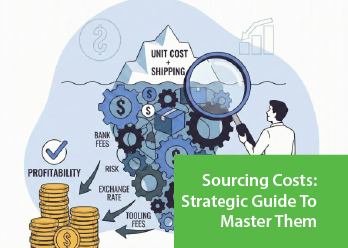
Compare landed cost, not only factory price. Landed cost may include duties, taxes, extra tariffs, customs brokerage, port charges, international and local transport, insurance, testing, storage, demurrage, detention, currency conversion, and payment fees.
Incoterms explain delivery tasks, costs, and risk between the seller and buyer.[9] They do not replace the rest of the sales agreement. Write the exact term, named place, and version, such as “FCA [named terminal], Incoterms 2020.”
Use a qualified customs broker or trade specialist for tariff classification, customs value, and destination-market rules. A sourcing agent can provide product details but should not guess the legal classification.
How to Decide Whether the Fee Is Worth Paying
Compare the agent’s total fee with the benefit the service is likely to create. Use expected losses, not only the worst possible loss.
Net value = time actually saved + expected losses reduced + proven price or freight savings − total agent cost
Include all charges: commission, fixed fees, visits, inspections, warehouse fees, samples, travel, payment charges, currency margins, and freight markups.
Consider a made-up $60,000 order:
- Your team expects to spend 120 hours at an internal cost of $30 per hour: $3,600
- A delay may cost $4,000 and has an estimated 30% chance: expected loss of $1,200
- Defects may cost $6,000 and have an estimated 20% chance: expected loss of $1,200
The starting management and expected-loss cost is $6,000.
An agent charges $4,500. You estimate that the agent will save 70 hours, cut the delay chance from 30% to 15%, and cut the defect chance from 20% to 8%:
- Time saved: 70 × $30 = $2,100
- Expected delay loss reduced: $4,000 × 15% = $600
- Expected defect loss reduced: $6,000 × 12% = $720
- Total benefit before price or freight savings: $3,420
- Net value: $3,420 − $4,500 = −$1,080
Under these assumptions, full-service sourcing is not worth the fee. If the agent also creates $1,500 in proven landed-cost savings without lowering quality, the net value becomes $420. Use conservative estimates and do not count the same saving twice.
Common fee models include a percentage commission, fixed project fee, monthly retainer, product markup, or supplier-paid commission. No model is always best. Ask what the fee applies to, whether supplier or freight payments are received, and what happens if the supplier changes, samples fail, production is delayed, or the order is canceled.
How to Check a Sourcing Agent
Start with a small paid task before giving an agent a large order. Ask for a shortlist of suitable factories with:
- Legal company names and registration details
- Factory addresses and evidence of production
- Main products, machines, workers, and realistic capacity
- Minimum quantities and lead times
- Itemized quotations based on the same requirements
- Important outsourced processes
- Main risks and a clear reason for each recommendation
Check part of the information yourself. The agent should be able to explain what each factory can and cannot do, why prices differ, what must be inspected, and what may delay the order.
Also verify the agent’s legal name, registration, office, bank-account name, product experience, target-market experience, sample reports, use of subcontractors, data storage, references, and relevant insurance.
A supplier-search test does not prove that the agent can manage production. Ask how the team handled a failed inspection, material change, late supplier, or payment dispute. A useful answer describes the steps taken, evidence collected, and final result rather than making general promises.
Do not choose only by commission rate. Clear reports, honest warnings, access to factories, product knowledge, and acceptance of independent checks are usually more important.
Contract, Payment, and Red Flags
The contract should cover services, fees, extra charges, reporting, payment timing, supplier disclosure, factory access, outside commissions, confidentiality, subcontracting, ownership of drawings and molds, inspections, warehouse duties, termination, record handover, liability, and dispute handling.
State which changes need your written approval. These normally include price, material, component, factory, subcontractor, packaging, quantity, production release, and shipment release.
Before sending money:
- Match the bank-account name with the contract and legal company
- Confirm unexpected account changes through a known phone number or video call
- Keep factory, agent, inspection, laboratory, and freight charges separate
- State whether the agent is a payment agent or reseller
- Link payments to evidence such as an approved sample, material check, production milestone, passed inspection, or shipping documents
- Do not pay the final balance only because the supplier says it needs the money to ship
Stop or investigate when you see:
- False claims about owning a factory
- Forged or irrelevant certificates
- Unexplained bank-account changes
- Hidden supplier commissions or freight markups
- Refusal of agreed factory access or independent inspection
- Pressure to pay before evidence is available
- Unauthorized use or retention of molds, drawings, or files
- Promises of perfect quality or impossible prices
- Changing explanations about materials, capacity, or delays
- Reports with no evidence or no mention of problems
One small administrative mistake may be fixable. A pattern of missing evidence, changing stories, payment pressure, and resistance to checks is much more serious.
Conclusion
Hire a sourcing agent when the product, factory, deadline, or money at risk is beyond what your team can control. Do not pay for full service by default. In the $60,000 example above, a $4,500 fee was not worthwhile when the estimated benefit was only $3,420. It became positive only after adding $1,500 in proven landed-cost savings. Put factory access, fee disclosure, change approval, inspection rules, payment evidence, and ownership of molds and files in writing. Start with a small paid task, check part of the work yourself, and expand only after the agent proves reliable.
This article provides general business information. Customs, product safety, testing, certification, and importer duties vary by product and market. Check the rules that apply to your order before production begins.