Buying OEM bicycle wheelsets from China? Start with 3–5 manufacturers and send each one the same specifications. Include rim size, tire compatibility, hubs, spokes, load requirements, and target market. Ask for a full price breakdown, check the samples, and review the test reports before placing a bulk order. A low quote means little if the wheels don’t fit your bikes or pass the required checks.
What Types of Bicycle Wheelsets Can You Source from China?
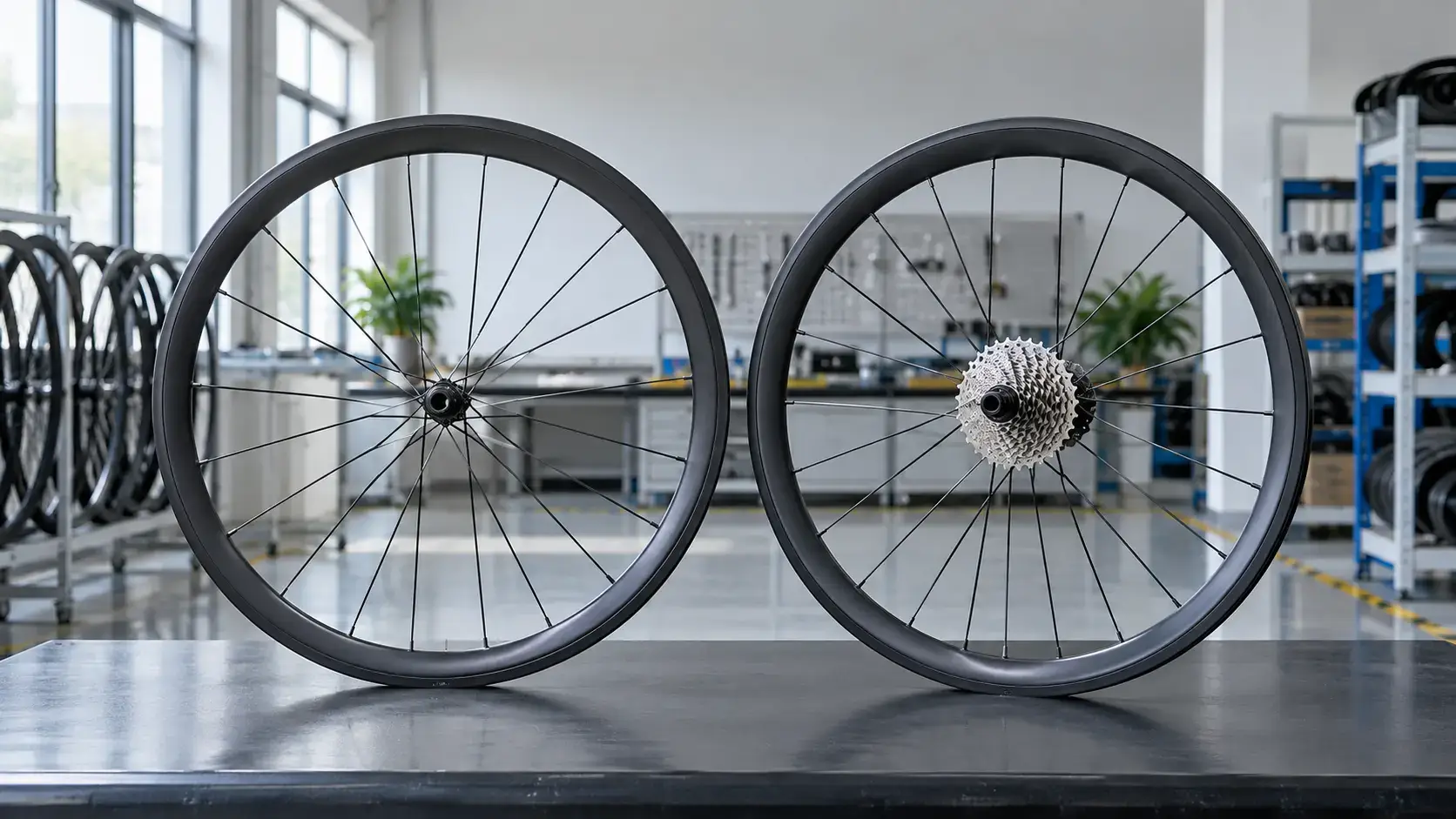
Chinese suppliers make aluminum and carbon wheelsets for road, gravel, mountain, city, and electric bikes. Some factories make the rims themselves. Others buy the parts and build complete wheels. Ask who makes each component and who handles the final assembly.
| Bicycle type | Common rim size | What to check first |
|---|---|---|
| Road | 700C / 622 mm BSD | Tire fit, brakes, and drivetrain compatibility |
| Gravel | 700C / 622 mm or 650B / 584 mm | Tire clearance, rim strength, and axle spacing |
| Mountain | 29 in / 622 mm or 27.5 in / 584 mm | Impact resistance and hub compatibility |
| City / trekking | Model-dependent; 622 mm and 559 mm are used | Load rating and replacement parts |
| E-bike | Depends on the bike | Load rating, axle fit, and hub-motor compatibility where applicable |
| Cargo bicycle | Depends on the bike | Rated system load and durability testing |
Here’s one detail that often causes confusion: 700C road wheels and 29-inch mountain bike wheels commonly share a 622 mm bead seat diameter (BSD). That doesn’t mean you can swap them. Rim width, tire fit, hubs, and brakes may all be different.
Use actual rim measurements in your specifications. ISO 5775-2:2021 covers bicycle rim dimensions.[1]
Also, make sure the quotation is for a complete pair: one front wheel and one rear wheel. Ask whether rim tape, tubeless valves, end caps, skewers, and rotor lockrings are included. Those small parts can cause assembly delays when they’re missing.
Aluminum or Carbon: Which Makes More Sense?
Both materials work for OEM wheelsets. The better choice depends on the bike you’re building, the target price, and the performance you need.
| What to compare | Aluminum rims | Carbon rims |
|---|---|---|
| Material details | Alloy, rim profile, joint, and surface finish | Fiber layup, resin system, molding, and curing process |
| Custom rim profiles | May need new extrusion tooling and testing | May need new molds and structural testing |
| Quality checks | Dimensions, rim joint, finish, and wheel assembly | Construction consistency, structural integrity, and wheel assembly |
| Typical applications | Commuter, trekking, and performance bikes | Performance road, gravel, and mountain bikes |
Don’t compare rim materials alone. Compare complete wheelsets with the same hubs, spokes, and accessories. A carbon rim may be light, but a heavy hub can change the finished wheelset’s weight.
For custom carbon rims, ask for test reports covering the actual rim profile and construction. A report for a 35 mm rim doesn’t automatically cover a different 50 mm design.
What Should You Include in Your Wheelset RFQ?
A request for “700C tubeless carbon wheels” leaves too much open. Two suppliers could quote completely different hubs, spokes, and rim constructions.
Give every supplier the same specification sheet. If they suggest different parts, ask them to list the changes clearly.
| Component | What to specify | What to check on samples |
|---|---|---|
| Application | Bike type, riding conditions, load, and sales market | Whether the design and tests cover the intended use |
| Rim | BSD, internal and external width, depth, material, hooked or hookless design | Measurements against the approved drawing |
| Tire | Approved tire models, widths, pressure limits, and tubeless parts | Tire-rim compatibility |
| Hubs | Front and rear models, axle spacing, bearings, and end caps | Fit on the intended frame and fork |
| Brakes | Rim or disc brakes; six-bolt or Center Lock | Rotor and mounting hardware fit |
| Freehub | Driver type and exact cassette model | Cassette installation and engagement |
| Spokes | Material, model, count, lacing pattern, and tension limits | Tension readings, runout, and wheel dish |
| Commercial terms | MOQ, price per pair, tooling, packaging, and delivery terms | Itemized quotation |
Check the Hub and Freehub Before Anything Else
Many road and gravel bikes use 12 × 100 mm front hubs and 12 × 142 mm rear hubs. Boost mountain bikes commonly use 15 × 110 mm front and 12 × 148 mm rear hubs.
Those numbers describe axle diameter and hub spacing. They don’t tell you the axle’s thread or full length, or which end caps you need.
The freehub needs the same attention. Shimano HG, MICRO SPLINE, SRAM XD, and XDR are different interfaces. Asking for a “12-speed compatible” hub isn’t enough. Give the factory your exact cassette model and test it on the sample wheel.
If you’re buying wheels and frames from separate suppliers, check both sets of drawings. The frame dimensions reviewed during bicycle frame inspection need to match the hubs and brake setup you’ve ordered.
Don’t Guess Tire Compatibility
For tubeless wheels, get the approved tire sizes, pressure limits, tape, and valve specifications in writing.
Hookless rims need particular care. A tire with the right diameter isn’t necessarily approved for a hookless rim. Check the tire and rim manufacturers’ compatibility requirements.
ISO 5775-1:2023 provides bicycle tire designations and dimensions.[2]
How Many Spokes Do You Need?
OEM wheelsets commonly come with 24, 28, or 32 spokes per wheel.
| Front / rear | Total spokes |
|---|---|
| 24 / 24 | 48 |
| 28 / 28 | 56 |
| 32 / 32 | 64 |
More spokes don’t automatically make a wheel stronger. Rim construction, spoke material, lacing, hub geometry, and tension all affect the result. Ask for test evidence covering the complete wheel design and intended load.
Have your wheelset specifications ready?
Send your rim drawings, hub and cassette models, spoke requirements, order quantity, and destination. Get comparable quotations with component differences clearly identified.
How Can You Tell Whether a Chinese Wheelset Factory Is Reliable?
Start by checking whether you’re dealing with a manufacturer, a wheel assembly factory, or a trading company. A supplier may offer hundreds of wheel models without making a single rim in-house.
Ask who makes the rims, hubs, and finished wheels. Then check the seller’s legal identity and payment details as part of supplier verification.
When several factories provide different bicycle components, record which supplier is responsible for each part and who handles final assembly.
| What to ask | What the factory should show you |
|---|---|
| Who makes the rims and hubs? | Manufacturer names, component models, and batch records |
| Who builds the wheels? | Assembly equipment, work instructions, and production records |
| How is wheel quality checked? | Actual tension and alignment measurements |
| Which products have been tested? | Test reports showing the model, revision, and test conditions |
| Does the factory outsource any work? | Subcontractor details and incoming quality checks |
| Can it supply spare parts? | Part numbers for bearings, freehubs, end caps, and spokes |
During a factory audit, compare the supplier’s claims with what actually happens on the production floor. Look at the wheel-building stations, spoke tension meters, truing equipment, and completed inspection records.
An ISO 9001 certificate may tell you something about the factory’s quality management system. It doesn’t prove that the particular wheelset you’re ordering has passed structural testing.
Should You Choose OEM or ODM Wheelsets?
With ODM, you usually start with a wheelset the factory already makes. You choose from its available rim profiles, hubs, finishes, and branding options.
Custom OEM development gives you more control over the design, but it can involve new tooling, prototypes, and testing.
Say you want an existing carbon rim with your own decals and a different hub. The factory may be able to use its current rim mold. If you want a new rim shape, expect a separate engineering and tooling review.
Before paying for development, agree on who owns the molds, drawings, and design rights. Also check whether the factory can sell the same design to other customers and whether you can move the tooling to another manufacturer.
How Should You Check Wheelset Samples?
Don’t approve samples from photos alone. Have the wheels measured, check the components, and fit them to the intended bicycle.
Samples should match the production design. If testing damages a wheel, you will need separate specimens for other checks.
| Inspection item | What to record |
|---|---|
| Components | Rim, hub, spoke, nipple, bearing, and freehub models |
| Dimensions | Rim measurements, hub spacing, and brake interface against drawings |
| Wheel alignment | Lateral runout, radial runout, and dish in millimeters |
| Spoke tension | Measured values against the approved limits for each side |
| Fit | Axle, cassette, rotor, and tire installation |
| Packaging | Wheel protection, labels, and included accessories |
Check Spoke Tension and Wheel Alignment
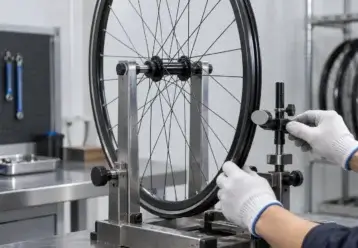
A wheel can look straight and still have uneven spoke tension. Measure it instead of judging by eye.
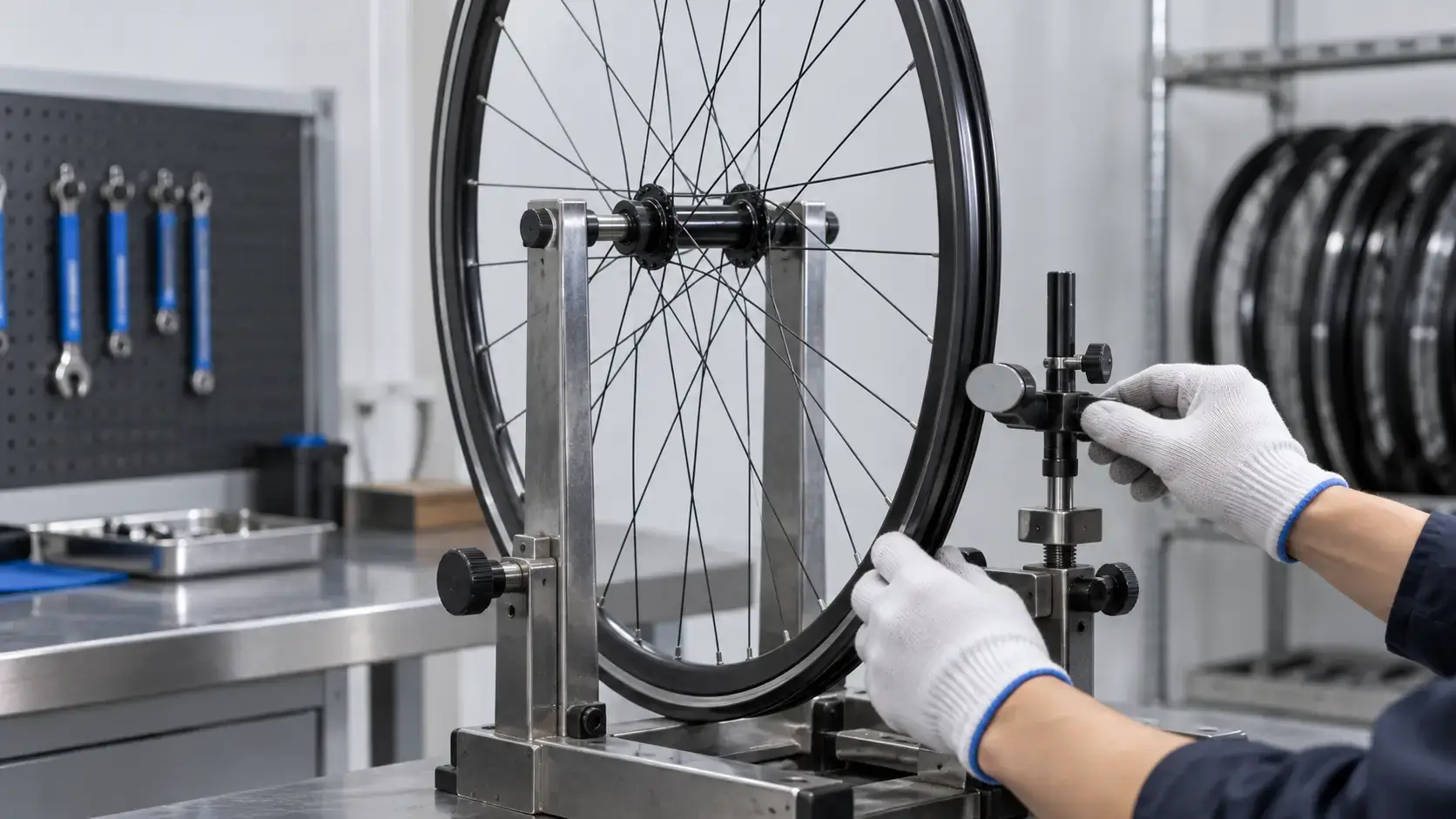
Ask the factory to record three things:
- Lateral runout: How far the rim moves from side to side as it turns.
- Radial runout: How much the rim moves up and down as it turns.
- Wheel dish: Whether the rim sits in the correct position relative to the hub.
Record runout and dish in millimeters. Check spoke tension against the approved range for that wheel design. Left and right spoke tensions can differ because of the hub and rim geometry.
Keep one approved reference sample with its drawings, component list, and inspection results. The production factory should work from the same revision.
If the factory later changes a rim, hub, or spoke model, don’t accept the substitution without checking its effect on compatibility, performance, and testing.
Which Safety Standards Should Bicycle Wheelsets Meet?
Start with the wheelset’s intended use. Road, mountain, cargo, and electric bicycles may have different safety and load requirements.
ISO 4210-2:2023 covers safety and performance requirements for bicycle categories within its scope. ISO 4210-7:2023 provides the related wheel and rim test methods.[3][4]
Some specialized bicycles fall outside these standards’ scope and need a different assessment.
Ask for reports identifying the actual product tested, its construction, test conditions, and results. A report for an individual rim doesn’t necessarily cover every requirement for the assembled wheel.
The same goes for design changes. A different carbon layup, tire interface, or spoke arrangement may require additional testing. Let the responsible engineer or laboratory decide whether previous results still apply.
What About US and EU Requirements?
For complete bicycles covered by US regulations, 16 CFR Part 1512 includes bicycle safety requirements affecting wheels. Check separately which obligations apply if you’re selling replacement wheelsets rather than complete bicycles.[5]
For relevant consumer products sold in the EU, assess the General Product Safety Regulation (EU) 2023/988 and any applicable product-specific rules.[6]
Don’t assume every wheelset needs CE marking. That depends on the legislation applying to the product.
Not sure what your wheelset supplier can actually produce?
Share the factory details, component list, and available test reports. Check its wheel assembly process, measuring equipment, and production records before committing to bulk orders.
How Much Do OEM Bicycle Wheelsets Cost in China?
You’ll get more useful pricing when every supplier quotes the same parts. Otherwise, a cheaper wheelset might simply come with lower-cost hubs, spokes, or bearings.
Ask for prices per front-and-rear pair, using one currency and the same Incoterms rule and named place.
| Cost item | What the quotation should cover |
|---|---|
| Wheel components | Rims, hubs, spokes, nipples, bearings, and freehub |
| Assembly | Wheel building, tensioning, truing, and final checks |
| Customization | Decals, colors, finishes, and packaging |
| Development | Tooling, prototypes, design changes, and testing |
| Transport | Cartons, freight, insurance, and delivery terms |
| Import | Applicable duties, non-recoverable taxes, brokerage, and handling |
| After-sales | Replacement parts and warranty arrangements |
Calculate Cost Per Saleable Pair
For a project-level purchasing calculation, use:
Cost per saleable pair = (Product cost + allocated tooling, testing and inspection + freight + insurance + duties + non-recoverable taxes + handling) ÷ saleable pairs received.
Keep one-time development costs separate if you only need the landed cost of a repeat shipment.
Don’t count freight twice when it’s already included in the supplier’s delivery price. Recoverable taxes should not be treated as permanent acquisition costs.
How Does MOQ Affect Pricing?
A factory may accept a smaller order using its standard rim and hub options but require a different minimum for custom finishes or new components.
Ask for MOQ and price breaks by rim design, color, hub, and freehub configuration. Don’t assume different models can be combined to meet one minimum order.
For smaller orders moving by sea, include the destination handling charges associated with LCL shipping. These charges can change the cost comparison between suppliers.
How Do You Keep Bulk Production Consistent?
Once samples are approved, give the factory the final bill of materials, drawings, inspection limits, and rules for component changes.
Check the first production wheels against the approved samples. Don’t leave every quality check until the order is packed.
| Production stage | What to check |
|---|---|
| Before production | During pre-production inspection, confirm incoming components, specifications, tools, and assembly instructions |
| During production | Use in-process inspection to check wheel alignment, spoke tension, hub function, and batch records |
| Before shipment | Carry out pre-shipment inspection for finished-wheel specifications, quantities, accessories, and packaging |
How Should You Sample an Order of 100 Wheelsets?
An order of 100 pairs contains 200 individual wheels. That’s straightforward, but you need to define what counts as one inspection unit.
For wheel defects, you may sample individual wheels. For missing accessories or packaging problems, you may inspect complete pairs or packed cartons.
Keep those inspection units separate. Each needs its own lot definition, sample size, and defect records.
ISO 2859-1:2026 provides AQL-indexed attribute sampling procedures. The lot size, inspection level, AQL, and sampling scheme determine the number of units to inspect and the acceptance or rejection numbers.[7]
AQL doesn’t mean every shipment is allowed to contain that percentage of defective wheels. And sampling for appearance or assembly defects doesn’t replace structural safety testing.
Your wheelsets are finished. Are they ready to ship?
Check the actual production wheels against your approved drawings, component list, and inspection limits. Include wheel alignment, hub fit, packaging, and quantity in the final inspection scope.
What Problems Should Stop a Wheelset Shipment?
Some issues can be fixed through rework. Others need a full technical review before the goods can be released.
| Problem | What to do |
|---|---|
| 12 × 142 mm hub supplied for a frame requiring 12 × 148 mm | Hold the affected wheels, fit the correct hub or replace the wheels, and check the fit again |
| Cassette won’t fit the freehub | Correct the component mismatch and test the final assembly |
| Runout or spoke tension is outside approved limits | Separate the affected production units, rework them, and measure again |
| Rim or hub differs from the tested specification | Hold the affected lot until engineering reviews the change and any required testing is completed |
| Cracked rim, structural damage, or failed required test | Quarantine the affected units or lot and obtain a documented technical decision before release |
| Missing required batch identification | Hold the affected goods until the traceability issue is resolved |
Keep component batch numbers, wheel-building dates, and drawing revisions. If a defect appears later, these records can show which other wheels might be affected.
When your frames and wheelsets come from different factories, check that both suppliers are working from compatible specifications. This can be handled during the wider sourcing process, before the parts reach final assembly.
Frequently Asked Questions
Can I combine different hub options to meet one MOQ?
Only if the manufacturer agrees. Ask for the minimum quantity for each rim design, finish, hub, and freehub option. Get the mixed-order pricing in writing.
Can I put my own brand on an existing wheelset?
Yes, if the factory offers private-label production. You may be able to change decals, colors, and packaging without developing a new rim. Confirm the approved design and branding details before ordering.
Which replacement parts should I order with my wheelsets?
Ask for compatible freehub bodies, bearings, end caps, spokes, and nipples. Keep their exact part numbers and revision details. A replacement part for one hub version may not fit another.
Does a rim test report cover the whole wheelset?
Not necessarily. A rim report only supports the tests and configuration listed in it. Ask whether the complete wheel assembly needs further testing for its intended use.
What if the factory changes a component after sample approval?
Hold approval of the changed configuration. Check the new part against the drawings, fit requirements, and previous test scope. Safety-related changes may need additional testing before production or shipment.
Finally
For OEM bicycle wheelsets from China, compare factories using the same BOM and approve samples with measured results. Check hub fit, spoke tension, wheel alignment, and relevant safety tests before bulk production. Don’t release a shipment with unresolved structural defects, incorrect interfaces, or unapproved component changes.