Choose a China supplier by checking five things: legal identity, experience with your product, real production capacity, sample quality, and willingness to accept clear payment and inspection terms. Do not choose a supplier only because it offers the lowest price, has a marketplace badge, sends attractive photos, or promises that every requirement is “no problem.”
The checks should match the risk of the order. A standard, low-value product needs fewer checks than a custom, electrical, battery-powered, children’s, food-contact, medical, protective, or safety-related product.

Write a Clear Product Specification
Before asking for prices, write down exactly what the supplier must make. A vague request produces quotations for different products, so the prices cannot be compared fairly.
For example, asking for “5,000 stainless-steel bottles” is not enough. One supplier may quote 304 stainless steel, while another quotes cheaper 201 stainless steel. Packaging, wall thickness, capacity, lid material, and testing may also differ.
Your specification should include:
- Product dimensions and tolerances
- Product weight
- Material type, grade, and thickness
- Color and surface finish
- Functions and performance requirements
- Components and accessories
- Logo, printing, labels, and barcodes
- Individual and export packaging
- Target country and intended user
- Required tests and certificates
- Order quantity and expected annual volume
- Required delivery date and destination
For custom products, also provide drawings, artwork, Pantone color references, a bill of materials, approved component brands, packaging files, and reference photos.
Replace vague words with measurable requirements. Do not write “strong carton.” State the carton structure, material grade, maximum gross weight, minimum edge-crush or compression strength, internal protection, carton size, shipping marks, and required drop test.
Divide the specification into three groups:
- Mandatory: legal requirements, safety features, materials, critical dimensions, and functions that cannot change.
- Target: results that should be reached within an agreed tolerance.
- Preference: useful features that do not decide whether the product is accepted.
For each important item, state the target, tolerance, test method, test conditions, number of units to test, and result that counts as a failure.
Give every drawing, bill of materials, packaging file, and specification a version number and approval date. Require written approval before the supplier changes a material, component, formula, factory, subcontractor, or production method.
A structured product sourcing process can help turn an initial product idea into one specification that several factories can quote against.
Choose the Right Supplier Type
A supplier may be a factory, trading company, assembly plant, component producer, factory-owned export company, or sourcing company.
A factory is often a good choice when you need:
- Custom tooling or engineering work
- Close control of the main production process
- Large or regular orders
- Frequent design changes
- Long-term production of the same product
A trading or sourcing company may be useful when you need:
- Several product categories from different factories
- Small quantities
- Mixed-container shipping
- Packaging and consolidation support
- Better communication and export coordination
A trading company is not automatically worse than a factory. A professional trading company with good technical staff and quality control may be safer than a poorly managed manufacturer.
The real risk is a supplier that hides its role. Ask:
- Which production steps are completed at your facility?
- Which steps are outsourced?
- Where is the production address?
- Who manages the workers and production schedule?
- Who purchases materials and components?
- Which company signs the contract?
- Which company receives payment?
- Which company appears on export documents?
- Who pays for rework, replacement, delay, or refund?
Factory buildings and machines may be rented or financed. This is not automatically a problem. What matters is who controls production, workers, materials, quality records, subcontractors, and corrective action.
Build a Shortlist
When enough suitable suppliers exist, start with about 10 candidates and reduce the list to three to five serious options. A specialized product may have only two or three capable factories, so do not add unsuitable companies just to increase the number.
Search by material and production process, not only by the general product name.
- Use “custom ABS injection-molded electronics enclosure manufacturer” instead of “plastic box supplier.”
- Use “seamless nylon-spandex activewear knitting manufacturer” instead of “clothing factory.”
Possible sources include B2B marketplaces, trade fairs, search engines, industry associations, referrals, testing laboratories, freight forwarders, customs-data services, and local sourcing teams.
A high marketplace ranking does not prove that a company is the best manufacturer. Ranking may be affected by advertising, platform membership, response speed, or sales volume.
Screen suppliers in three rounds:
- Remove suppliers that do not match the product, quantity, production process, market, or lead time.
- Request company records, production photos, equipment lists, similar-product evidence, and basic compliance documents.
- Order samples, conduct audits, and enter detailed negotiations only with the strongest candidates.
If you use an agent, ask how it is paid, whether it receives supplier commissions, whether it will disclose the real factory, and who is responsible when goods fail inspection. A good agent should make the supply chain clearer. See how a China sourcing agent supports supplier selection.
Check the Company and Payment Account
Ask for the supplier’s Chinese business license. Use the Chinese legal name and Unified Social Credit Code when checking official records.
Verify:
- Full Chinese company name
- Unified Social Credit Code
- Legal representative
- Registration date
- Registered address
- Current company status
- Business scope
Search the company through China’s National Enterprise Credit Information Publicity System. It provides public registration, annual-report, administrative-penalty, abnormal-operation, and serious violation information.[1]
A business license proves that a company is registered. It does not prove that the company owns a factory, has enough capacity, or can make your product. Registered capital is also not the same as cash available to complete your order.
When relevant, check customs registration and credit information through the China Customs Enterprise Import and Export Credit Information Publicity Platform.[2]
The sales company, factory, exporter, contract company, and payment beneficiary may be different. This can be legitimate, but the relationship must be clear.
Create a simple list showing:
- Who sells the product
- Who manufactures it
- Who signs the contract
- Who receives payment
- Who exports the goods
- Who is responsible for quality and refunds
The bank beneficiary should normally match the company named in the contract. Stop the payment if:
- The supplier asks for payment to a personal account.
- The beneficiary is an unexplained third party.
- The bank account or payment country changes suddenly.
- New payment details arrive from an unfamiliar email address.
- The supplier pressures you to pay before verification.
A supplier may use a Hong Kong company, parent company, or export company. Ask for company registration records, a written explanation, a stamped payment authorization, and a contract clause naming the beneficiary.
If bank details change, verify them using a phone number or contact person confirmed before the change. Do not rely on the same email that requested the new account. The FBI advises businesses to verify changes in account numbers or payment procedures through a separate contact channel.[3]
Check Product Experience and Capacity
A real factory may still be the wrong factory. A factory making cheap promotional bags may not be able to make technical outdoor bags. A factory making basic USB cables may not be suitable for high-power charging products.
Ask for evidence involving products with similar materials, tolerances, equipment, testing, and order size:
- Recent photos and live production video
- Production process flow
- Machine and tooling list
- Testing-equipment list
- Incoming-material inspection records
- In-process and final inspection forms
- Similar-product test reports
- Corrective-action records
Ask practical technical questions:
- Which production step creates the most defects?
- What tolerance can you hold in normal production?
- How do you prevent materials from being mixed?
- How do you control color differences?
- How do you trace a finished product to its material batch?
- Which parts are commonly reworked?
- Which components have the longest lead time?
If a supplier claims it can hold a tolerance of ±0.1 mm, ask for inspection records, details of the measuring equipment, and examples of similar products. Then check the claim through sample measurements or an audit.
Also ask about the last serious quality problem, its cause, how the affected batch was controlled, and what action prevented the problem from returning.
For capacity, ask about available output rather than maximum output. A factory may claim it can make 100,000 units per month, but the number means little if existing orders already use most of that capacity.
Check:
- Output for products similar to yours
- Current orders
- Available machine or line hours
- Number of workers and shifts
- Material lead times
- Normal yield and rework rate
- Product changeover time
- Holiday and maintenance plans
- Backup equipment for important processes
Find the bottleneck. The delivery date may depend on one slow process, such as molding, plating, heat treatment, sewing, aging tests, electronic testing, or packing.
Send the Same RFQ to Every Supplier
Send one standard request for quotation to every shortlisted supplier. This prevents suppliers from quoting different materials, packaging, tests, or shipping terms.
The RFQ should include:
- Specification version
- Order quantity and price breaks
- Materials and components
- Packaging and labeling
- Testing requirements
- Sample and tooling requirements
- Delivery date
- Shipping term and named place
- Payment terms
- Quote validity
Ask suppliers to separate:
- Unit price
- Tooling cost
- Printing or setup cost
- Packaging cost
- Sample cost
- Testing cost
- China transport
- Export charges
Require each supplier to list assumptions, exclusions, and suggested alternatives. Lead time should be split into tooling, sampling, material purchasing, production, testing, packing, and export preparation.
Before comparing prices, make sure every quotation uses the same material, quantity, packaging, test requirements, payment terms, Incoterm, and named place.
Compare Shipping Terms Correctly
An EXW price cannot be compared directly with an FCA, FOB, CIF, DAP, or DDP price because different costs and responsibilities are included.
Incoterms 2020 define certain delivery duties, costs, and transport risks between the buyer and seller.[4]
Write the exact term, place, and rule version:
- FCA Supplier’s Factory, Shenzhen, Incoterms 2020
- FOB Yantian Port, Incoterms 2020
- CIF Port of Los Angeles, Incoterms 2020
- DAP Buyer’s Warehouse, Berlin, Incoterms 2020
“FOB China” is incomplete because it does not identify the port.
Do not assume that the seller carries the risk to the destination simply because it pays the freight. Under several “C” terms, risk passes to the buyer before the goods reach the final destination.
For container shipments, compare FCA with FOB. Containers are often handed to the carrier at a terminal before they are loaded onto the vessel, which can make FCA more suitable.[5]
For DDP quotations, confirm who will be the importer of record, what customs value will be declared, whose registration will be used, and who will keep the customs records.
Incoterms do not decide product quality, payment timing, ownership, warranty, delay compensation, or product compliance. Put these points in the sales contract.
Calculate the Real Cost
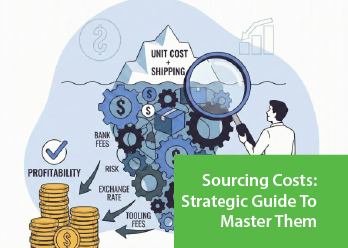
Compare cost per saleable unit, not only the factory unit price.
Total landed cost = Product cost + Packaging + Tooling + Testing + Inspection + China transport + Export charges + Freight + Insurance + Duty + Non-recoverable taxes + Customs clearance + Warehouse delivery + Expected quality losses
Recoverable import VAT or GST may affect cash flow but should not always be treated as a permanent cost.
Include four groups of costs:
- Product: unit price, tooling, packaging, printing, accessories, and spare parts.
- Import: domestic transport, export handling, freight, insurance, duty, customs clearance, port charges, and delivery.
- Quality: inspection, testing, sorting, rework, repacking, unusable units, replacement freight, refunds, and recalls.
- Business: delays, missed sales, emergency air freight, excess stock, and money tied up in inventory.
Example:
- Supplier A quotes $5.00 per unit.
- Supplier B quotes $5.30 per unit.
- The order contains 10,000 units.
- Supplier A has a 5% unusable-product rate.
- Supplier B has a 1% unusable-product rate and supplies 1% free spare units.
Supplier A appears $3,000 cheaper. However, 500 unusable units remove $2,500 of that saving. Only $500 remains before adding sorting, replacement shipping, refunds, delays, or lost sales. If those extra losses exceed $500, Supplier B is cheaper overall.
Cost per saleable unit = Total landed and quality-related cost ÷ Number of units that can actually be sold
When you do not have reliable defect and delay data, calculate a best case, expected case, and poor-quality case.
Order and Test Samples
Stock samples help you check basic workmanship, materials, packaging, and communication. They do not prove that the supplier can make your custom product.
Custom samples use your dimensions, materials, colors, logo, or functions. Record every requested change in writing instead of relying on calls or chat messages.
Pre-production samples should use the same materials, components, tooling, printing, labels, accessories, and packaging planned for mass production.
Use a clear approval statement:
Sample version V3, approved on [date], is accepted for dimensions, materials, color, printing, function, accessories, and packaging. Mass production must meet V3 and the signed specification.
The written specification remains more important than one sample. One unit cannot show every tolerance or possible defect.
For higher-risk products, request several units from a pilot run or early production. Keep one approved reference sample in good condition and record its version and approval date.
Test samples under real use conditions. Depending on the product, check:
- Dimensions and weight
- Material composition
- Load and impact strength
- Water and temperature resistance
- Battery life and charging time
- Colorfastness and wash resistance
- Coating or adhesive strength
- Sharp edges and small parts
- Packaging protection
- Barcode readability
A useful test instruction states the number of units, equipment, setup, temperature, load, test time, number of cycles, pass limit, failure limit, data required, and retest rule.
Check Compliance and Test Reports
Check product rules before finalizing the design. Legal requirements may affect materials, components, labels, warnings, instructions, packaging, tests, and technical records.
Start by defining:
- Destination country
- Product use
- Intended user and age group
- Sales channel
- Applicable regulations and standards
- Required tests, labels, certificates, and records
For certain general-use products covered by U.S. Consumer Product Safety Commission rules, the importer of an overseas-made product must issue a General Certificate of Conformity based on the required testing or a reasonable testing program.[6]
Children’s products covered by applicable CPSC rules generally require testing by a CPSC-accepted third-party laboratory. The importer issues the Children’s Product Certificate for products manufactured outside the United States.[7]
Since July 8, 2026, importers of products subject to CPSC certificate requirements must electronically file the required certificate data. The later date for covered goods entered from a U.S. foreign trade zone is January 8, 2027. This does not mean every consumer product needs a CPSC certificate.[8]
In the European Union, the General Product Safety Regulation has applied since December 13, 2024. Importers have duties related to product safety, contact details, instructions, warnings, technical records, storage, transport, and corrective action.[9]
The GPSR is not the only EU rule. Toys, batteries, radio equipment, electrical products, machinery, personal protective equipment, cosmetics, and medical devices may have additional rules.
When checking a test report, review:
- Report number and date
- Applicant and manufacturer
- Factory address
- Product name and model
- Product photos
- Materials and components
- Test method and standard
- Results, failures, notes, and exclusions
A report may not cover your order if the battery, charger, plastic, coating, size, software, factory, material, intended user, or product model has changed.
ISO/IEC 17025 sets competence and impartiality requirements for testing and calibration laboratories. Accreditation should cover the exact test method, not only the laboratory’s general business.[10]
Use the ILAC signatory directory to find the relevant accreditation body and confirm the laboratory’s accreditation scope.[11]
Audit the Factory and Control Subcontracting
A live video tour is useful for early screening. An independent on-site audit gives stronger evidence for custom, high-value, safety-related, or long-term orders.
A factory audit should check:
- Legal company and production address
- Workers, lines, machines, and test equipment
- Incoming-material inspection
- Process control
- Equipment calibration
- Batch traceability
- Rejected-product control
- Corrective action
- Warehouse conditions
- Subcontracted processes
Ask the auditor to trace one finished unit back to its production record, component batch, material batch, incoming inspection, and material supplier.
Rejected materials should be separated. Different customer orders and material grades should be clearly labeled. Chemicals and moisture-sensitive materials should be stored under suitable conditions.
A practical factory inspection in China should confirm whether the supplier’s earlier claims are true.
Many factories outsource processes such as plating, painting, printing, heat treatment, circuit-board assembly, sewing, chemical treatment, or packaging. Require the supplier to list outsourced processes that can affect safety, compliance, appearance, strength, or product life.
The contract should prevent the supplier from changing the factory, subcontractor, material source, component, or formula without written approval.
For higher-risk supply chains, collect supplier lists, bills of materials, purchase records, batch records, transport records, and origin information. U.S. Customs and Border Protection advises importers to know their supply chains and trace inputs where forced-labor risks may apply.[12]
Define Defects and Inspection Rules
Do not use “good quality” as an acceptance standard.
Critical defects create a safety, legal, or serious-use risk. Examples include an exposed electrical wire, battery overheating, a sharp edge on a children’s product, or a missing safety part.
Major defects make the product difficult to sell or use. Examples include a non-working function, wrong material, incorrect dimensions, leakage, missing accessories, or a large printing error.
Minor defects do not stop normal use but reduce appearance. Examples include a small scratch, slight color difference, uneven stitching, or a small packaging mark.
For visual defects, define:
- Location
- Maximum size
- Maximum number
- Viewing distance
- Lighting conditions
- Acceptable and unacceptable photos
Use physical limit samples when color, scratches, gloss, stitching, dents, or print position cannot be described clearly.
State the sample size and acceptance rules before production. ISO 2859-1:2026 provides AQL-indexed sampling plans for inspection by attributes.[13]
AQL is a sampling parameter, not a promise that the whole shipment contains only that percentage of defects. Critical safety points may need special tests, stronger process controls, or 100% checking.
Use a Clear Contract and Payment Plan
A proforma invoice is not enough for a custom, high-value, or regulated order.
The agreement should include:
- Correct legal company names
- Specification, drawing, and bill-of-material versions
- Approved sample reference
- Quantity, price, and packaging
- Delivery date
- Incoterm and named place
- Tests and inspection rules
- Payment schedule
- Tooling ownership and storage
- Change-control rules
- Warranty
- Defect and delay remedies
- Dispute terms
State which document has priority if the specification, drawing, sample, purchase order, and email do not match.
Define what happens after a failed inspection. Possible actions include sorting, rework, replacement, refund, price reduction, a new inspection at the supplier’s cost, or air shipment of late replacement goods.
Do not write only “the supplier will solve quality problems.” State the action, deadline, evidence required, and who pays.
A simple payment plan is:
- Deposit after the contract and specification are approved
- Interim payment only when a clear tooling or production milestone requires it
- Remaining balance after the goods pass inspection and the required documents are provided
There is no single correct deposit percentage. It depends on tooling, custom materials, order value, supplier history, and bargaining power. Keep enough unpaid money to encourage the supplier to correct problems.
Inspect Production
Inspection timing should match the product and supplier risk. The available China inspection services cover different stages of production.
Pre-production inspection: Check materials, components, tooling, machines, instructions, and production readiness before mass production. This is useful for new suppliers, expensive materials, precision products, and tight schedules. See the pre-production inspection service.
During-production inspection: Check representative products while there is still time to correct the process. Use it for new products, large orders, complex processes, strict deadlines, or suppliers with past quality problems. See the during-production inspection service.
Pre-shipment inspection: Normally inspect when production is complete and at least 80% of the order is packed. Check quantity, workmanship, dimensions, function, labels, barcodes, accessories, packaging, carton marks, and approved-sample match. See the pre-shipment inspection service.
The buyer or independent inspection company should select cartons and units at random. Factory staff should not prepare only their best products.
Give the inspector your specification, defect list, test instructions, packaging requirements, and approved sample. Do not ask only for a “standard inspection.”
Loading supervision: Check carton quantity, product identity, container condition, loading method, container number, seal number, and visible damage. This is useful when goods could be switched after inspection or loading damage is a concern. See the loading supervision service.
If an inspection fails:
- Separate the affected goods.
- Confirm the defect and affected quantity.
- Find the cause.
- Sort, rework, or reproduce the goods.
- Provide evidence of the correction.
- Conduct another inspection.
- Release payment and shipment only after the agreed result is reached.
Start With a Trial Order
A trial order tests more than the product. It also tests material purchasing, production planning, communication, quality control, packaging, inspection response, export documents, and delivery.
Do not make the trial so small that the factory uses a different process from normal mass production.
Set success limits before ordering:
- No critical defects
- Maximum major and minor defects
- Inspection pass rate
- Maximum delivery delay
- Packaging-damage rate
- Document accuracy
- Response time
- Corrective-action completion time
After delivery, compare the inspection report with warehouse findings, transport damage, customer complaints, returns, and after-sales support.
Do not increase the next order only because the first shipment looked good on arrival. Products that require long-term use may need several weeks or months of reliability data.
Score the Suppliers
| Area | Points |
|---|---|
| Sample quality and testing | 20 |
| Production experience and equipment | 15 |
| Product compliance | 15 |
| Quality control and traceability | 15 |
| Total cost per saleable unit | 15 |
| Capacity and delivery | 10 |
| Communication | 5 |
| Company and payment checks | 5 |
Give every score supporting evidence, such as sample results, audit findings, test reports, quotations, production records, and delivery history.
Apply rejection rules before calculating the total. Do not approve a supplier that:
- Cannot prove its legal identity
- Hides the production site
- Uses false or unrelated reports
- Refuses reasonable inspection
- Requests unexplained personal payment
- Fails a mandatory safety requirement
- Changes materials or factories without approval
Adjust the score weights to the product. Compliance should carry more weight for children’s products, electrical products, and protective equipment. Engineering ability should carry more weight for custom industrial parts.
Watch for Red Flags
Investigate further when a supplier:
- Quotes far below comparable suppliers
- Refuses to provide its Chinese legal name
- Uses several unexplained company names
- Changes the bank account unexpectedly
- Cannot explain the production process
- Claims to manufacture many unrelated products
- Refuses an audit or inspection
- Uses a report for another model or factory
- Promises an unrealistic lead time
- Claims unlimited capacity
- Avoids written specifications
- Pressures you to pay immediately
- Becomes difficult to contact after receiving the deposit
One warning sign may have a reasonable explanation. Several unexplained changes, contradictions, payment requests, and inspection refusals usually mean the risk is too high.
Keep a Backup Supplier
A backup supplier is not qualified simply because it sent a quotation. It should complete legal checks, sample approval, compliance review, capacity checking, and agreement on key commercial terms.
Keep a current production-transfer file containing:
- Specifications and drawings
- Bills of materials
- Approved component sources
- Approved samples
- Tooling records
- Software and firmware files
- Test methods and reports
- Packaging artwork
- Inspection standards
- Past defect and corrective-action records
A backup is especially important when the product is a major source of revenue, lead time is long, tooling is unique, or one factory creates a single point of failure.
Conclusion
Choose a China supplier with evidence, not promises. Start with a written specification, compare several suitable candidates when the market allows, verify the Chinese legal company and bank beneficiary, and test a final sample before mass production. For a new or high-risk order, check materials before production, inspect goods while production is running, and release the balance only after a passed pre-shipment inspection. Compare cost per saleable unit rather than unit price, because defects, rework, delays, and emergency freight can remove a small price saving. Begin with a trial order, record the results, and keep a qualified backup supplier.