Why You Need a Quality Control Expert in Your Sourcing Team
Risk Management in sourcing, the basics
Since the beginning of trade, and by that I mean import-export, which Phoenicians for example did a very good job at developing, men and women have had to manage risks. Whether it was the risk of losing crops to very bad weather, getting robbed, taking new trade routes etc… I don’t think we can even fathom the adversity our ancestors faced in ancient times.
Which brings us to the topic at hand, that is, how we manage our risks today.
We have already written extensively about this topic, but today we are going to focus on a specific role: the quality control expert.
The Role of a Quality Control Expert Is Often Misunderstood

When people hear the term “quality control expert”, they sometimes confuse it with the role of a quality inspector. While both functions are obviously connected, they are not interchangeable.
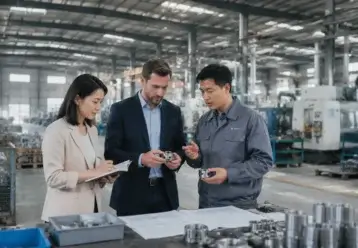
A quality inspector is generally responsible for executing inspections according to predefined procedures, specifications, tolerances, and sampling methods. Their involvement is operational. They verify whether products conform to the requirements established by the buyer, the factory, or the sourcing team.
A quality control expert operates at a much broader level.
Their role is not limited to identifying defective products during inspections. In many cases, they are involved much earlier in the sourcing process, long before production even starts.
This can include:
- supplier qualification,
- factory audit analysis,
- production feasibility evaluation,
- manufacturing process assessment,
- quality management system verification,
- compliance risk evaluation,
- defect prevention planning,
- and supplier performance monitoring.
In other words, a quality control expert is not simply checking whether products are good or bad.
They are evaluating whether the entire production environment is capable of consistently producing goods according to the buyer’s requirements and international standards.
That distinction matters enormously in global sourcing.
Because in manufacturing, quality problems rarely originate from a single defective unit. More often than not, defects are symptoms of deeper process failures:
- inconsistent raw materials,
- inadequate process controls,
- poor production planning,
- lack of operator training,
- weak quality management systems,
- unrealistic lead times,
- or communication gaps between buyers and factories.
An experienced quality control expert understands this very well.
Their role is therefore partially technical, partially operational, and partially strategic.
They do not simply “inspect products”.
They help companies reduce manufacturing uncertainty.
Why Quality Problems Usually Begin Long Before Inspection
One of the biggest misconceptions in sourcing is the idea that quality can somehow be “inspected into” a product once production is completed.
In reality, by the time a final random inspection takes place, most of the important variables have already been locked in:
- material quality,
- supplier capability,
- process stability,
- production conditions,
- assembly consistency,
- packaging methods,
- and production timelines.
A final inspection may identify defects, but it cannot fundamentally correct a poorly controlled manufacturing process.
This is precisely why mature sourcing organizations place so much emphasis on upstream quality management rather than relying exclusively on downstream inspection activities.
A quality control expert therefore becomes involved throughout multiple stages of the supply chain.
Supplier Qualification and Factory Evaluation
Before placing orders, factories must first be evaluated beyond pricing and production capacity.
This includes assessing:
- manufacturing capabilities,
- machinery condition,
- process standardization,
- workforce stability,
- internal quality procedures,
- subcontracting practices,
- certification validity,
- and historical quality performance.
A supplier may produce excellent prototypes or samples while still lacking the operational discipline necessary for quality-efficient mass production.
This is particularly common in international sourcing environments where buyers have limited visibility over day-to-day factory operations.
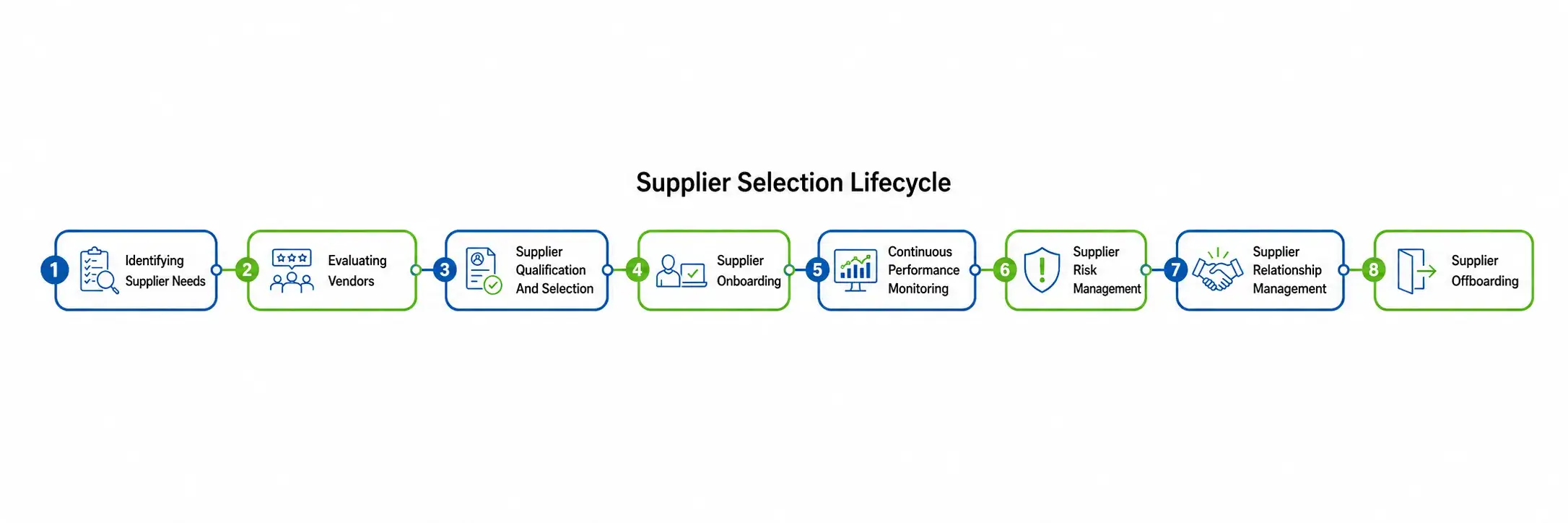
Supplier verification therefore becomes an essential form of risk management.
Production Feasibility and Manufacturing Alignment
Another important responsibility of a quality control expert involves verifying whether product requirements realistically align with manufacturing capabilities.
Many sourcing failures occur because:
- specifications are incomplete,
- tolerances are unrealistic,
- packaging requirements are unclear,
- compliance standards are misunderstood,
- or factories accept projects they are not fully equipped to execute.
In these situations, defects are merely the consequence of poor production alignment.
A competent quality control expert helps identify these issues before production begins.
This may involve reviewing:
- technical drawings,
- bill of materials,
- packaging specifications,
- testing requirements,
- labeling standards,
- assembly procedures,
- and acceptable quality limits (AQL).
At this stage, the objective is not simply quality control.
It is manufacturing risk reduction.
The Relationship Between Quality Control and Supply Chain Management
One of the reasons the role of a quality control expert has evolved significantly over the past two decades is because supply chains themselves have become far more complex.
Today, many products involve:
- multiple component suppliers,
- subcontracted manufacturing stages,
- international logistics providers,
- compliance verification agencies,
- testing laboratories,
- and sourcing intermediaries operating across different countries.
This creates operational fragmentation.
And fragmentation creates risk.
A quality control expert therefore often functions as a bridge between sourcing, procurement, production, logistics, and supplier management.
Their responsibilities may include:
- monitoring supplier consistency,
- coordinating inspection schedules,
- validating corrective action implementation,
- reviewing production timelines,
- evaluating defect trends,
- and ensuring compliance requirements are respected throughout the manufacturing cycle.
In some industries, particularly electronics, toys, medical products, cosmetics, or industrial equipment, this level of oversight becomes absolutely critical because quality failures can create not only commercial losses, but also regulatory exposure and product liability risks.
Quality Control Versus Quality Assurance
Another important distinction that is often misunderstood is the relationship between quality control and quality assurance.
Quality control generally focuses on verification activities:
- inspections,
- measurements,
- testing,
- sampling,
- and defect identification.
Quality assurance is broader.
It focuses on building systems designed to reduce the probability of defects occurring in the first place.
An experienced quality control expert often operates somewhere between these two functions.
They may supervise inspection activities while simultaneously evaluating whether suppliers maintain reliable quality management systems capable of sustaining long-term production consistency.
This is why experienced sourcing companies rarely rely solely on final product inspections.
Instead, they implement layered quality procedures throughout production:
-
- pre-production inspections,
- during-production inspections,
- final random inspections,
- loading supervision,
- supplier audits,
- and corrective action follow-ups.
The objective is not simply to catch defects.
The objective is to create process stability across the supply chain.