To source products from China, write a clear product specification, check the import rules, compare several suppliers, verify the factory, test samples, inspect the order before final payment, and calculate the full landed cost before buying.
Do not select a supplier only because it offers the lowest price. A successful order must meet four basic conditions: the product matches your requirements, the supplier can make it consistently, the total cost leaves enough profit, and the goods can legally be sold in your market.
This process works for private-label goods, custom products, packaging, replacement parts, building materials, hotel supplies, medical consumables, and many industrial products. Buyers who need help finding and managing suppliers can review JS Sourcing’s China manufacturer sourcing service.

Decide What You Need
Before contacting suppliers, decide exactly what you want to buy. A vague request usually produces vague quotations and products that cannot be compared fairly.
There are three common sourcing models:
| Model | What the supplier provides | Best for |
|---|---|---|
| Private label | An existing product with your logo and packaging | Fast launches and simple products |
| ODM | An existing product changed in color, size, material, packaging, or features | Moderate customization |
| OEM | A product made from your own drawings or design | Original products and long-term brands |
Private-label products are normally faster and cheaper to launch. OEM products give you more control, but they may require engineering work, molds, compliance testing, and several sample rounds.
Set these limits before asking for prices:
- Target selling price
- Maximum landed cost
- Minimum acceptable profit per unit
- First-order quantity
- Expected monthly sales
- Required delivery date
- Destination country
- Mandatory certificates and tests
- Maximum amount you can afford to lose
Your risk is not limited to the supplier deposit. It also includes samples, molds, testing, inspection, freight, duty, storage, returns, replacement stock, and unsold inventory.
A first order should test both the product and the supplier. It should not place the whole business at risk.
Check Whether China Is the Right Source
China is not automatically the best choice for every product. Local or regional purchasing may be better when:
- The order is very small
- Delivery is urgent
- The product is bulky but low in value
- Local repair or installation is important
- Import duties remove the price advantage
- The product has a short selling season
Compare total cost, minimum order quantity, lead time, freight, cash-flow pressure, and after-sales work. Do not compare factory prices alone.
Separate your product requirements into three groups:
- Must-have: requirements that cannot change
- Preferred: requirements that can be negotiated
- Unacceptable: conditions that require you to reject the product or supplier
For example, a slight color change may be negotiable. A required safety standard, load rating, material grade, or electrical specification is not.
Write a Clear Product Specification
A supplier cannot quote accurately from a message such as:
I need 1,000 high-quality stainless steel bottles. Please send your best price.
The supplier still does not know the steel grade, capacity tolerance, wall thickness, lid design, finish, packaging, test method, or shipping term.
Create a specification sheet detailed enough for two factories to make the same product without guessing.
| Item | Example requirement |
|---|---|
| Capacity | 750 ml |
| Body material | SUS 304 stainless steel |
| Construction | Double-wall vacuum insulation |
| Product weight | 380–410 g |
| Mouth diameter | 45 mm with an agreed tolerance |
| Finish | Matte powder coating |
| Color | Pantone 2965 C |
| Logo | One-color laser engraving |
| Lid | Polypropylene lid with silicone seal |
| Leak test | Defined water level, closing method, position, duration, and pass result |
| Thermal test | Starting water temperature and maximum temperature loss after 6 and 12 hours |
| Packaging | Retail box, insert, instruction card, and master carton requirements |
| Labels | Barcode, model number, warnings, and country of origin |
Avoid unclear words such as “premium,” “strong,” “safe,” or “good quality.” Replace them with measurements or test results.
Do not write:
Use a strong export carton.
Write:
Use a five-layer corrugated master carton with the agreed carton quantity and internal protection. The packed carton must pass the agreed drop test without product damage.
Attach all useful files:
- Product drawings
- Bill of materials
- Reference photographs
- Packaging layouts
- Logo and artwork files
- Color codes
- Label and warning files
- Test procedures
- Inspection checklist
Give every file a version number and date. The purchase order must state which version the factory must use.
Make Every Requirement Testable
Each important requirement should answer five questions:
- What must the product achieve?
- How will it be measured?
- How many units will be checked?
- What equipment or method will be used?
- What result is a pass or failure?
For example, a leak test should state how much water is used, how tightly the lid is closed, how the product is positioned, how long the test lasts, and whether any visible moisture is allowed.
A color check should state whether approval is based on a Pantone code, a signed physical sample, or a measured color difference.
A product-weight requirement should state whether packaging is included and what scale accuracy is required.
Packaging must also be included in the specification. Define the retail box, internal protection, master carton, carton quantity, carton weight, pallet method, moisture protection, and shipping marks.
Decide Which Document Controls
A physical sample is useful for color, texture, appearance, and fit. Written specifications are better for materials, dimensions, labels, safety, and performance.
The contract should state which document controls when two documents conflict. A practical order of priority is:
- Signed manufacturing agreement
- Latest approved specification
- Latest approved drawings and bill of materials
- Approved test and inspection requirements
- Approved physical sample for appearance
- Purchase order
- Written change approvals
Without this rule, the buyer may rely on a new drawing while the factory uses an old sample or chat message.
Check Product Rules Before Production
Check the main legal requirements before approving the final sample or starting mass production. Testing a completed shipment is too late if the design, materials, labels, or components are wrong.
Products that often need special checks include:
- Children’s products and toys
- Electrical products
- Wireless devices
- Batteries
- Food and food-contact products
- Cosmetics
- Medical devices
- Textiles
- Protective equipment
- Chemicals
- Vehicle parts
For products covered by U.S. Consumer Product Safety Commission rules, manufacturers and importers may need to test the product and issue a written or electronic compliance certificate. Children’s products subject to applicable rules generally require testing by a CPSC-accepted third-party laboratory.[1]
For most imported consumer products that require CPSC certification, electronic certificate filing took effect on July 8, 2026. For relevant goods withdrawn from a U.S. Foreign Trade Zone for consumption or warehousing, the requirement takes effect on January 8, 2027.[2]
FDA-regulated imported products must meet the same applicable requirements as products made in the United States. Depending on the product, the importer may need facility registration, prior notice, listing, labeling, clearance, approval, or other documents.[3]
Do not ask only whether a supplier has “FDA certification.” FDA does not issue one general certificate that makes every food, cosmetic, or medical product legal.
Wireless devices may need FCC equipment authorization, testing, labeling, and records. The exact route depends on the device and its radio functions.[4]
Chemical substances and some products containing chemicals may be covered by Toxic Substances Control Act import rules or other EPA requirements.[5]
Textile and wool products sold in the United States may need labels showing fiber content, country of origin, and the responsible company.[6]
Lithium batteries are subject to transport rules covering testing, packaging, labels, documents, and carrier acceptance.[7]
Medical products need more careful supplier and document checks. Buyers in this field can review JS Sourcing’s page on sourcing medical supplies from China.
Build a Compliance Checklist
Before placing the order:
- List every country where the product will be sold.
- Define the product type, intended use, user age, materials, power source, and claims.
- Identify the government agencies that regulate the product.
- List required tests, labels, warnings, registrations, and certificates.
- Confirm who must perform the tests.
- Confirm who must issue or sign each certificate.
- Confirm what must be filed during import.
- Keep the records needed after the product is sold.
Do not treat every document called a “certificate” as the same thing.
- A test report records test results for a sample.
- A product certificate may be a statement signed by the manufacturer or importer.
- A factory certificate may cover a management system, not the product.
- A registration or authorization may be a separate legal process.
For each test report, check:
- Report number
- Laboratory name
- Product model
- Applicant and manufacturer
- Factory address
- Tested materials and components
- Test date
- Standard and version
- Photographs of the tested sample
A report for a similar lamp, toy, battery, or material may not cover your product. A change to the material, battery, power supply, radio module, size, factory, model, or intended use may require a review or new testing.
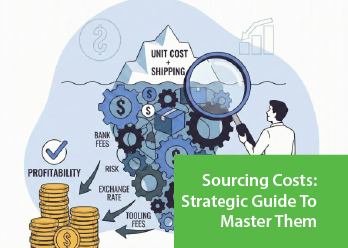
Calculate the Full Landed Cost
The factory price is only one part of the cost.
Landed cost = product cost + tooling + packaging + testing + inspection + China transport + export charges + international freight + insurance + ordinary customs duty + additional duties + customs fees + destination handling + final delivery + expected defect cost
Do not add “duty” and “tariff” as two general costs unless they are clearly different charges. Ordinary customs duty, Section 301 duty, antidumping duty, and countervailing duty should be listed separately when they apply.
Cost example for 2,000 units
| Cost | Total | Per unit |
|---|---|---|
| Product | $12,000 | $6.00 |
| Packaging | $1,000 | $0.50 |
| Inspection | $350 | $0.18 |
| Testing | $800 | $0.40 |
| China transport | $450 | $0.23 |
| Freight and insurance | $2,400 | $1.20 |
| Import duties | $2,000 | $1.00 |
| Customs and delivery | $1,200 | $0.60 |
| Defect allowance | $400 | $0.20 |
| Total | $20,600 | $10.30 |
The product does not cost $6 per unit. It costs $10.30 per unit before warehousing, marketplace fees, fulfillment, advertising, returns, and customer service.
Calculate at least three outcomes:
- Expected cost
- Higher freight and storage cost
- Delay, defect, and lower-sales cost
A product should not be profitable only when everything goes perfectly.
Also calculate:
Contribution per unit = selling price − landed cost − marketplace fees − fulfillment − advertising − expected returns − customer-service cost
Check Tariff Codes and Extra Duties
For U.S. imports, identify the correct Harmonized Tariff Schedule code before approving the order. The official tariff schedule is maintained by the U.S. International Trade Commission.[8]
Do not use a tariff code only because the supplier has used it before. Classification depends on the product’s materials, design, function, and legal tariff rules.
Also check whether Section 301 duties apply. Current actions and exclusions are published by the Office of the United States Trade Representative.[9]
Some products may also be covered by antidumping or countervailing duty orders. These extra duties can be much higher than the normal duty rate.[10]
Use a licensed customs broker or trade professional when the classification or duty scope is unclear.
Find Several Suppliers
Use at least two supplier channels. This gives you a better view of normal prices, minimum order quantities, and factory ability.
Common channels include:
- Alibaba
- Global Sources
- Made-in-China
- Canton Fair
- Industry trade shows
- Industrial clusters
- Sourcing agents
- Import records
- Professional referrals
Start with about 10 to 20 possible suppliers. After checking their replies, reduce the list to three to five serious candidates.
A supplier may be a factory, assembler, trading company, wholesaler, or agent. These businesses work differently. JS Sourcing’s guide to types of Chinese manufacturing companies explains the main differences.
A trading company is not automatically a bad choice. It may offer lower order quantities, better export support, or mixed-product purchasing. The problem is a trader pretending to own a factory or refusing to disclose where the goods will be made.
Remove Weak Suppliers Early
Common warning signs include:
- The supplier claims to manufacture unrelated products across many industries.
- The supplier gives a price without reading the specification.
- The supplier refuses to list differences from your requirements.
- The price is far below the normal range without a clear reason.
- The supplier avoids showing the production site.
- The company, contract, invoice, and bank names differ without explanation.
- The supplier asks for payment to a personal account.
- Bank details change shortly before payment.
- Test reports cover a different model or factory.
- The supplier cannot explain its production capacity.
Also ask whether the lead time includes materials, packaging, testing, rework, and busy-season delays. Chinese New Year, National Day, peak shipping periods, and material shortages can affect production.
Send the Same RFQ to Every Supplier
An RFQ is a request for quotation. Send the same information to every supplier so their offers can be compared fairly.
Include:
- Product specification
- Drawings and photographs
- Order quantity
- Price-break quantities
- Packaging requirements
- Logo method
- Required tests
- Sample quantity
- Destination country
- Incoterm and named place
- Required completion date
Ask each supplier to provide:
- Unit prices at several quantities
- Minimum order quantity
- Sample cost and lead time
- Production lead time
- Mold cost
- Packaging cost
- Product and carton weight
- Carton dimensions
- Production capacity
- Payment terms
- Quotation validity
- Incoterm and named place
- Test reports
- Defect or warranty policy
Do not compare an EXW price with a FOB price as though they include the same costs.
Ask the supplier to mark each key requirement as:
- Complies
- Does not comply
- Alternative proposed
A blank answer does not prove that the supplier accepts the requirement.
Compare Suppliers Before Comparing Prices
Use pass-or-fail checks before giving suppliers a score. A low price should not cancel out a failure in safety, compliance, legal identity, or required materials.
A supplier should pass these basic checks:
- The legal company and bank account can be verified.
- The product can meet mandatory rules.
- Critical materials and components can be confirmed.
- The factory and subcontractors are disclosed.
- The sample passes critical tests.
- The supplier accepts written change control.
After that, you can use a score:
| Factor | Example weight |
|---|---|
| Product match | 25% |
| Sample quality | 20% |
| Factory ability | 15% |
| Compliance | 15% |
| Price | 10% |
| Lead time | 5% |
| Communication | 5% |
| Payment terms | 5% |
The weights should change by product. Compliance should matter more for children’s products, electrical products, medical products, and safety equipment.
Verify the Company and Factory
A good sample does not prove that the supplier owns a factory or can control mass production.
Ask for:
- Chinese business license
- Full Chinese legal name
- Unified Social Credit Code
- Registered address
- Factory address
- Export company name
- Bank beneficiary name
- Production-equipment list
- Quality-control records
- Test reports and certificates
The company names should either match or have a clear and documented business relationship.
A factory may use a trading company or export company. In that case, confirm:
- Which company signs the contract
- Which company issues the invoice
- Which company receives payment
- Which company operates the factory
- Which company is responsible for defects and refunds
Registered capital does not prove that a company has the stated amount of cash, equipment, or available production capacity.
Check Real Production Capacity
Ask the supplier:
- How many production lines or machines are available?
- How many units can each line produce?
- How many shifts are running?
- What is the normal defect or yield rate?
- Which step limits production speed?
- Which processes are subcontracted?
- How much capacity is available for your order?
The capacity available to your order matters more than the supplier’s theoretical maximum.
Use Video Calls and Factory Audits
Ask for a live video call rather than a recorded company video.
Ask the supplier to show:
- Building entrance
- Company sign
- Business license
- Production floor
- Current production
- Raw-material storage
- Finished-goods warehouse
- Testing equipment
- Packing and loading areas
A video call is useful for initial screening, but it does not prove ownership, capacity, or compliance.
For large, technical, or regulated orders, use an independent audit. JS Sourcing provides factory audit and quality inspection services in China.
An audit may check:
- Legal identity
- Factory location
- Workers and equipment
- Production processes
- Quality system
- Incoming-material checks
- Calibration records
- Traceability
- Subcontracting
- Corrective-action records
An audit shows what was checked on that date. It does not replace product testing or shipment inspection.
Test the Right Samples
The word “sample” can describe several different stages:
| Sample stage | What it checks | What it does not prove |
|---|---|---|
| Stock sample | Existing workmanship and product quality | Ability to make your custom version |
| Custom sample | Your requested design, color, size, or packaging | Stable mass production |
| Compliance sample | The tested design meets required rules | Future production remains unchanged |
| Golden sample | The final approved appearance and setup | Every production unit will match |
| First production unit | The production line is set up correctly | The rest of the batch will remain correct |
| Inspection sample | The lot passes agreed sampling rules | Every uninspected unit is defect-free |
Ask whether a custom sample was:
- Handmade
- Made on normal production equipment
- Made with temporary parts
- Made from final materials
- Produced with final tooling
A handmade sample may look good but be difficult to reproduce in mass production.
Test Samples Instead of Only Looking at Them
Depending on the product:
- Drop it
- Wash it
- Bend it
- Load it
- Open and close it repeatedly
- Test buttons and moving parts
- Check heat or cold performance
- Test leakage
- Check odor
- Scan the barcode
- Assemble it using the instructions
- Check packaging fit
- Check whether surfaces scratch easily
Record every result. “Sample approved” is too vague.
For important samples, record the version, factory, date, materials, components, tooling, production method, and test results. Keep one marked or sealed reference sample.
For a new product or supplier, a pre-production inspection can check materials, tooling, equipment, and production readiness before mass production.
Protect Your Brand and Tooling
Do not send complete product files to many unknown suppliers without basic controls.
For important products:
- Search the brand name before using it.
- Consider early trademark registration.
- Limit access to complete design files.
- Use version numbers.
- Watermark early drawings when useful.
- Ban unauthorized production and sales.
- Ban use of your logo and packaging for other customers.
- State what happens to files, samples, and molds when cooperation ends.
Paying for a mold does not automatically prove that you own it.
The agreement should list:
- Mold name and number
- Number of cavities
- Mold price
- Buyer ownership
- Storage location
- Expected tool life
- Maintenance responsibility
- Use restrictions
- Transfer procedure
- Replacement and damage rules
Sign a Clear Order Agreement
Do not rely on chat messages as the only agreement.
Use a signed contract or manufacturing agreement together with a detailed purchase order.
Include:
- Buyer and supplier legal names
- Product specification and version
- Drawing and bill-of-material versions
- Approved sample
- Quantity and price
- Packaging
- Testing and inspection rules
- Production location
- Approved subcontractors
- Delivery date
- Incoterm and named place
- Payment schedule
- Mold ownership
- Change-control rules
- Defect and delay remedies
- Dispute process
Do not write:
The products must be high quality.
Write:
Product dimensions must comply with drawing V4 dated July 2, 2026. The supplier may not change the material, component, process, factory, subcontractor, logo method, color, or packaging without written buyer approval.
Link Payments to Completed Work
A common production payment structure is:
- Deposit before production
- Balance after production and passed inspection
A 30% deposit and 70% balance is common, but it is not a mandatory rule. The right payment structure depends on the product, supplier, tooling, and order size.
Before releasing the balance, require:
- Passed pre-shipment inspection
- Completed corrective work
- Passed reinspection when needed
- Correct shipping documents
- No unapproved material or factory changes
A passed inspection should not remove your rights for hidden defects, false materials, compliance problems, or damage found after arrival.
Before paying:
- Confirm the bank beneficiary.
- Compare it with the contract and invoice.
- Confirm the account through a second channel.
- Investigate sudden bank changes.
- Avoid personal accounts without a verified reason.
- Keep protected platform orders and payments on the platform.
Control Production Before the Final Inspection
After paying the deposit, confirm:
- Final specification
- Approved sample
- Materials and components
- Production process
- Packaging files
- Testing plan
- Production dates
- Inspection date
- Shipping date
Approve the first completed production units before the full run continues.
Check:
- Dimensions
- Weight
- Color
- Logo
- Function
- Assembly
- Internal parts
- Packaging
- Labels
- Barcode
- Instructions
This can stop one setup error from affecting thousands of units.
For higher-risk orders, a during-production inspection can find problems while the factory still has time to correct them.
Require Written Approval for Changes
A factory may need to change a material, part, supplier, process, or production site. No important change should happen without review.
A written change request should state:
- What will change
- Why it will change
- Effect on quality
- Effect on compliance
- Effect on price
- Effect on delivery time
- Whether a new sample or test is required
Do not approve important changes through a short chat message.
Inspect Finished Goods Before Final Payment
The inspector should receive:
- Purchase order
- Product specification
- Approved-sample details
- Drawings
- Packaging files
- Barcode list
- Test procedures
- Defect list
- Order quantity
- Factory address
Define three defect types.
Critical defects
A critical defect creates a safety, legal, or serious use risk.
Examples include exposed electrical parts, a sharp point on a children’s product, dangerous battery damage, a prohibited material, or a missing safety warning.
Critical defects are often given an acceptance number of zero in the inspected sample. This means one critical defect may cause the lot to fail. It does not prove that every uninspected unit has no critical defects.
Major defects
A major defect affects normal use, sale, or customer acceptance.
Examples include a product that does not work, leakage, wrong dimensions, a broken zipper, an incorrect logo, or a missing part.
Minor defects
A minor defect does not stop normal use.
Examples include a small scratch in a less visible area, a slight printing shift, or a small carton mark.
Use AQL Correctly
Many inspections use an AQL-based sampling plan under the agreed version of ISO 2859-1, ANSI/ASQ Z1.4, or another sampling standard.
AQL does not mean the buyer agrees to receive that percentage of defective goods. It is used to decide:
- How many units to inspect
- How many defects allow the lot to pass
- How many defects cause the lot to fail
The inspector should select units randomly from different cartons and areas. The factory should not prepare a group of handpicked good units.
A passed inspection means the inspected lot met the agreed sampling and test rules. It does not mean every unit is perfect.
Include product-specific tests such as:
- Drop test
- Leak test
- Load test
- Pull test
- Power or charging test
- Assembly test
- Barcode scan
- Carton measurement
- Product weight
- Coating-adhesion test
- Function-cycle test
A pre-shipment inspection in China should be completed while you still have payment and shipment control.
Handle a Failed Inspection
Do not release the balance immediately.
Require:
- Root-cause analysis
- Corrective-action plan
- Sorting, repair, or replacement method
- Control of rejected units
- New inspection date
- Evidence that all affected units were checked
Photographs of a few repaired products do not prove that the whole shipment was corrected.
For serious failures, require full sorting or a wider reinspection. The agreement should state who pays the extra inspection cost.
Choose the Shipping Method
Select shipping based on product size, weight, value, urgency, destination, and cargo restrictions.
Ask for a complete logistics quotation. It may include:
- China pickup
- Export handling
- Terminal charges
- Main freight
- Fuel and peak-season charges
- Destination handling
- Customs clearance
- Drayage
- Storage
- Final delivery
Confirm which costs are fixed, estimated, included, or excluded.
JS Sourcing provides more information about shipping goods from China.
Courier
Courier shipping is best for samples and small urgent orders. It is fast and easy to track, but the cost per kilogram is high.
Air freight
Air freight is suitable for urgent or valuable goods that are too large for normal courier service. Charges are usually based on actual or volumetric weight, whichever is higher.
Sea freight
Sea freight is normally better for large, heavy, and less urgent shipments.
- LCL: your cargo shares a container.
- FCL: you use a full container.
LCL can work for smaller shipments, but destination handling and repeated cargo movement can increase cost and damage risk.
Rail and truck
Rail and truck services are available on some routes between China, Europe, and other parts of Asia. Cost and transit time depend on the route and border conditions.
Buy Suitable Cargo Insurance
Buy cargo insurance when the possible loss would materially hurt your business.
Check:
- Insured value
- Covered risks
- Exclusions
- Deductible
- Claim deadline
- Required photographs and documents
An Incoterm does not prove that the insurance is enough for your full risk.
Batteries, chemicals, liquids, powders, magnets, and other restricted goods may need special testing, packaging, labels, and carrier approval.
Solid-wood pallets, crates, and dunnage entering the United States generally need to meet applicable ISPM 15 treatment and marking requirements.[11]
Choose the Correct Incoterm
Always include a named place and the Incoterms version.
Do not write only:
- FOB
- EXW
- DDP
Write:
- FOB Yantian Port, Incoterms 2020
- FCA supplier factory, Shenzhen, Incoterms 2020
- DAP buyer warehouse, Los Angeles, Incoterms 2020
Incoterms explain who handles transport, costs, customs work, and risk at different stages. They do not decide product quality, payment timing, ownership, intellectual property, or defect remedies.[12]
EXW
The buyer takes responsibility early, usually at the supplier’s premises. EXW may be difficult for a new importer because the buyer may need to arrange pickup and export work in China.
FCA
The seller delivers the goods to the buyer’s carrier at the named place and handles export formalities. FCA is often suitable for containerized or multimodal cargo.
FOB
FOB is for sea or inland-waterway transport. The seller delivers the goods on board the vessel at the named port.
CIF
The seller arranges sea freight and the minimum insurance required by the rule. Risk does not necessarily transfer when the goods arrive at the destination.
DAP
The seller delivers the goods to the named destination. The buyer normally handles import clearance and import duties.
DDP
The seller takes broad responsibility through the named destination, including import clearance and duties.
Before accepting DDP, ask:
- Who is the importer of record?
- What customs value will be declared?
- Which tariff code will be used?
- Are duties being paid correctly?
- Will you receive the customs records?
Avoid shipping arrangements based on false values, vague descriptions, or incorrect tariff codes.
Prepare Customs Documents Before Shipping
Do not wait until the goods leave China to start customs work.
Common documents include:
- Commercial invoice
- Packing list
- Bill of lading or air waybill
- Purchase order
- Country-of-origin information
- Tariff code
- Test reports
- Product certificates
- Permits
- Customs bond information
- Insurance certificate
For applicable U.S. ocean shipments, Importer Security Filing information is generally required before the cargo is loaded at the foreign port. U.S. Customs and Border Protection provides official guidance on the Importer Security Filing (“10+2”) requirements.[13]
The commercial invoice should show:
- Seller and buyer
- Clear product description
- Quantity
- Unit price and total price
- Currency
- Incoterm
- Country of origin
- Package count
- Gross and net weight
Descriptions such as “accessories,” “parts,” “samples,” or “gift” may be too vague. Include the product’s function, material, model, and intended use where relevant.
Foreign-origin goods entering the United States are generally subject to country-of-origin marking requirements unless an exception applies.[14]
Do not remove “Made in China” only because the product carries your brand. Brand ownership and manufacturing origin are different matters.
Plan for Common Problems
Late production
Use milestone dates instead of one final delivery date. Possible remedies include faster production at the supplier’s cost, air shipment of part of the order, a discount, cancellation after a defined delay, or a refund of unearned payments.
Wrong materials
Keep approved material samples, supplier records, and test reports. Use laboratory testing or incoming-material inspection for critical materials.
Transport damage
Check whether damage came from weak retail packaging, weak cartons, poor stacking, moisture, rough handling, incorrect loading, or product movement inside the box.
Customs hold
Prepare the product description, tariff-classification basis, origin records, test reports, certificates, supplier records, and shipping documents. Do not solve a customs issue by using a false description or value.
Product-safety incident
When necessary, stop sales, isolate remaining stock, identify the affected batch, keep samples and records, and review reporting or recall duties. CPSC provides official recall guidance for businesses.[15]
Supplier failure
Record where your molds, materials, packaging, files, and finished goods are stored. The agreement should state what happens if the supplier closes, refuses to ship, or cannot complete production.
Use the First Order as a Test
The first order should test:
- Product quality
- Supplier communication
- Production timing
- Packaging
- Inspection response
- Shipping
- Customs clearance
- Customer feedback
- Defect and return rates
Choose the quantity based on expected monthly sales, forecast error, shelf life, reorder time, freight cost, minimum order quantity, seasonality, and available cash.
After arrival, record:
- Units received
- Units damaged
- Major and minor defects
- Customer returns
- Common complaints
- Missing parts
- Packaging failures
- Final landed cost
- Actual delivery time
Check the goods again after arrival even if they passed pre-shipment inspection. Look for carton damage, missing units, transport damage, packaging deformation, and product faults.
Final Check Before Paying the Deposit
- The product specification is complete.
- The product can legally be sold.
- The tariff code has been reviewed.
- Extra-duty risks have been checked.
- The full landed cost is acceptable.
- The supplier’s legal identity is verified.
- The factory location is confirmed.
- The bank account is verified.
- The samples have passed testing.
- The approved document versions are recorded.
- The contract and purchase order are signed.
- Mold ownership is clear.
- Production milestones are written.
- Inspection rules are attached.
- The Incoterm includes a named place.
- Customs documents are planned.
- Defect and delay remedies are clear.
- An arrival inspection is planned.
An unclear legal requirement, unverified supplier, unapproved sample, unknown total cost, or unexplained bank account should normally stop the payment.
Conclusion
Sourcing from China is safest when you control the order before production starts. Compare at least three qualified suppliers, approve a measurable specification, verify the factory and bank account, and inspect the goods before paying the balance. A $6 factory product can easily become a $10.30 landed product after packaging, testing, freight, duty, and delivery. Start with an order small enough to survive delays or defects, then increase volume only after checking the first shipment’s real cost, defect rate, delivery time, and customer returns.